Trump pushes for grand Russia-Ukraine peace deal as Europe fights for seat at negotiating table
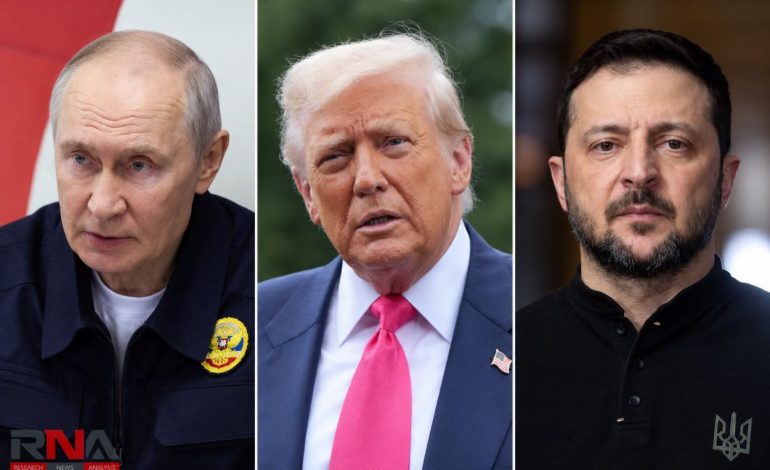
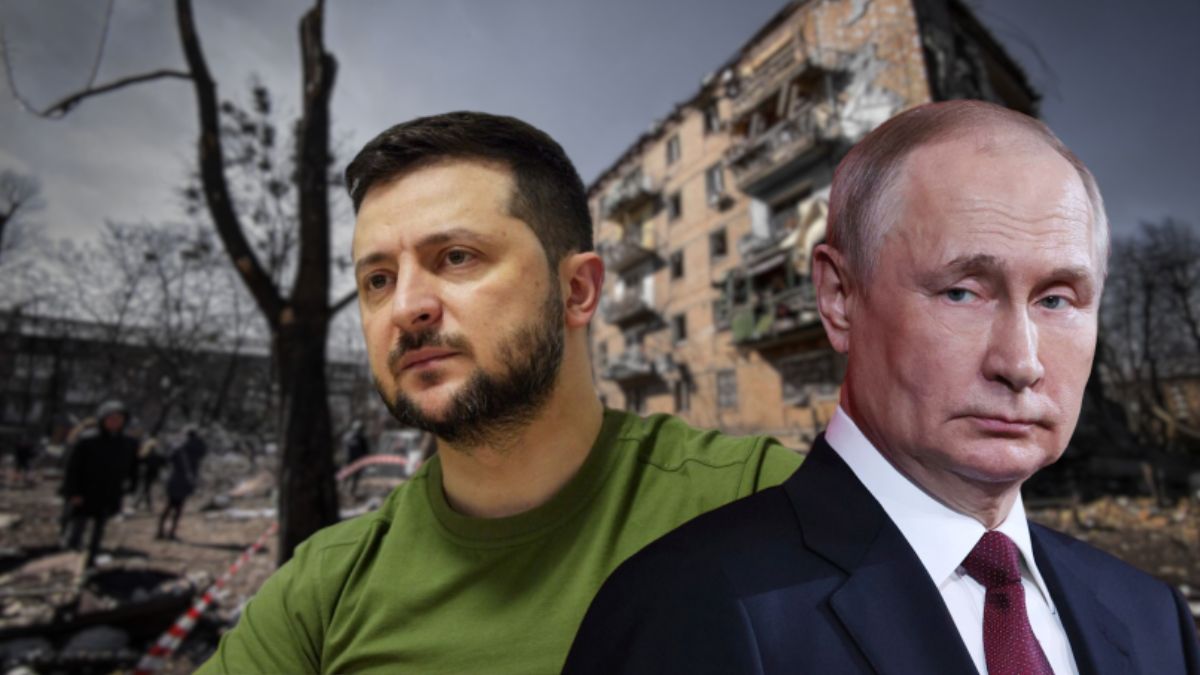
Vladimir Putin (L), Donald Trump (C) and Volodymyr Zelenskyy.

New Delhi: The United States is preparing to press Russia to accept European participation in negotiations to end the Ukraine war, as Washington attempts to turn renewed diplomatic engagement into a wider settlement covering the continent’s security arrangements. The initiative comes ahead of two days of US-mediated talks in Abu Dhabi, beginning Tuesday, with fundamental disagreements over Ukrainian territory, military restrictions and postwar security guarantees still threatening to derail the process.
The negotiations, involving Russian, Ukrainian and American delegations, mark the first direct trilateral engagement since February, when earlier diplomatic efforts failed to produce a meaningful breakthrough. The US president, Donald Trump, has nevertheless expressed confidence that a comprehensive settlement is possible, suggesting that any agreement could extend beyond Ukraine to address longstanding tensions between Russia and Nato.
Speaking after meeting the Russian presidential envoy, Kirill Dmitriev, at the White House on November 4, Trump indicated that Washington was exploring a broader European security arrangement. In a subsequent television interview, he suggested that Moscow and Kyiv were approaching an agreement, although his remarks also implied that Ukraine might ultimately face changes to its territorial boundaries.
The latest American initiative reflects a recognition that ending hostilities would require more than a ceasefire along the existing front line. Any durable agreement would also have to establish mechanisms for preventing renewed Russian military action, reassuring Ukraine and addressing the security concerns raised by Moscow and European governments.
Europe demands a voice in its own security
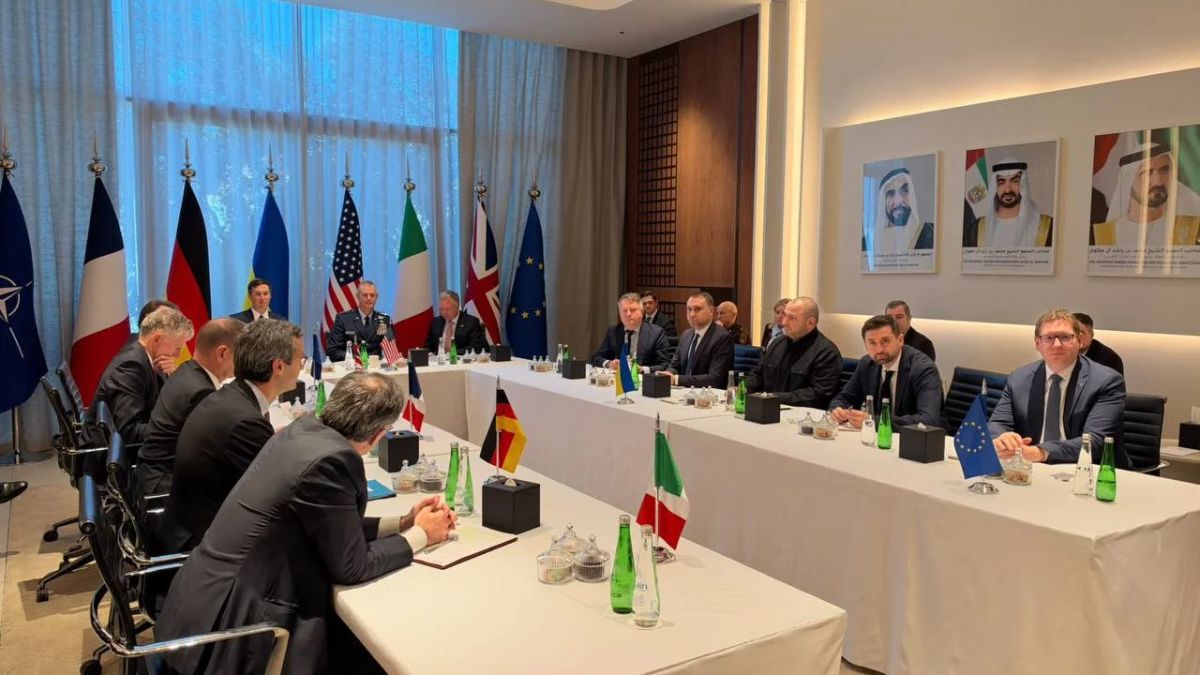
European representatives from Britain, France, Germany, Italy, the European Union and Nato are expected to attend consultations alongside the Abu Dhabi negotiations, although Moscow has opposed their direct participation in the principal talks. Ukraine maintains that European governments must be involved in decisions affecting its sovereignty and future defence arrangements, particularly because they would be expected to help finance reconstruction and provide postwar security assistance.
The Kremlin’s foreign policy adviser, Yuri Ushakov, has rejected European involvement at the current negotiating stage, reinforcing Moscow’s preference for dealing primarily with Washington. However, the Kremlin spokesman, Dmitry Peskov, has acknowledged that European participation would eventually become necessary if the discussions expanded into a comprehensive continental security framework.
Washington is seeking to establish arrangements for greater military transparency, crisis communication and reciprocal measures to reduce the risk of escalation. Such proposals could revive discussions about arms control and confidence-building mechanisms that deteriorated sharply before Russia launched its full-scale invasion of Ukraine in February 2022.
The diplomatic challenge is considerable because European governments fear that a settlement negotiated principally between Washington and Moscow could undermine Nato’s existing security architecture. American officials have sought to reassure their allies that any additional European security framework would complement rather than weaken the transatlantic alliance.
Territorial disputes remain the principal obstacle
The Russian president, Vladimir Putin, continues to demand Ukrainian withdrawal from territories Moscow claims as its own, including areas its forces have never fully occupied. The Ukrainian president, Volodymyr Zelenskyy, has rejected territorial concessions imposed under military pressure and insists that any settlement must include enforceable guarantees against another invasion.
A particularly contentious question concerns the Donbas region, where Moscow demands control over the remaining Ukrainian-held territory despite years of costly fighting. Reuters reported on Tuesday that American officials had detected limited flexibility in private discussions, although neither government has publicly abandoned its established position.
Ukraine is seeking security commitments resembling Nato’s Article 5 collective-defence principle, under which an attack on one member is treated as an attack on all. Russia, meanwhile, wants guarantees concerning its own security, restrictions on Ukraine’s military capabilities and assurances that Kyiv will not join Nato.
Battlefield realities complicate diplomacy
The negotiations are taking place against continued fighting along a front stretching approximately 1,200 kilometres, with neither side demonstrating a willingness to suspend military operations unconditionally. Russian missile and drone attacks have increasingly targeted Ukrainian energy infrastructure ahead of winter, while Ukrainian strikes against Russian oil installations have added another dimension to the conflict.
Kyiv is consequently seeking an agreement to halt attacks on energy facilities, restore safer navigation in the Black Sea and expand prisoner exchanges. Germany’s Deutsche Welle reported that Ukrainian negotiators also want preparations for a possible summit involving Trump, Putin and Zelenskyy.
A limited humanitarian ceasefire around Russian-occupied Oleshky in southern Ukraine in October has provided a potential model for smaller confidence-building measures. The temporary arrangement, facilitated partly through efforts involving the US first lady, Melania Trump, enabled civilian evacuations and humanitarian deliveries but did not produce a wider reduction in hostilities.
Washington’s negotiating team, led by the special envoy, Steve Witkoff, and Trump’s son-in-law, Jared Kushner, faces the challenge of translating such limited arrangements into binding commitments. Russia’s delegation is headed by presidential adviser Vladimir Medinsky, while Ukraine’s team is led by foreign intelligence chief Rustem Umerov.
For India, the negotiations carry implications beyond the European battlefield, including energy-market stability, relations with Moscow and the wider strategic balance between Russia and western powers. New Delhi has consistently supported diplomacy and dialogue, making the durability and acceptability of any eventual settlement more consequential than an early announcement of agreement.
The immediate test in Abu Dhabi will therefore be whether negotiators can establish credible understandings on security guarantees, territorial questions and limited ceasefires. With the principal disagreements unresolved, the resumption of talks represents a diplomatic opening rather than evidence that the war is approaching a negotiated conclusion.