



Tibet earthquake kills 16, injures 65 as thousands evacuated and homes collapse
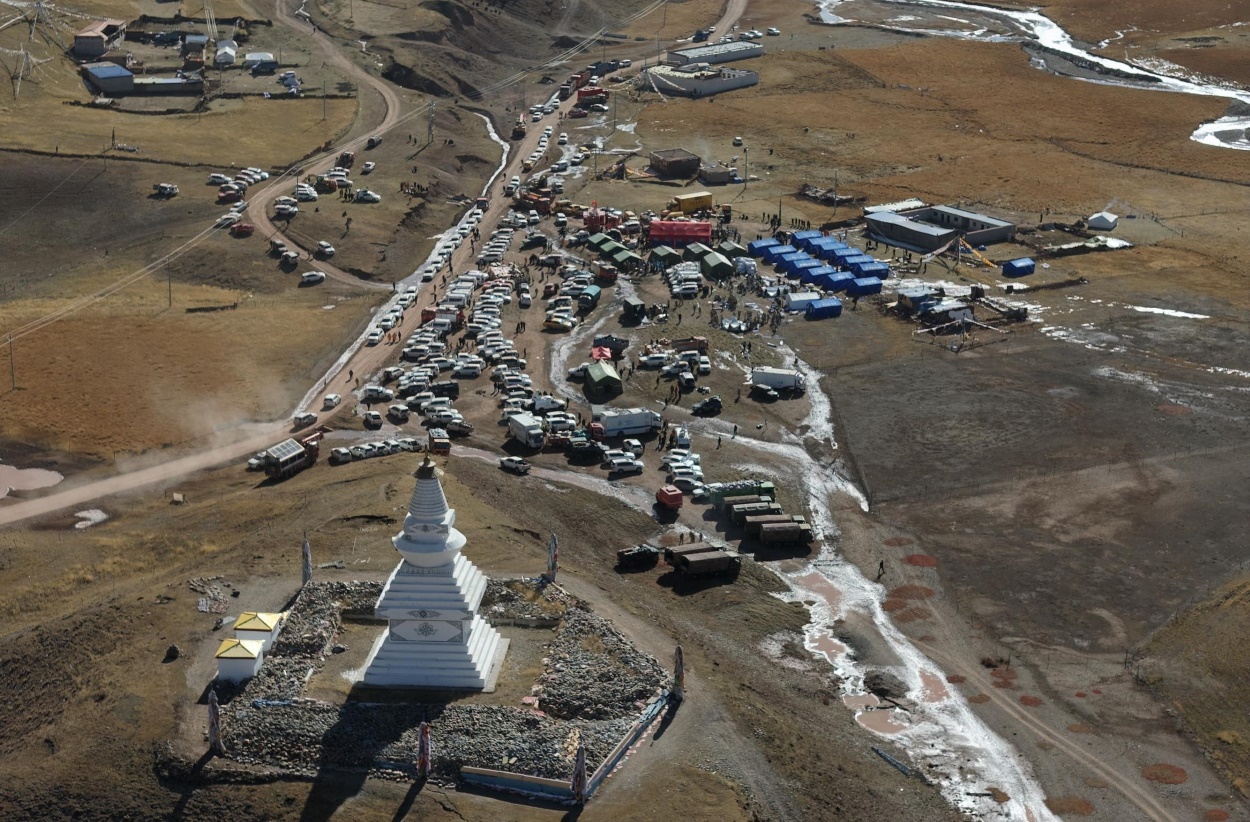
An aerial drone photo shows emergency tents at an earthquake-hit village in Maru township of Baqen county, Nagqu city, Tibet Autonomous Region, on October 23, 2026. (Photo: X/@XHNews)

New Delhi: A magnitude-7 earthquake struck northern Tibet on Thursday, killing at least 16 people and injuring 65, according to the latest information available. More than 12,000 residents were moved to safety as rescuers searched affected communities and authorities assessed the damage.
The earthquake struck at about 10.33pm local time – 8.03pm IST – in the Nagqu region, with Baqen county among the affected areas. The China Earthquake Networks Centre put the average elevation within five kilometres of the epicentre at approximately 4,864 metres, underscoring the difficult conditions confronting emergency teams.
At least 339 homes and 20 livestock sheds collapsed, according to local officials cited by the Associated Press. Communications were disrupted in some affected areas, while railway authorities halted trains passing through the region.
Rockfalls blocked a section of National Highway 317, where access was restricted to emergency and official support vehicles while crews cleared debris. Forecasts of intermittent snow over the following three days added to the difficulties facing rescue teams and displaced families.
China raised its national earthquake emergency response from level IV to level III on Friday and dispatched a team to coordinate relief operations, according to local official information. The national fire and rescue force deployed 350 rescuers and 83 vehicles, with some teams already at the scene early that morning.
Authorities mobilized 1,000 prefabricated housing units, more than 3,200 tents, approximately 2,800 folding beds and over 4,200 quilts. The supplies were intended to provide temporary accommodation and protection from the cold for residents unable to return home.
The Chinese president, Xi Jinping, ordered intensive searches for missing people and prompt treatment for the injured. The reports reviewed did not provide a confirmed number of people missing, leaving that part of the disaster’s human toll unclear.
The China Earthquake Networks Centre recorded 413 aftershocks following the main earthquake. The latest injury count of 65 superseded lower figures released during the initial emergency response, while the reported death toll remained at 16.
Tibet’s earthquake risk is rooted in the continuing collision between the Indian and Eurasian tectonic plates, which has created complex fault systems across and around the plateau. As the Hong Kong Observatory explains, this deformation produces seismic activity within the plateau as well as along its margins.
The disaster follows another major earthquake in Tibet’s Tingri county on January 7, 2025, which killed at least 126 people. The US Geological Survey measured that earthquake at magnitude 7.1 and attributed it to shallow normal faulting – movement in which one block of the Earth’s crust slips down relative to another.