
Russia’s hidden war toll: Leaked records reveal over 460,000 deaths linked to Ukraine invasion
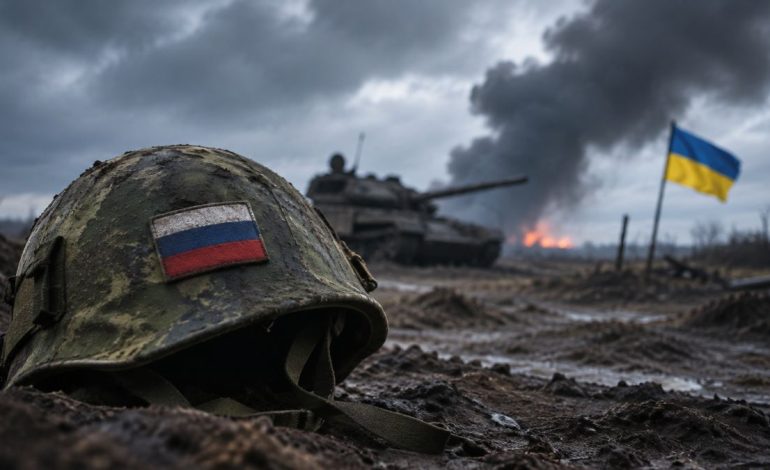
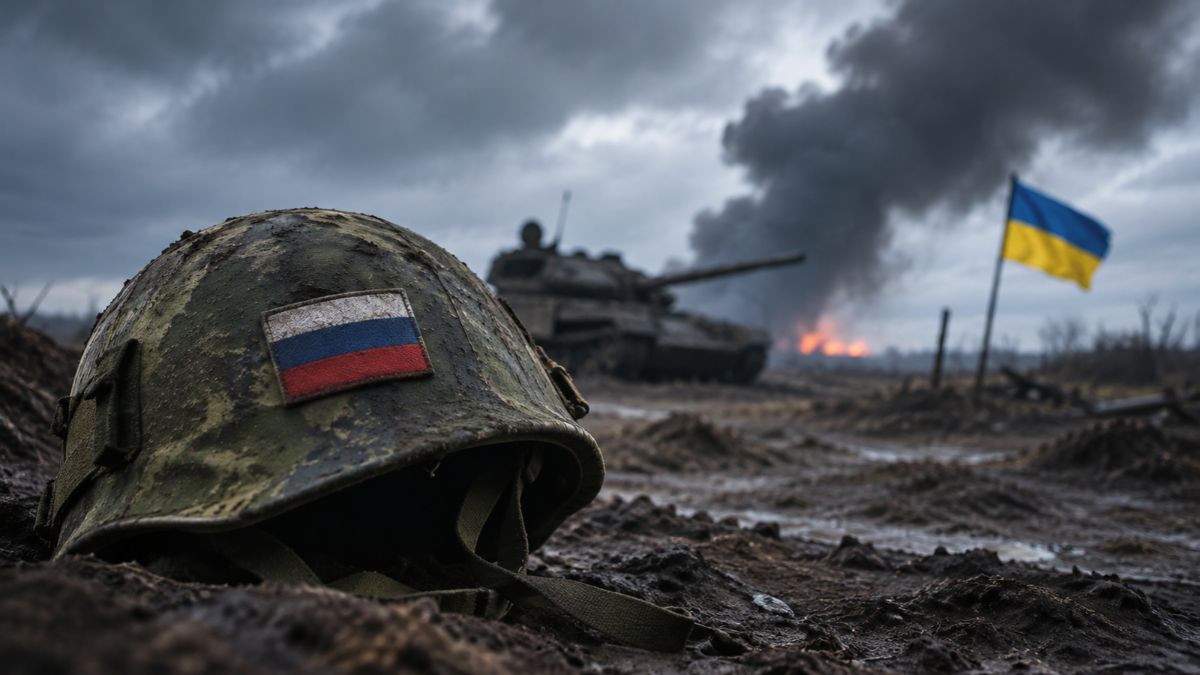
RNA Media illustration for representation.

New Delhi: More than 460,000 deaths linked to Russia’s invasion of Ukraine have been identified in a vast collection of leaked civil registration records covering February 2022 to September 2026. The findings offer a rare measure of the war’s human cost at a time when Moscow has not revised its official military death toll since September 2022, when it acknowledged 5,937 troops killed.
The figure comes from the Guardian’s Monday investigation into more than 11 million death records obtained by the Belarusian opposition-linked Cyber Partisans and Ukraine’s silent crow hacking collective. The records originate from Russia’s state statistics agency, Rosstat, but the Guardian’s findings are an independent analysis, not an official announcement of combat fatalities.
How the figures were established
Rosstat’s anonymized files contain details such as ages, places of death and recorded circumstances, rather than a publicly identifiable list of names. The Guardian counted certificates carrying war-related causes and records identifying military employment, excluding people outside combat age; its wider criteria may nonetheless include some civilians.
The database is also incomplete because missing soldiers can be declared dead years after disappearing, and some fatalities may never be registered. Rosstat acknowledged a cyberattack but denied that legally protected information had been leaked, while independent journalists tested the files against previously documented deaths.
A separate analysis of the leaked records by BBC Russian and Mediazona identified 490,334 probable Russian military deaths by September 2026. The figure comprised 425,174 entries indicating combat-related causes, another 14,093 identified through employment records and 51,067 deaths established through court rulings, often involving soldiers missing in combat. BBC Russian said approximately 90 per cent of deaths in its independently compiled list could be matched to the database, while Mediazona and Meduza reported a 95.1% match using their separate verification criteria.
Their statistical modelling put total military deaths at more than 700,000 by September after accounting for delayed registrations and missing soldiers. That is an estimate, with substantial uncertainty concentrated in the latest 12 months, and must not be combined with the Guardian’s broader figure or represented as a confirmed toll.
A sharp rise in recorded deaths
The Guardian’s analysis found almost 20,000 war-linked deaths in the invasion’s first year, about 50,000 in 2023 and more than 134,000 in 2024. The annual toll approached 200,000 in 2025, a rise of roughly 52 per cent, averaging 548 recorded deaths a day compared with about 277 across the conflict.
During the week beginning May 5, 2025, the recorded rate reached approximately 720 Russian deaths every 24 hours, the highest identified in the investigation. The comparatively thin 2026 records should not be read as evidence of a similar fall in actual battlefield losses, because registrations lag behind deaths.
These patterns also help explain the difference between confirmed name lists and broader estimates. BBC Russian and Mediazona have independently documented military deaths through obituaries, memorials, court records and other open sources, but not every soldier’s death enters the public record.
Pokrovsk and the cost of territorial gains
The intensity of the fighting is particularly visible in Ukraine’s Donetsk region, where the Guardian identified nearly 116,000 deaths with known locations in Pokrovsk district. That area includes the prolonged battles around Avdiivka and Pokrovsk, rather than one operation responsible for all those fatalities.
Citing the Institute for the Study of War, the investigation said Russian forces took about 21 months to advance 39 kilometres from Avdiivka towards Pokrovsk. Roughly 88,700 deaths were recorded in the district over that period, equivalent to more than 2,200 for each kilometre of advance, although the comparison is not a literal casualty cost for every stretch of ground.
The scale of losses extended to smaller settlements, with BBC Russian identifying approximately 20,000 Russian soldiers killed during fighting for ten Ukrainian villages whose combined pre-war population was only 12,000. Around Andriivka, south of Bakhmut in Donetsk region, 1,122 Russian soldiers died fighting for a village previously inhabited by just 74 people. Separately, Russian deaths in Kursk region rose sharply following Ukraine’s cross-border incursion in August 2024, reflecting the cost of Moscow’s efforts to regain territory.
Despite years of offensives, Russia gained roughly 8,000 square kilometres of Ukrainian territory from early 2023, less than 1.5 per cent of Ukraine’s area, according to DeepState monitoring cited by the Guardian. Russia analyst Janis Kluge assessed that heavy losses alongside slower recruitment were creating manpower constraints that may already have reduced the tempo of some offensives in 2026, rather than ended Russia’s ability to fight.
The burden shifts to older men and poorer regions
The age profile of Russian fatalities has shifted as the Kremlin increasingly relies on paid volunteers rather than another nationwide mobilization. Their average age rose from 34 in 2022 to nearly 40 in 2026, with almost one-fifth of those killed this year whose ages were recorded older than 50, compared with about 6 per cent initially.
Alexander Korepanov provides one illustration of this trend. He enlisted in August 2023, returned to the front after being wounded twice and was killed near Pokrovsk in May 2025 aged 52, according to the Guardian’s investigation.
Economic inequalities are equally stark. The eight poorest Russian regions recorded war-death rates four times those in the eight wealthiest, exceeding ten per 1,000 men aged 18–69 compared with fewer than three in richer regions.
In Zabaykalsky Krai, the Guardian identified approximately 32 war-related deaths per 1,000 men aged 18–69 born there, against about one per 1,000 in Moscow and St Petersburg. In at least 19 regions, predominantly in the far east, war accounted for more than half of recorded deaths among men under 50 in 2025 where a cause was listed; large signing bonuses provide one explanation for recruitment in communities with fewer well-paid opportunities.
Foreign fighters and the India connection
The Guardian identified more than 7,300 probable foreign soldiers among the dead, excluding Ukrainians, including approximately 2,700 foreign-born individuals whose citizenship was not recorded. BBC Russian, using narrower identification criteria, documented at least 5,017 foreign nationals killed while fighting for Russia, including 1,031 Uzbeks and 720 Tajiks. The Guardian’s findings also identified recruits from 78 countries outside the former Soviet Union, including Nigeria, Cameroon, Colombia and Cuba, illustrating the international reach of Russia’s recruitment operations.
Recruitment networks also reached India, Nepal and Kenya. Some men were reportedly offered high pay, citizenship or civilian jobs before being deployed to the front, but the circumstances of recruitment differed and the records do not establish that all foreign fighters were deceived or coerced.
Crucially, the investigation does not establish a verified number of Indian nationals killed. Dual nationals recorded as Russian and other gaps may also cause the foreign tally to understate participation.
The North Korean losses are assessed separately, outside the Guardian’s foreign-recruit count. South Korea’s national intelligence service estimated around 2,000 North Korean troops killed and approximately 6,000 killed or wounded after Pyongyang sent more than 10,000 troops to support Russia in Kursk.
The demographic and political aftermath
Among Russian men under 65 whose death certificates gave a cause in 2025, the Guardian found war mentioned in 29 per cent, ahead of circulatory diseases at 26 per cent and other external causes at 12 per cent. The loss of working-age men compounds emigration and lower birth rates, particularly in regions already struggling with workforce shortages and household income insecurity.
Judyth Twigg of Virginia Commonwealth University assessed that combat deaths, political emigration and public spending diverted towards recruitment incentives and compensation could have effects lasting generations. These pressures affect families, employers and public services, but are not evidence of imminent economic or demographic collapse.
Moscow continues to portray fallen soldiers as national heroes while restricting anti-war activism and keeping updated official casualty figures out of public view. The Guardian reported that Put Domoi, an organization formed by wives and mothers of mobilized men, was criminalized in 2024; interviews with bereaved relatives revealed both continued support for the war and exhaustion with its costs.
The leaked records cannot settle the eventual military death toll or predict whether public attitudes will change. They do, however, expose the widening distance between the scale of independently documented losses and the limited accounting offered by Russia’s government.