
Ratko Mladic, Bosnian Serb commander during Yugoslav Wars, dies at 84 in UN custody, but Bosnia’s genocide wounds remain open
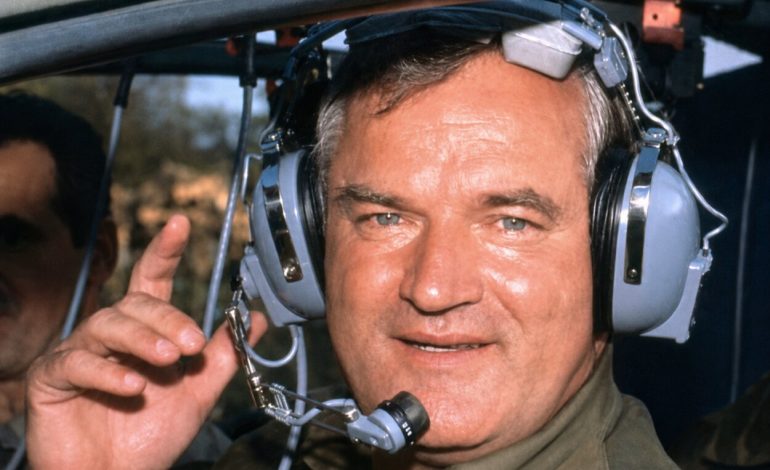
Ratko Mladic in September 1994, during the Bosnian War.

New Delhi: Ratko Mladic, the former Bosnian Serb military commander convicted of genocide over the Srebrenica massacre, died in United Nations custody in The Hague on Thursday, aged 84. His death closes the life of one of the Bosnian war’s most notorious figures, but it leaves unresolved the deep divisions over his crimes that continue to shape politics and public memory across the Balkans.
Serbian state broadcaster RTS and Bosnian Serb television first reported the death, which was subsequently confirmed by Mladic’s lawyer, Dragan Ivetic, and a UN official. No immediate cause was disclosed, although he had spent his final months in the hospital wing of the UN detention centre after years of serious health problems.
Mladic was serving a life sentence imposed by the International Criminal Tribunal for the former Yugoslavia in November 2017 for genocide, crimes against humanity and violations of the laws and customs of war. The tribunal’s successor, the International Residual Mechanism for Criminal Tribunals, upheld the convictions and sentence on appeal in June 2021.
The judges found him responsible for persecution, extermination, murder, deportation, forcible transfer, attacks on civilians, hostage-taking and a campaign designed to terrorize Sarajevo. They also concluded that he participated in a series of joint criminal enterprises intended to drive Bosniaks and Croats from territory claimed by Bosnian Serb leaders and to eliminate the Bosniak population of Srebrenica.
The most consequential finding concerned the killing of more than 8,000 Bosniak men and boys after Bosnian Serb forces captured Srebrenica, a UN-designated safe area, in July 1995. Women, children and elderly residents were forcibly removed, while prisoners were taken to execution sites and their bodies buried in mass graves, some of which were later reopened so that the remains could be moved and the evidence concealed.
The massacre, judicially recognized as genocide, is widely regarded as the worst atrocity committed on European soil since the Second World War. Images of Mladic reassuring frightened families and distributing sweets to children before men and boys were separated for execution became enduring evidence of the calculated deception surrounding the operation.
Mladic’s forces were also central to the siege of Sarajevo, during which Bosnian Serb artillery and snipers positioned around the capital repeatedly attacked civilian neighbourhoods. More than 10,000 people were killed during the siege, part of a conflict that claimed over 100,000 lives and displaced about 2.2 million people between 1992 and 1995.
A career officer in the communist-era Yugoslav People’s Army, Mladic was appointed commander of the newly established Army of Republika Srpska on May 12, 1992, soon after Bosnia and Herzegovina declared independence from Yugoslavia. Backed militarily and politically by Belgrade under the then president of Serbia, Slobodan Milosevic, Bosnian Serb forces rapidly seized much of the country and conducted campaigns of expulsion, detention and violence against non-Serb communities.
Mladic worked closely with the wartime Bosnian Serb political leader, Radovan Karadzic, who was also convicted of genocide and sentenced to life imprisonment. The tribunal determined that both men participated in the effort to create permanently Serb-controlled territory by removing Bosniaks and Croats through violence and intimidation.
The tribunal first indicted Mladic in July 1995, but he remained commander of the Bosnian Serb Army until November 1996 and then avoided arrest for nearly 15 years. For part of that period, he lived with relative freedom in Serbia and was reportedly protected by military, intelligence and nationalist networks before disappearing from public view.
Serbian authorities arrested him on May 26, 2011, at a relative’s home in the village of Lazarevo, north of Belgrade, and transferred him to The Hague five days later. The once physically imposing commander appeared frail, having reportedly suffered several strokes, but retained the confrontational manner that characterized both his military career and his years before the tribunal.
Mladic never accepted responsibility or expressed remorse for the crimes established by the court, instead rejecting the tribunal’s legitimacy and accusing its judges of lying when his sentence was pronounced. His repeated demands for release on medical or compassionate grounds were rejected, including after a UN doctor warned this month that his death could occur within weeks.
The Srebrenica Memorial director, Emir Suljagic, said Mladic’s death could neither return the dead nor alter the judgements against him, and urged survivors to ensure that truth and memory were not buried with the former commander. Kada Hotic, whose husband and son were killed at Srebrenica, said justice had been delivered when the tribunal imposed a life sentence and refused to release him.
The response from Serbian nationalist figures illustrated how sharply Mladic’s legacy continues to divide the region. The Bosnian Serb separatist leader, Milorad Dodik, called his death a “murder” and said Mladic had “stood to defend Serbs”, while the Serbian ultranationalist politician, Vojislav Seselj, alleged without offering evidence that “they killed him”.
Such admiration extended well beyond political leaders, with portraits, murals, rallies and commemorations presenting Mladic as a soldier who protected the Serbian people rather than a commander convicted of genocide and other international crimes. Reuters documented that every home in his native village displayed his portrait before the 2017 verdict; one cousin, Dusko Mladic, insisted that “he did not kill people”, while another, Mile Mladic, declared: “The general is not guilty.”
For survivors, Mladic’s death does not conclude the struggle against genocide denial or the glorification of convicted war criminals, which remains visible in murals, political rhetoric and public commemorations in parts of Serbia and Republika Srpska. His historical record is nevertheless settled in international law: he died as a convicted perpetrator of genocide, crimes against humanity and war crimes, after exhausting his appeals and serving the remainder of his life in UN custody.