




Nvidia loses record $335 billion in early trading as Jensen Huang honeytrap probe hits Wall Street bedroom bedsheets
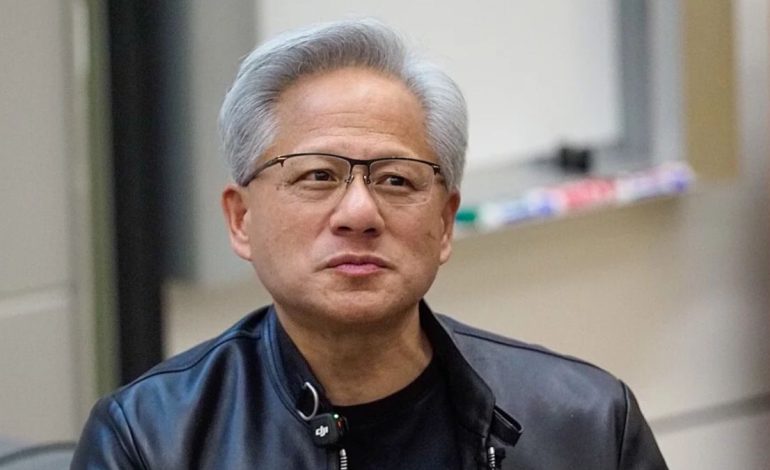
Nvidia CEO Jensen Huang. (Image courtesy: Wikimedia Commons)

New Delhi: Nvidia lost approximately $335 billion in market value during early wall street trading on Monday, as its shares plunged nearly 7.5 per cent following allegations that CEO Jensen Huang had been targeted by a Chinese intelligence operation. The sell-off followed the company’s announcement of an independent investigation, raising concerns about leadership stability, corporate governance and potential national security implications.
Nvidia shares fell to approximately $172.75 from Friday’s closing price of $186.64, reducing its market capitalization from around $4.5 trillion to $4.16 trillion, The Guardian reported.
The figures represent an early-trading estimate rather than a confirmed closing loss. Subsequent market reports recorded different percentage declines as trading progressed.
Market capitalization represents a company’s stock-market value, calculated by multiplying its share price by outstanding shares. The $335 billion decline therefore reflects investors marking down Nvidia’s valuation, not an equivalent loss of company cash.
Massive valuation loss, but not a record
Despite its scale, Monday’s decline was not the largest in stock-market history. Nvidia suffered a record single-day loss of approximately $593 billion on January 27, 2025, when its shares plunged nearly 17 per cent following the emergence of China’s low-cost DeepSeek artificial intelligence model.
The latest decline also followed November 5’s technology-sector sell-off, when Nvidia shares fell more than nine per cent, erasing nearly $450 billion in market value.
That wider downturn reflected concerns over AI infrastructure spending, expensive data-centre projects and uncertainty surrounding future investment returns.
What triggered the controversy?
Jensen Huang reportedly maintained a close personal relationship with Alice Huang, a Chinese businesswoman formerly associated with Singapore based cloud computing company Megaspeed International, the New York Times reported.
The newspaper cited intelligence assessments suggesting that Alice Huang, also known as Huang Le, had links to China’s ministry of state security and allegedly gathered information for Beijing. The allegations remain unproven through publicly available evidence.
Huang acknowledged being unfaithful to his wife in a Sunday message to employees, apologising to his family and colleagues.
“I take full responsibility for what I did,” he wrote, while pledging to cooperate with the investigation and rebuild confidence.
However, Huang did not publicly identify the woman involved in his admission, which does not establish that espionage occurred.
Nvidia’s board announced that an independent committee, assisted by outside legal counsel, would examine the allegations. The board expressed confidence in Huang and said it had no reason to believe company secrets or US national security had been compromised.
The development follows earlier reporting on Nvidia’s investigation into alleged Chinese intelligence links involving its CEO, as RNA Media reported earlier.
Megaspeed and US-China chip restrictions
Megaspeed has faced scrutiny over suspicions that advanced Nvidia processors reached Chinese customers despite American export restrictions.
Alice Huang’s previous association with Megaspeed and Singapore’s clarification concerning the allegations were examined in an earlier RNA Media report.
US authorities have investigated whether the Singapore based company facilitated access to restricted AI chips, Reuters reported.
Megaspeed has disputed allegations of illegal transfers, while no publicly established finding shows Nvidia knowingly supplied restricted processors to China through the company.
Singapore’s ministry of home affairs clarified on October 31 that authorities had not investigated Alice Huang over alleged Chinese intelligence links or her relationship with Jensen Huang. However, investigations involving Megaspeed remained ongoing.
China rejected the espionage allegations on Monday, with the foreign ministry spokesman, Guo Jiakun, describing them as baseless speculation intended to smear Beijing.
Investor confidence and national security concerns
Huang’s importance extends beyond his position as Nvidia’s co-founder and chief executive. The company’s graphics processing units power AI models, cloud platforms and data centres worldwide, making Nvidia central to the industry’s expansion.
Technology analyst, Dan Ives, warned that uncertainty involving Huang could weigh on Nvidia’s shares and intensify scrutiny of its China business. Three senior Republican lawmakers also requested a congressional briefing from Huang on November 18 concerning the allegations and Nvidia’s safeguards against foreign espionage.
The president, Donald Trump, described Huang as an “honorable guy” while acknowledging that he had not discussed the allegations with him, Reuters reported.
The wider technology market showed a mixed response, with several Asian semiconductor stocks recovering even as Nvidia declined.
For investors, the immediate question is whether the investigation uncovers governance or security failures that could affect Nvidia’s leadership and commercial relationships.
Until its findings emerge, the company faces heightened scrutiny without publicly established evidence that its technology or confidential information was compromised.