
North Korean missiles return to Ukraine as Pyongyang deepens Russia war role
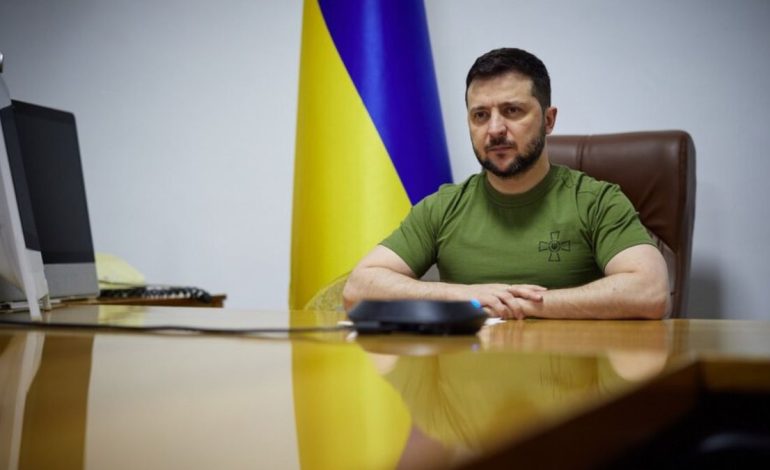
Ukrainian president Volodymyr Zelenskyy has accused Russia of using North Korean ballistic missiles in renewed strikes on Ukraine. Image Courtesy: Wikimedia Commons

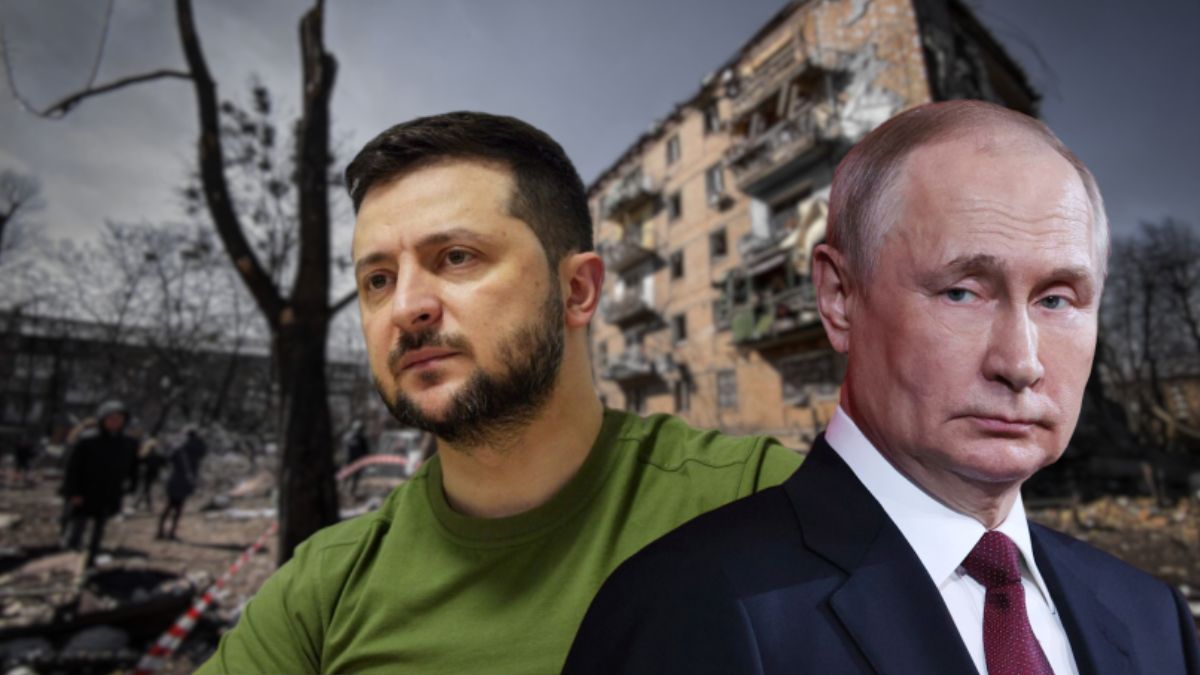
New Delhi: A Russian strike on the southeastern city of Zaporizhzhia on Wednesday has renewed scrutiny of North Korea’s role in Moscow’s war after seven workers at a steel plant were killed and 21 injured. The Ukrainian president, Volodymyr Zelenskyy, said the attack involved ballistic missiles supplied by Pyongyang, while Russia did not confirm the weapons’ origin.
The strike was part of Russian attacks that killed at least 10 civilians, according to Ukrainian authorities cited by AP. Three others, including a 15-year-old boy, were killed in the Dnipropetrovsk region.
Fresh missiles, familiar supply line
The Zaporizhzhia attack follows signs that Russia has received a fresh batch of North Korean ballistic missiles after their recorded use had fallen away for nearly a year. Ukraine’s military intelligence says a North Korean missile unit is deploying to Russia’s Voronezh region and could eventually operate up to 120 missiles and six launchers.
The agency says about 90 North Korean personnel are attached to the unit and 40 missiles have been delivered. Reuters said a US source was aware of the deployment, but the detailed numbers remain Ukrainian intelligence assessments and have not been independently verified.
The weapons include KN-23 and KN-24 short-range ballistic missiles, which Ukrainian military sources say have greater range and larger payloads than Russia’s comparable Iskander system, though they are less accurate.
Their return gives Moscow another way to pressure Ukraine’s limited high-end air-defence network.
From ammunition to troops
North Korea’s contribution is no longer confined to weapons. Ukrainian and South Korean estimates put the number of North Korean soldiers sent to Russia’s Kursk region since 2024 at about 14,000 to 15,000, and Moscow and Pyongyang confirmed in April 2025 that North Korean forces had fought Ukrainian troops there.
Ukraine’s military intelligence estimates that about 9,500 North Korean troops remain in Kursk, though it says they are not currently taking a direct role against Ukraine. Russia has also said North Korea would provide 1,000 sappers and 5,000 military construction workers to clear mines and help rebuild the region.
Zelenskyy has said between 30,000 and 50,000 additional North Koreans could be deployed on Russian territory.
He did not disclose the basis for that estimate and Reuters has not independently verified it.
Millions of rounds for Moscow
The manpower sits on top of a much larger ammunition pipeline. A Reuters investigation with the Open Source Centre tracked 64 voyages by four Russian-flagged ships to North Korea’s Rajin port between September 2023 and March 2025, moving munitions towards Russian depots supporting the war.
The 11-country Multilateral Sanctions Monitoring Team reported that North Korea may have supplied Russia with as many as nine million artillery and multiple-rocket-launcher rounds in 2024. It also said at least 100 ballistic missiles were transferred that year.
Those transfers have helped Russia sustain the high rate of fire required by a long attritional war.
The relationship is also giving North Korea something difficult to buy combat experience. The sanctions-monitoring team said North Korean troops had gained first-hand military experience in Russia, while South Korean assessments have pointed to possible Russian assistance in advanced military technology.
Long-term partnership
North Korean troops have been exposed to drones, artillery coordination and other features of a modern battlefield, while South Korean intelligence assessments say Pyongyang has received economic assistance and military technology from Russia. The precise scale of that exchange remains difficult to verify, but both governments have made their military relationship increasingly explicit.
The Russian president, Vladimir Putin, and North Korean leader Kim Jong-un signed a comprehensive strategic partnership treaty in June 2024 that includes a mutual assistance provision if either country faces armed aggression.
The ties are also being institutionalized beyond immediate wartime needs. In April, the Russian defence minister, Andrei Belousov, said the two countries planned to sign a military cooperation programme covering 2027 to 2031.
For Moscow, North Korea supplies manpower and munitions for a long war. For Pyongyang, Russia offers resources, technology and battlefield experience that could strengthen North Korea’s armed forces well beyond Ukraine.