


Malaysia courts Indian firms for Asean expansion as trade focus shifts beyond palm oil

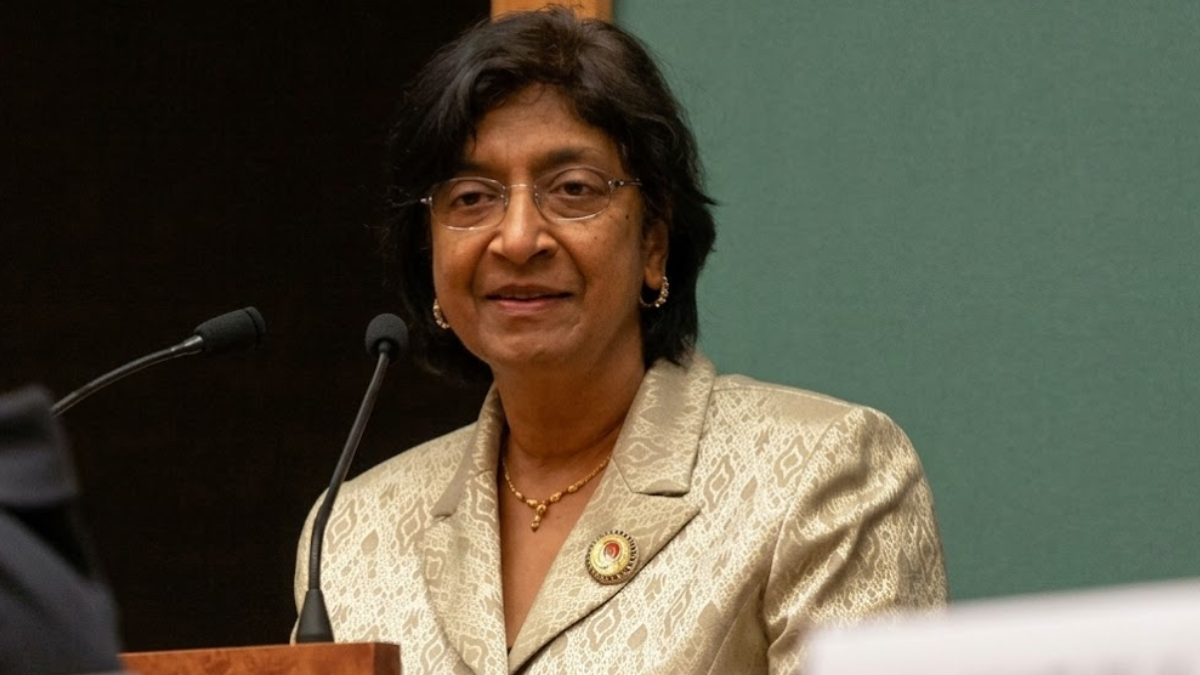
The plantation and commodities minister, Noraini Ahmad, (Image courtesy: X/@MyKomoditi)

New Delhi: Malaysia is positioning itself as a base for Indian companies seeking customers and manufacturing partners across the Association of Southeast Asian Nations (Asean), as it seeks to broaden trade beyond palm oil. The proposal from the country’s plantation and commodities minister, Noraini Ahmad, focuses on rubber, timber, research, technology and higher-value manufacturing rather than a new market-access agreement.
The minister identified opportunities for Malaysian medical gloves and industrial rubber products in India’s healthcare, automotive and manufacturing sectors. She also pointed to furniture, engineered wood and construction components as areas for cooperation.
“Malaysia can also serve as a strategic gateway for Indian companies seeking to expand into the wider Asean market, while India remains an important market and partner for Malaysian businesses. Our focus is to translate these opportunities into practical cooperation and commercially meaningful partnerships that benefit both countries,” Ahmad said in a written interview with ANI.
Malaysia wants businesses to explore downstream processing, commercially viable investment and production partnerships, while government agencies facilitate contacts and discussions on market access. The interview did not announce any signed investment or supply agreement.
Access to southeast Asia
For Indian companies, a Malaysian base could provide access to regional suppliers, manufacturers and customers, complementing India’s Act East Policy. But operating in Malaysia would not automatically confer preferential access across Asean, where national regulations, product standards and applicable trade rules still matter.
India-Asean trade reached $114.1 billion in calendar year 2025, while foreign direct investment inflows from India totalled $7.1 billion, according to preliminary statistics released by the Asean secretariat on September 22. India was the bloc’s eighth-largest trading partner.
India and Malaysia upgraded ties to a comprehensive strategic partnership in August 2024. Their trade relationship is supported by a bilateral comprehensive economic cooperation agreement, effective since July 2011, and the Asean-India trade in goods agreement, which is undergoing review.
From palm oil to processing
The established commodity relationship gives the proposal a commercial starting point. Malaysia shipped 2.94 million tonnes of palm oil and palm-based products to India in 2025, worth RM14.15 billion, according to the Malaysian palm oil council. Malaysian palm oil shipments rose 40.4 per cent to 2.26 million tonnes in the first eight months of 2026.
Bilateral merchandise trade stood at approximately $21 billion in India’s 2025-26 financial year, India Brand Equity Foundation figures show.
Ahmad visited India from September 27 to October 1 for industry and government engagements. Earlier, the prime minister, Narendra Modi, and his Malaysian counterpart, Anwar Ibrahim, reviewed bilateral trade and investment cooperation during their September 12 meeting on the sidelines of the 18th BRICS Summit in New Delhi.