
Lula’s campaign accuses Trump of seeking to ‘colonize’ Brazil and seize its resources
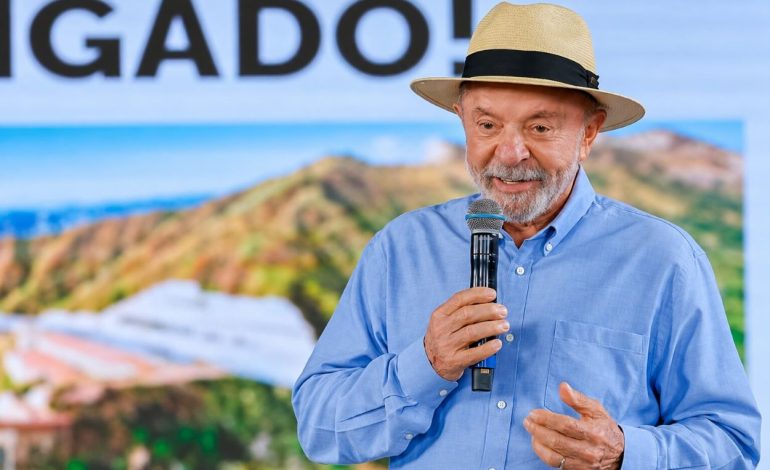
Luiz Inacio Lula da Silva during a campaign speech. (Photo: X/@LulaOficial)

New Delhi: The Brazilian president, Luiz Inacio Lula da Silva, has stepped up his confrontation with the US president, Donald Trump, with a campaign advertisement accusing Washington of seeking control of Brazilian resources through electoral interference. The attack targets his challenger, Flavio Bolsonaro, before October’s presidential vote.
The advertisement released on Thursday portrays Bolsonaro as Trump’s preferred candidate and alleges an ambition to “colonize” Brazil. Its resource-grab accusation is a campaign claim, rather than an independently established finding.
Washington has rejected allegations that it is trying to undermine the election, describing them as a “baseless lie”. The state department’s response also said the US respected Brazilians’ right to choose their government and had maintained successful relations with administrations across the political spectrum.
The dispute has become increasingly consequential as polling points to a closely fought contest between Lula and Bolsonaro, a senator and son of the former president, Jair Bolsonaro. The first round is scheduled for October 4 with a run-off on October 25, 2026, if nobody secures more than half the valid votes.
Two surveys reported by Reuters on September 21 showed the candidates statistically tied in a potential second round: Quaest put Bolsonaro at 42 per cent and Lula at 41 per cent, while BTG Pactual/Nexus placed Lula at 46 per cent against 45 per cent. Both differences were within the surveys’ two-percentage point margins of error, although Lula led their first-round scenarios.
Lula had already raised the issue internationally in his UN general assembly address on Wednesday, warning against attempts by domestic or foreign actors to undermine the vote. Without naming Trump, he defended Brazil’s electoral system and argued that international help against organized crime should take the form of cooperation, rather than intervention.
Concerns about external pressure have also surfaced within Brazil’s security establishment, according to reporting by Folha de S Paulo. The newspaper said a confidential assessment by the Brazilian intelligence agency, Abin, sent to the presidency, electoral authorities and justice ministry in late August, identified a critical risk of US influence and interference.
According to Folha’s account, the assessment linked mounting pressure to Washington’s pursuit of greater regional influence and access to strategic assets, natural resources and infrastructure. It cited trade retaliation and sanctions, warning that restrictions could affect Brazilian businesses through their financial relationships, access to dollars and exposure to further penalties.
These were the Brazilian agency’s assessments, as reported by the newspaper, rather than publicly adjudicated findings of electoral wrongdoing. Their significance lies in the warning that economic and diplomatic measures could influence the political environment without directly interfering with ballot counting.
In Washington, 31 Democratic lawmakers challenged the administration over alleged interference. They asked the secretary of state, Marco Rubio, to respect Brazil’s electoral process.
The confrontation follows an earlier diplomatic dispute over visas, during which Brazil denied entry to two US officials and Washington subsequently revoked the visa of Brazil’s ambassador, Maria Luiza Ribeiro Viotti. Brasília alleged that the proposed visit was intended to question its electoral system, while Washington said the officials planned routine discussions on election integrity and fundamental freedoms.
The emphasis on resources has a substantial economic backdrop: the US Geological Survey’s 2026 assessment lists Brazilian rare-earth reserves at about 21 million tonnes. That mineral wealth helps explain the strategic importance of access to Brazilian deposits, but does not itself establish the campaign’s allegation about Washington’s intentions.
The election also tests whether Bolsonaro’s political movement can retain its strength under a new candidate, with his father barred from the contest and serving a sentence for plotting to overturn the 2022 result. Lula, meanwhile, is seeking a fourth presidential term in a race where economic pressures, healthcare and public security remain central concerns alongside the increasingly bitter argument over national sovereignty.