


Israel demolishes Hebron neighbourhoods after gunmen kill 2 IDF soldiers in West Bank town, fuels ‘collective punishment’ fears
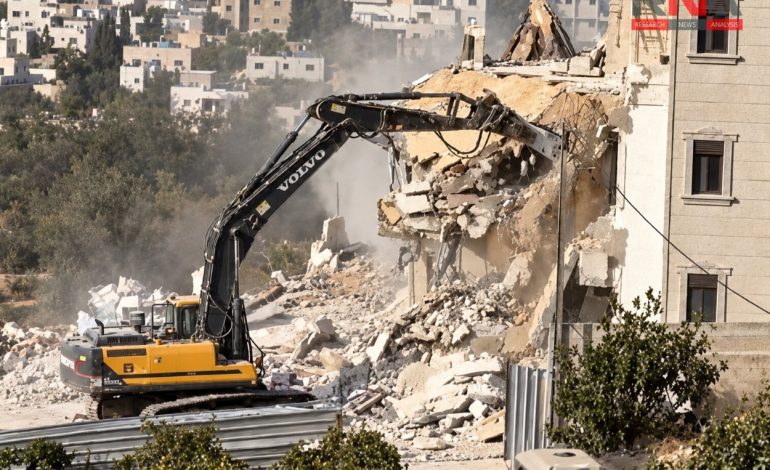
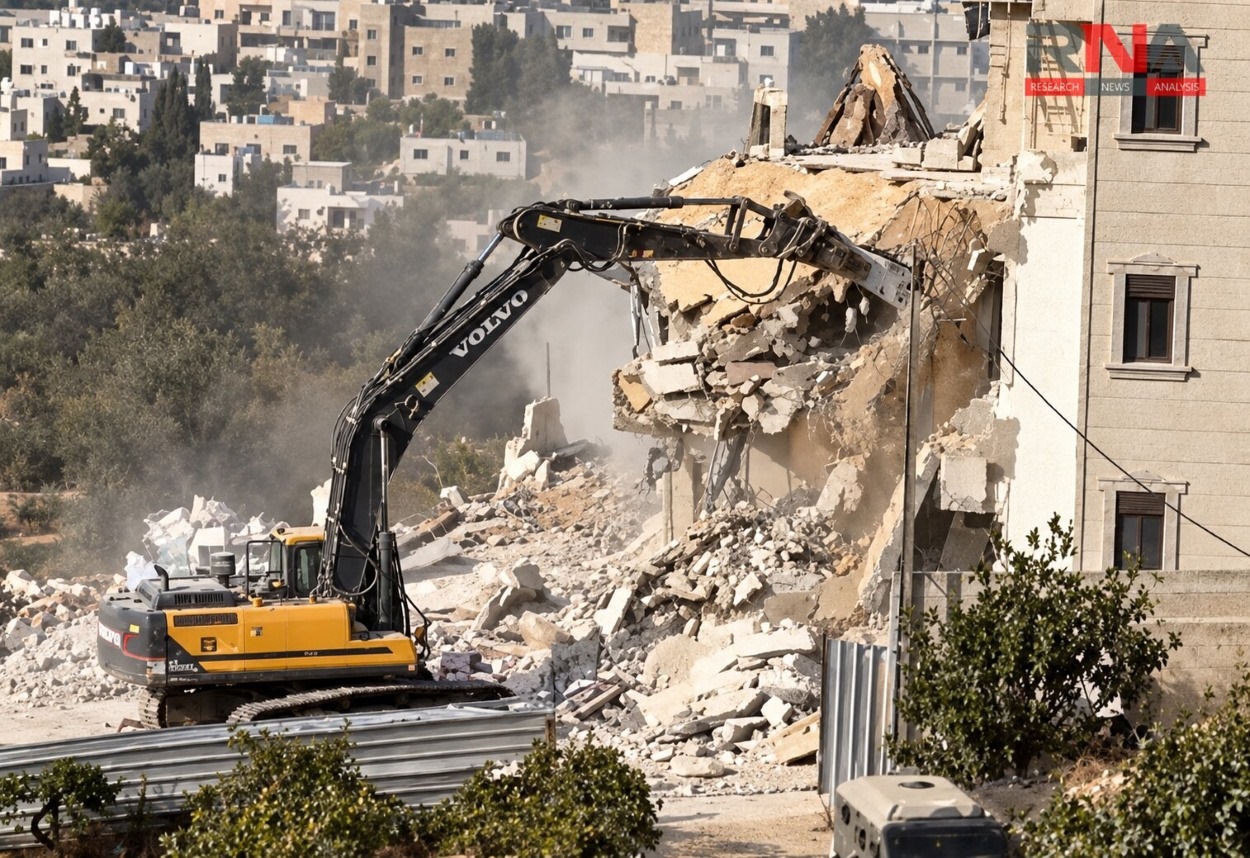
This digitally enhanced screenshot of a widely posted video on social media shows an Israeli excavator demolishing a multistorey Palestinian residential building in Hebron, West Bank, Occupied Palestine.

New Delhi: Israeli forces have demolished Palestinian homes and businesses and driven hundreds of families from their neighbourhoods in Hebron, following an attack that left two Israeli soldiers dead in the occupied West Bank. The operation has left civilians facing the loss of their homes and livelihoods, while Palestinian officials accuse Israel of imposing collective punishment days before its parliamentary election.
The Palestinian news agency Wafa reported that about 1,500 people had been forced from the Deir Baha and al-Jilda areas by Saturday. An earlier municipal estimate put the number at around 1,200, with further displacement feared as Israeli forces continued searches and demolitions.
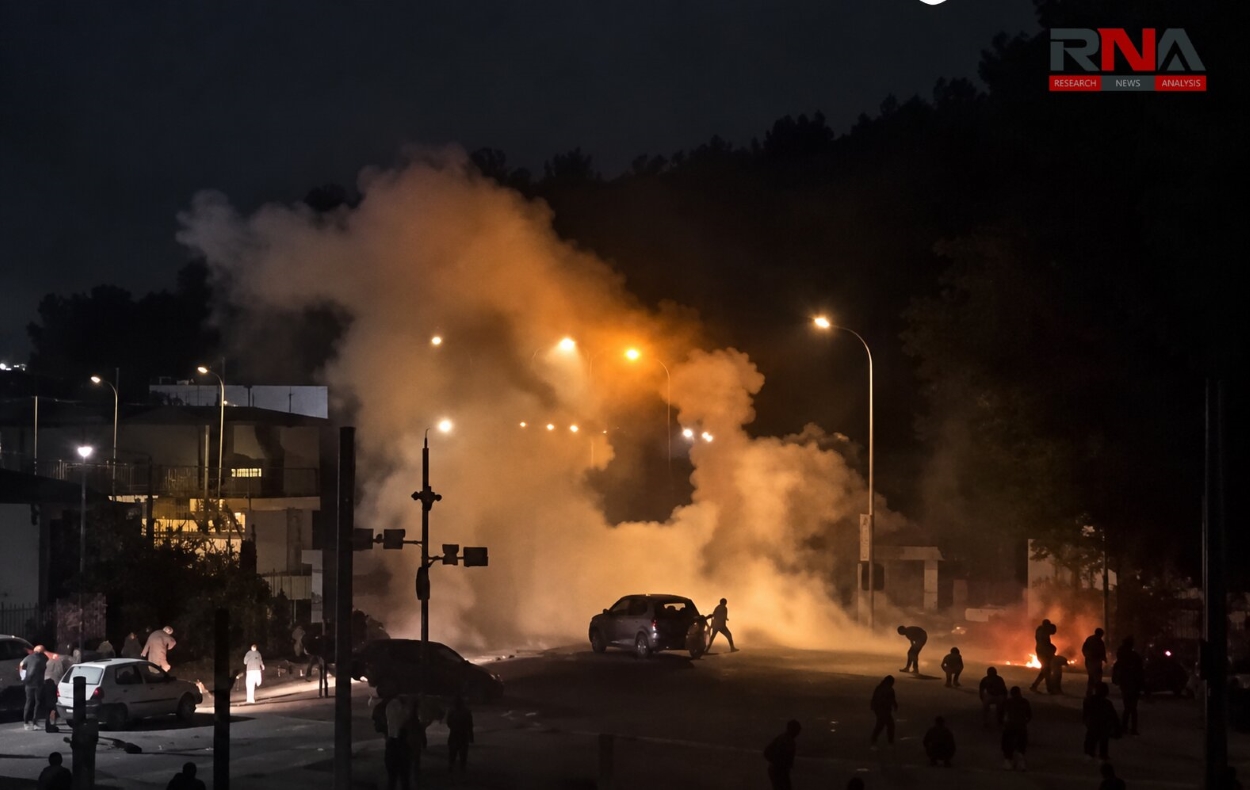
The crackdown followed a shooting near Hebron on October 23, when two Palestinian gunmen killed two Israeli soldiers and wounded three others before being killed themselves. The prime minister, Benjamin Netanyahu, subsequently promised a sweeping military response and said part of the city would be evacuated and demolished, as RNA Media had reported.
Netanyahu’s intervention came ahead of Israel’s election on October 27, with security dominating the campaign. His far-right coalition partners also demanded tougher action against Palestinians, linking the response to the attack with calls to strengthen Israeli settlements in the occupied territory.
The finance minister, Bezalel Smotrich, appeared beside a bulldozer and announced that Palestinian buildings allegedly constructed without permits would be demolished. According to Associated Press, he did not establish any connection between their owners and the gunmen.
For residents, the consequences extended beyond the immediate shooting site. Families described being expelled despite having no involvement in the attack, while closures obstructed access to essential care, including one father’s journey with his daughter for cancer treatment in Jerusalem.
Wafa separately reported that soldiers removed families from homes in Khallet Manna and the al-Zaytoun suburb and converted the properties into military positions. Citing local sources, it said other houses overlooking surrounding neighbourhoods were evacuated and used as observation posts.
Israel’s military said its operation sought militants and weapons, and that arms found in the attackers’ vehicle suggested they had intended to attack civilians. It also described demolitions near the shooting site as measures against unauthorized structures and potential security threats.
Those explanations have not resolved the central legal concern: whether civilians are being punished for acts they did not commit. The destruction also prompted judicial intervention, with Israel’s high court temporarily halting demolitions on October 23 following an urgent petition.
Article 33 of the Fourth Geneva Convention prohibits collective penalties and punishment of protected people for offences they have not personally committed. It also prohibits reprisals against protected civilians and their property, making individual responsibility a fundamental limit on an occupying power’s response to violence.
The convention places separate restrictions on destruction and displacement. Article 53 prohibits an occupying power from destroying property unless military operations make it absolutely necessary, while Article 49 permits evacuation only under limited conditions involving civilian safety or imperative military reasons.
These provisions mean that a deadly attack does not provide unrestricted authority to demolish neighbouring homes or displace their occupants. Assessing each action requires examining its purpose and necessity, including whether it addresses a concrete military requirement or penalizes a wider community for the conduct of particular individuals.
The operation unfolds against the broader legal dispute over Israel’s occupation. In its July 19, 2024 advisory opinion, the international court of justice found Israel’s continued presence in the occupied Palestinian territory unlawful and said it must cease new settlement activity.
The court also emphasized that the occupation’s unlawfulness does not remove Israel’s responsibilities towards Palestinians under its control. Those obligations continue until its presence ends – including the protections governing civilian homes, property and displacement now at issue in Hebron.