Iran uses secret network to import $2.3 billion in military equipment despite sanctions
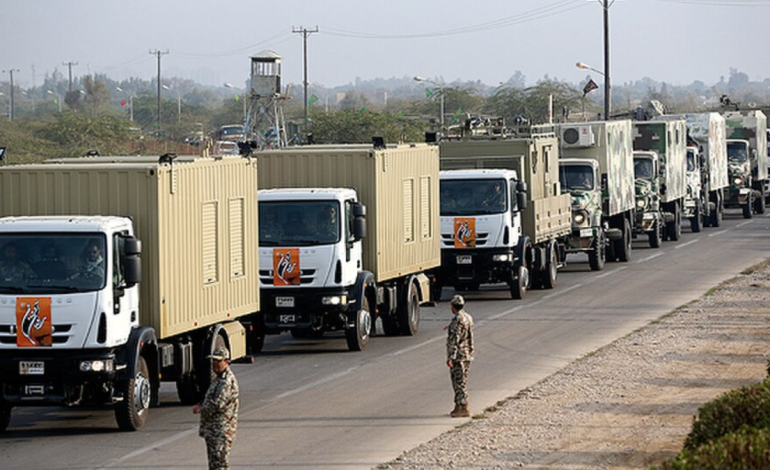
Representational image. (Image courtesy: Wikimedia)

New Delhi: Iran used a network of more than 5,000 secret military agencies to import weapons-related materials, explosives and heavy-duty trucks while evading western sanctions. The imports supported the country’s missile and drone programmes, including during the war that began on February 28.
The agencies operate under names linked to Iran’s ministry of defence and armed forces logistics (MODAFL). They use intermediaries and foreign companies to purchase goods from overseas, with records linking some agencies to the Islamic Revolutionary Guard Corps (IRGC).
A Reuters investigation, conducted with Israeli-American risk consultancy 240 analytics, found that one agency, MOD 346428, imported military hardware worth $2.3 billion between January 2025 and June 2026. The investigation examined Iranian bank records, corporate filings, shipping documents and import data.
The agency imported rocket fuel ingredients, explosives, aircraft engine parts and heavy-duty trucks. Records listed China, Russia and European Union countries among the origins of various shipments. The materials included 93 tonnes of unwrought Chinese titanium delivered to Bandar Abbas on February 9 which can be used to manufacture missile components.
Between January and April 2025, the agency also imported 886 tonnes of chemicals from China, including sodium chlorates and other perchlorates used in solid rocket fuel. An explosion at Bandar Abbas on April 26, 2025, killed at least 70 people and injured more than 1,200. The investigation could not establish whether chemicals from the final 75-tonne shipment caused the blast.
The agency imported 435 Iveco trucks between January 2025 and June 2026. Some were traced to a customs yard outside Tehran using satellite imagery, social media footage and vehicle identification numbers. The network also brought in thousands of Toyota Hilux and Land Cruiser vehicles, which Iran’s military has displayed during parades.
Records linked an earlier purchase of six Iveco trucks in 2022 to Sahara Thunder, an Iranian entity sanctioned by the United States in 2024 for supplying drones to Russia. Iveco said it had safeguards against sales to prohibited destinations and no control over goods transferred by third parties without a direct contractual relationship. Toyota said it had no knowledge of the purchases identified in the investigation.
The agencies used foreign intermediaries and financial arrangements to avoid cross border money transfers. Around 97 per cent of the shipments examined were settled through transactions recorded as taking place “without currency transfer”. The procurement network was also linked to proceeds from illicit oil sales.
Bank records showed that 36 agencies held foreign exchange accounts containing $1.2 billion at the end of 2024. The remaining agencies collectively held around $1.8 billion in local currency. Phone numbers associated with 91 agencies also appeared in records of Bank Sepah, which handles salary and pension payments for IRGC personnel.
The United States treasury department said Washington had severed Iran’s economic lifelines and remained ahead of attempts to evade sanctions. China’s foreign ministry said it was unaware of the specific circumstances described and opposed attempts to link regional hostilities to China. Iranian government entities and companies contacted for comment did not respond. Russia’s defence ministry, the White House and the US central command also did not respond.