
Iran-Oman shipping pact for Hormuz could hand Tehran lasting leverage over key strait
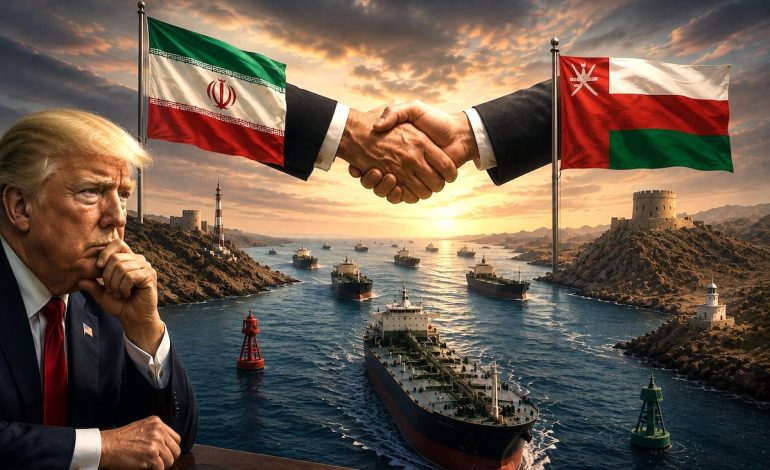
RNA Media illustration for representation.

New Delhi: Iran and Oman are edging towards an agreement to restart commercial shipping through the Strait of Hormuz, but the arrangement being negotiated may end up cementing Tehran’s grip over a waterway that was, until the war, open to all. Iranian and American officials familiar with the discussions say the emerging framework would split the strait into two corridors – one hugging the Iranian coast for vessels entering the Persian Gulf, and another running close to Omani waters for ships heading out.
Tehran’s account and Washington’s account of the deal, notably, do not match. Iranian officials describe a “service fee” – not a toll, they insist – meant to cover environmental costs, cargo security and staffing, with proceeds split evenly between Iran and Oman. A US official familiar with the talks dismissed this version as “not accurate”, maintaining that any temporary routes agreed upon would involve neither Iranian approval nor any charges whatsoever.
Iran’s foreign minister, Abbas Araghchi, said on Sunday that the negotiations with Muscat were entering their “final stages”, even as he insisted the strait would never revert to its pre-war status. The foreign ministry spokesman, Esmail Baghaei, told Iranian state television that the two sides were converging on a route that was neither the existing northern nor southern corridor, but one respecting the sovereign interests and security concerns of both countries.
For the US president, Donald Trump, a reopened strait would resolve his most pressing political headache. Iranian officials, however, maintain that the passage will stay shut regardless of any Oman-brokered deal until Washington lifts its naval blockade of Iranian Gulf ports and both sides return fully to the 14-point Islamabad memorandum of understanding.
Washington could ease global market pressure further still, some officials suggest, by granting sanctions exemptions that would let Iran legally sell and deliver its oil. That option remains under discussion, but no formal decision has been announced.
The geopolitical cost of the deal is what worries Washington’s own diplomats. Iranian officials have been candid that they are shaping the accord specifically to ratify their capacity to control the strait, securing a form of strategic leverage they never possessed before the war began.
Such an outcome would directly contradict the position staked out repeatedly by the US secretary of state, Marco Rubio, who has insisted the strait must revert to the open international waterway it was before the United States and Israel struck Iran on February 28 this year. Speaking recently at a gathering of Southeast Asian officials, Rubio warned against any precedent where a nation state could unilaterally control an international waterway, charge a toll and threaten to strike ships that refused to pay – calling it “a very dangerous precedent, which will repeat itself in other parts of the world.”
Rubio framed the stakes in broader terms too. He argued that freedom of navigation, and the rules that have underpinned a century and a half of international trade, were themselves under threat and could not be allowed to erode.
Trump has said comparatively little in public about the specifics of the emerging pact. He did credit the renewed round of negotiations with persuading him to call off a broader new assault on Iran over Saturday and Sunday, after warning on Truth Social that the US was “locked and loaded” before agreeing, at Tehran’s request and with regional appeals including one from Saudi Arabia’s crown prince, Mohammed bin Salman, to hold fire.
The deal reportedly gives Iran and Oman 60 days to finalise the reopening of the strait. Within that same window, the US and Iran are expected to resume talks on the fate of Iran’s stockpile of roughly 11 tonnes of enriched uranium, including about half a tonne of material now close to weapons grade.
Washington wants that fuel diluted so it cannot readily be converted into a weapon, and ultimately shipped out of Iran, either to the United States or to a third country where it can be disposed of or diverted to civilian nuclear power use. A plan signed in mid-June 2026 by the US vice-president, JD Vance, and separately by Trump, had both men declaring confidently that a nuclear accord could be struck within 60 days.
That deadline is now due to lapse within a fortnight, and officials privately concede that substantive negotiations, if they begin at all, are likely to run well into the autumn and possibly beyond. Some officials doubt an accord will materialise at all, suggesting Trump may simply declare that Iran’s enriched stockpiles ought to remain buried beneath the rubble of the air strikes carried out on three nuclear facilities in June 2025.
Reopening the strait nonetheless carries real political weight for Trump. “You’ll find out today or tomorrow,” he told reporters at the White House, adding that matters would move quickly one way or another and were “not very complex”. He has repeatedly predicted the strait could reopen “literally by tomorrow” – a claim he has made on several occasions in recent months without it coming to pass. He also outlined a sequence: strait reopening first, denuclearisation second.
Scepticism runs deeper inside the Pentagon than the White House lets on. Current and former officials briefed on internal deliberations say some senior figures regard the Omani-Iranian arrangement as tantamount to capitulation. They point out that the route running from the Gulf through the strait via Omani waters remains heavily mined, meaning ships would still need to coordinate movements with Iran to transit safely.
Even within Iran, doubts persist about whether the accord will function as intended and lift the risk of renewed American strikes. Mahdi Mohammadi, a senior adviser to Iran’s lead negotiator, told state television on Monday night that talks between Tehran and Muscat over managing the strait were proceeding separately from the wider war with Washington.
Both sides have accused each other of violating the earlier ceasefire framework. Iran contends the US breached the peace plan by directing ships through the southern route near Oman, given that the original language on who controlled the strait was left deliberately vague; the US and allied officials, in turn, note that Iran fired on vessels transiting the Gulf without its permission.
The US Central Command has continued escorting commercial vessels along that southern route, even as those ships remain within range of Iranian missile batteries. Trump has twice in the past fortnight overruled a plan by the Centcom commander, Admiral Brad Cooper, for a short, sharp bombardment of the sites from which those threats originate, alongside other military targets – underscoring his preference for reopening trade over further escalation, even at the cost of ceding Iran some measure of control.
Ali Vaez, deputy director of the Middle East programme at the International Crisis Group, said Iran regards its hold over the strait as the one tangible gain to emerge from the war, and that any settlement along these lines would leave Tehran better positioned than before the latest round of fighting began. He described Trump’s dilemma starkly: any solution leaving Iran in control of the strait would be a hard sell domestically, yet no military option exists to strip that control away by force – leaving the US president caught, in Vaez’s words, between an unwinnable war and an unpalatable peace.
The strait carries roughly a fifth of the world’s oil consumption on a normal day, and its closure since early March has left well over a hundred million barrels of crude, along with tens of millions of barrels of refined fuel, stranded aboard tankers across the region. A June ceasefire had briefly reopened the waterway before collapsing within weeks over disputes about shipping routes, with fighting resuming in July – a pattern that has left markets and mariners alike bracing for further twists before any durable settlement takes hold.