


Iran draws nuclear red line, refuses to send enriched uranium abroad as US peace talks stall
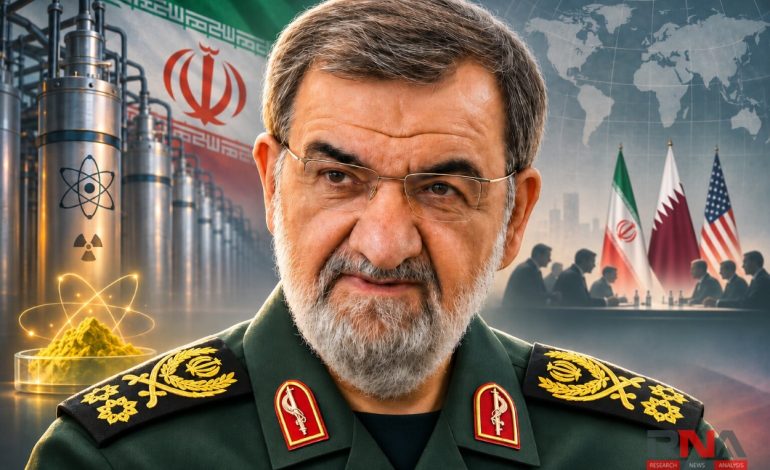
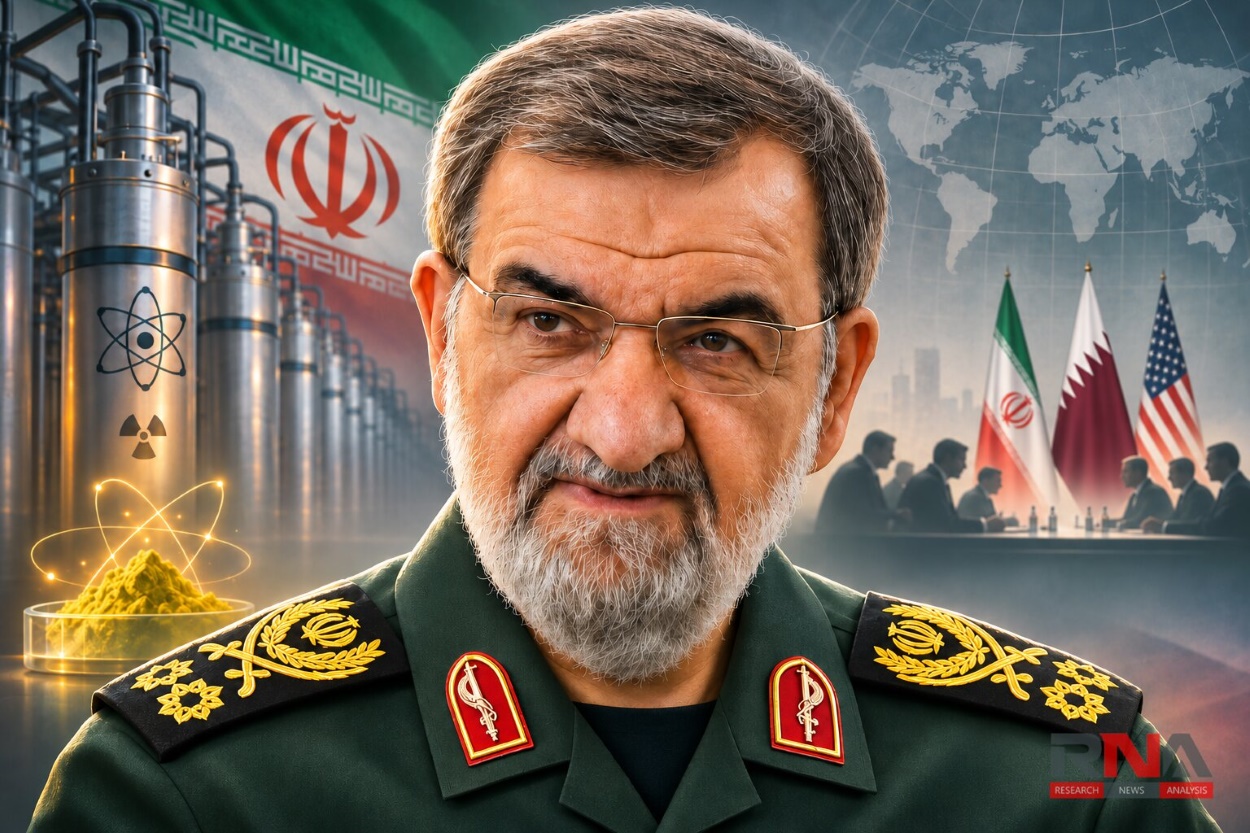
RNA Media illiustration featuring Mohsen Rezaei for representation.

New Delhi: Iran has categorically rejected transferring any of its enriched uranium stockpile overseas, complicating efforts to negotiate a settlement with the United States and resolve the continuing military and economic confrontation in West Asia. The declaration, which also rules out sending nuclear material to Russia for safekeeping, comes as Washington and Tehran remain divided over nuclear restrictions, sanctions relief and reopening the strategically important Strait of Hormuz.
The secretary of Iran’s supreme national security council, Mohsen Rezaei, outlined Tehran’s position in an interview with Lebanon’s Al Mayadeen television, insisting that the country would retain its entire enriched nuclear stockpile for domestic purposes. He said Moscow had already been informed of the decision, effectively rejecting a proposal under which Russia could receive Iranian uranium as part of a wider diplomatic agreement.
Rezaei justified the decision by citing Iran’s intention to develop nuclear-powered ships and submarines, suggesting that Tehran regards its enriched uranium reserves as strategically valuable beyond civilian electricity generation. However, nuclear naval propulsion presents particular proliferation concerns because the level of enrichment required depends on reactor design, and some naval reactors use highly enriched uranium.
The announcement directly challenges one of the potential confidence-building measures discussed in previous attempts to resolve the Iranian nuclear dispute. Transferring enriched uranium abroad would reduce the quantity immediately available to Tehran and could provide international inspectors with greater assurance that the material was not being diverted towards weapons production.
Uncertainty over Iran’s nuclear stockpile
According to the International Atomic Energy Agency, Iran possessed approximately 440.9 kilograms of uranium enriched to 60 per cent purity before Israeli and American strikes targeted its nuclear installations in June 2025. That concentration is substantially above the levels normally required for commercial nuclear power generation and relatively close to the approximately 90 per cent enrichment associated with weapons-grade uranium.
The actual location, condition and quantity of the remaining material have become major concerns because international inspectors have been unable to establish how much survived the attacks. Subsequent strikes during the conflict that began on February 28, 2026, have further complicated assessments of Iran’s nuclear infrastructure, particularly at Fordow, Natanz and Isfahan.
Iran maintains that its nuclear programme serves exclusively peaceful purposes, rejecting longstanding accusations by the United States, Israel and other Western governments that it seeks nuclear weapons. Nevertheless, the absence of comprehensive independent verification has increased uncertainty about the status of its enriched uranium, making an internationally acceptable settlement more difficult.
Peace negotiations face fresh obstacles
Rezaei also dismissed reports that he was preparing to meet the US vice-president, JD Vance, in Qatar, denying that direct negotiations between Tehran and Washington were under way. He claimed that suggestions of an imminent diplomatic breakthrough were intended to calm international energy markets and reduce oil prices rather than reflect any genuine progress towards an agreement.
The Iranian security chief said Tehran had submitted seven conditions for ending the confrontation and was awaiting a satisfactory American response. These reportedly include sanctions relief, access to frozen Iranian assets, an end to the US naval blockade and guarantees against renewed military attacks, with Tehran also demanding an end to hostilities across West Asia, particularly in Lebanon.
The Strait of Hormuz, through which a substantial share of internationally traded petroleum normally passes, remains a central bargaining point in the dispute. Iran has linked its reopening to concessions from Washington, extending the conflict’s economic consequences beyond the immediate region and threatening energy-importing economies, including India.
Meanwhile, the US secretary of state, Marco Rubio, said on November 10 that Washington saw little immediate need for further large-scale military operations because sanctions and the naval blockade were exerting severe economic pressure on Tehran. Speaking after G7 discussions in Paris, Rubio indicated that the administration of the US president, Donald Trump, intended to maintain pressure rather than immediately resume extensive airstrikes.
Tensions escalated further on Wednesday when Iran’s foreign minister, Abbas Araghchi, condemned an American offer of up to $20 million for information about Iranian nuclear facilities, equipment and personnel. In a letter to the United Nations and the IAEA, Araghchi warned that the initiative could encourage espionage and endanger nuclear scientists, demanding its explicit condemnation.
The nuclear dispute has remained unresolved since Washington withdrew from the 2015 nuclear agreement in 2018, subsequently restoring extensive sanctions against Tehran. That agreement had restricted Iran’s enrichment activities and nuclear stockpile in exchange for sanctions relief, establishing verification arrangements that have progressively weakened following years of confrontation.
Rezaei’s latest declaration therefore narrows the diplomatic options available to both governments, particularly if Washington continues to insist that nuclear restrictions form part of any initial settlement. With Tehran unwilling to surrender control of its enriched uranium and international inspectors unable to verify its remaining stockpile, the prospects of a comprehensive agreement remain uncertain.


