

In daring military operations, Nigeria rescues 360 hostages from Boko Haram group in Borno
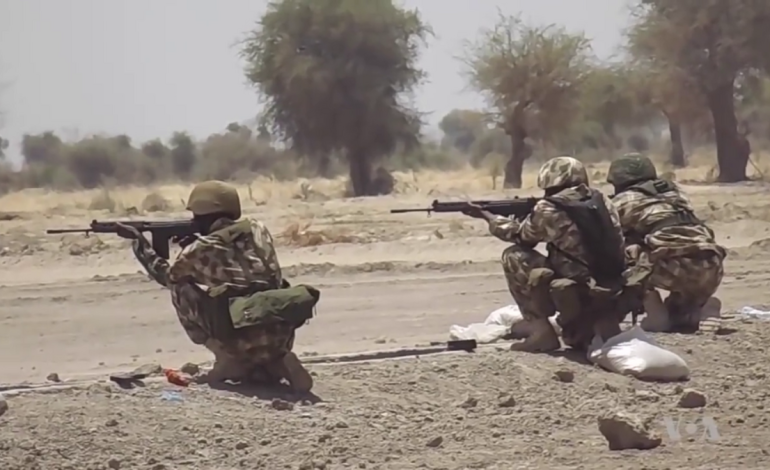
REpresentational image. (Image courtesy: Wikimedia)

New Delhi: In a daring operation based on intelligence inputs, Nigeria’s security forces have rescued 360 persons held captive in a mountain in the northeastern Borno state by an insurgency group opposed to the government in Abuja. The abducted persons, including men, women, and children, were in the captivity of Jama’atu Ahlis Sunna Lidda’awati wal-Jihad, or JAS, in the Mandara mountains in the Borno state, close to the local provincial capital, Maiduguri. JAS is the Arabic name of Boko Haram’s Borno faction – an African organization connected to several instances of violence and terrorism.
The Nigerian military said, in a statement, that a joint task force, which included special forces, conducted the rescue operation. A gunfight in the mountains led to the JAS fighters abandoning their positions and fleeing from the battlefield, leaving the abductees unattended. The Nigerian forces, later, reached the abducted persons and rescued all of them from the JAS hideout.
Those in the JAS captivity were persons belonging to various communities of Nigeria and were held prisoners by the armed insurgent group. JAS had demanded millions of Nigerian naira in ransom for the release of the captives. Two of the abducted children had previously died in captivity due to exhaustion and the impact of the harsh environment in the Mandara mountains in the southern part of Borno state.
Nigerian forces’ rescue operations
According to the Nigerian military, its forces surrounded the Mandara mountains, where the JAS fighters were holding the 360 people hostage under “harsh conditions” and began a gunfight with the insurgents. After hours of gunfight, the JAS fighters fled the scene and vanished into the surrounding mountains. Some of the fighters surrendered to the Nigerian forces, though the military did not offer a comment on whether they were arrested and sent to prison.
The Nigerian military gathered intelligence on the JAS fighters and the hostages at the site where they were held up. The military also mounted “psychological operations” to sow “mistrust within the insurgent ranks” before “the commencement of the assault phase.” A Nigerian military spokesperson said, “The remaining rescued abductees were successfully evacuated to safe locations for medical care and humanitarian support, marking a major operational success and a significant setback for the terrorist group.”
Boko Haram insurgency in Nigeria
Nigeria, a West African nation, has fought insurgency within its territory for years and has struggled to handle insecurity. Among the local social strife includes a herder-farmer conflict, kidnapping gangs, armed religious groups, and community defence militia in its northern areas. The widespread crimes, terror incidents, mass kidnappings, and ever-growing presence of armed groups across Nigeria, Africa’s most populous nation, have gathered international attention for several years now.
Borno state is the epicentre for an insurgency movement, which resulted in a growing number of armed gangs, abduction groups, and separatist organizations that worsened north-eastern Nigeria’s security crisis. The troubles for the Nigerian government in Abuja grew in 2009 when Boko Haram, and its Borno breakaway group, began its bloody attacks. JAS regularly carried out kidnappings and raised about $1.66 million in ransom payments between July 2024 and June 2025.
In response, the Nigerian military ramped up efforts to fight Boko Haram and its breakaway group, JAS, the ISIL affiliate in West Africa Province (ISWAP). In May, Nigeria and the United States carried out a joint military operation against ISWAP that led to the killing of 175 fighters in the gunfight. The Nigerian and US presidents, in mid-May, jointly announced the killing of Abu-Bilal al-Minuki, described as ISIL’s number two in their military operation. The fight led by Boko Haram and various armed groups has killed tens of thousands of people and forcibly displaced at least two million people from their homes in Nigeria so far.