



Elon Musk’s Grok AI played role in Iran strikes, Trump administration reveals
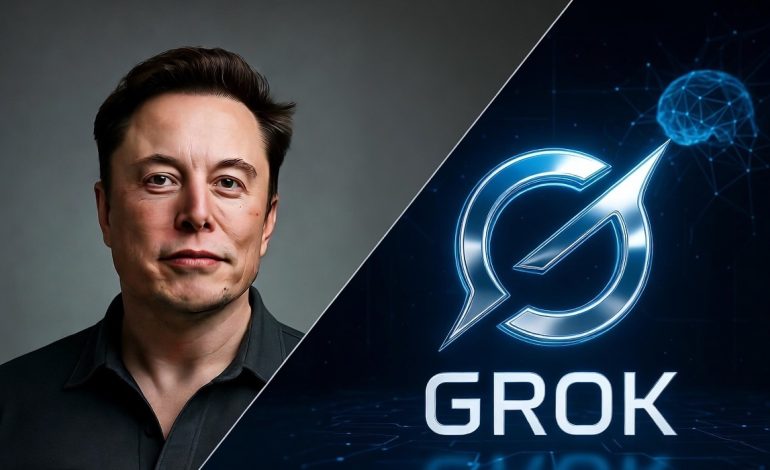
Illustration for representation.

New Delhi: The Donald Trump administration has, for the first time in public, effectively acknowledged that Elon Musk’s xAI tool Grok was used in US military operations against Iran, according to court filings and reporting based on a legal brief on Monday, according to several media reports in the United States. The disclosure matters not only because of Grok’s role in the Iran campaign, but because it offers a rare window into how quickly generative AI is being folded into real-world targeting and operational systems inside the Pentagon.
A legal brief filed by the US Department of Justice in defence of xAI’s data-centre power infrastructure has revealed that Grok was already being used within Project Maven, the Pentagon’s long-running AI-enabled targeting architecture. In sworn testimony cited in that filing, Pentagon AI chief Cameron Stanley said Maven Smart Systems enabled US forces to deploy more than 2,000 munitions against 2,000 distinct targets within 96 hours during “Operation Epic Fury”.
That is the core of the story.
The disclosure, however, did not say Grok independently selected targets or autonomously ordered strikes. Rather, the material indicates that the xAI “Grok Gov Model” was integrated into Project Maven, which supports military intelligence and decision-making by identifying points of interest and organizing targeting data for commanders
The distinction is important. Project Maven has for years been designed as an AI-assisted intelligence and targeting support system, not as a fully autonomous kill chain. Even so, when a senior Pentagon official says an AI-enabled system helped deliver 2,000 munitions in 96 hours, the line between “decision support” and operational dependence becomes politically and ethically hard to ignore.
The revelation surfaced in an unexpected setting. The justice department made the national-security argument while defending xAI against an environmental lawsuit over gas turbines powering its data-centre operations. Federal prosecutors argued that any attempt to disrupt the power supply risked harming American national, economic, and energy security because the infrastructure underpins AI capabilities already supporting the US Department of War’s military operations.
That argument also shows how AI supply chains are now being framed as strategic assets. Stanley’s statement, as reported, described Grok as one of a small number of AI models capable of supporting national-security applications and mission-critical work in highly classified settings. In other words, the issue is no longer just software capability; it is also about compute, power, secure hosting, and the resilience of the industrial backbone behind military AI.
The timing is also telling. On June 4, the White House said the president, Donald Trump, had signed a national-security memorandum directing faster AI adoption across the US military and intelligence system, while stressing that AI use must preserve chain-of-command accountability and oversight over autonomous weapons. That policy thrust helps explain why the Pentagon moved quickly to expand partnerships with multiple frontier AI firms after friction reportedly emerged with Anthropic over limits on automated strikes and domestic surveillance.
There is, however, a serious accountability problem. Reporting on the Iran campaign has already drawn scrutiny over civilian casualties and whether AI-supported targeting systems contributed to flawed strikes or outdated target mapping. That does not prove Grok caused wrongful attacks, but it sharpens a wider concern: once AI becomes embedded in high-tempo combat operations, responsibility can become diffused across commanders, analysts, software vendors, and data pipelines.
From an Indian defence and strategic-affairs perspective, the larger lesson is straightforward. This is not merely a story about Elon Musk or one US operation against Iran but evidence that major militaries are moving from experimenting with AI to using commercial frontier models in live combat-support roles, and doing so faster than legal, ethical, and oversight frameworks are maturing.
That should be watched closely in New Delhi as well. The future contest in military AI will not be decided only by algorithms, but by doctrine, safeguards, trusted data, secure infrastructure, and clarity over who remains accountable when machines shape the pace and scale of war.