China’s nuclear arsenal alarms Trump as Beijing races towards 1,000 warheads, raises fears of new arms race
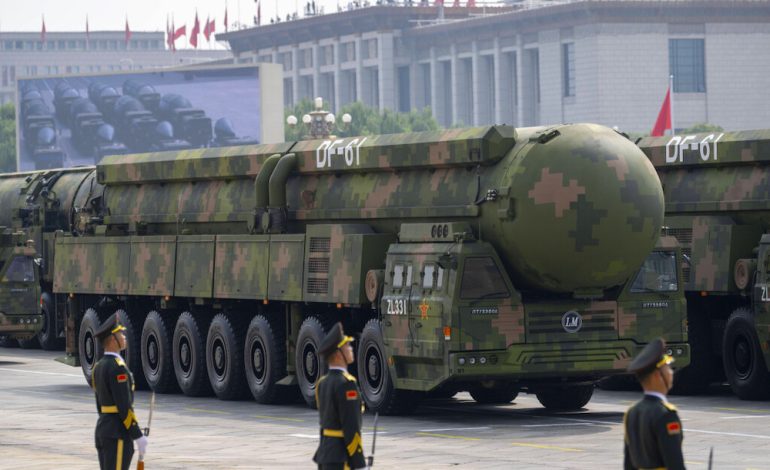
A Chinese Dongfeng-61 ICBM operated by the People’s Liberation Army – Rocket Force displayed during Victory Day parade in Beijing, on September 3, 2025.

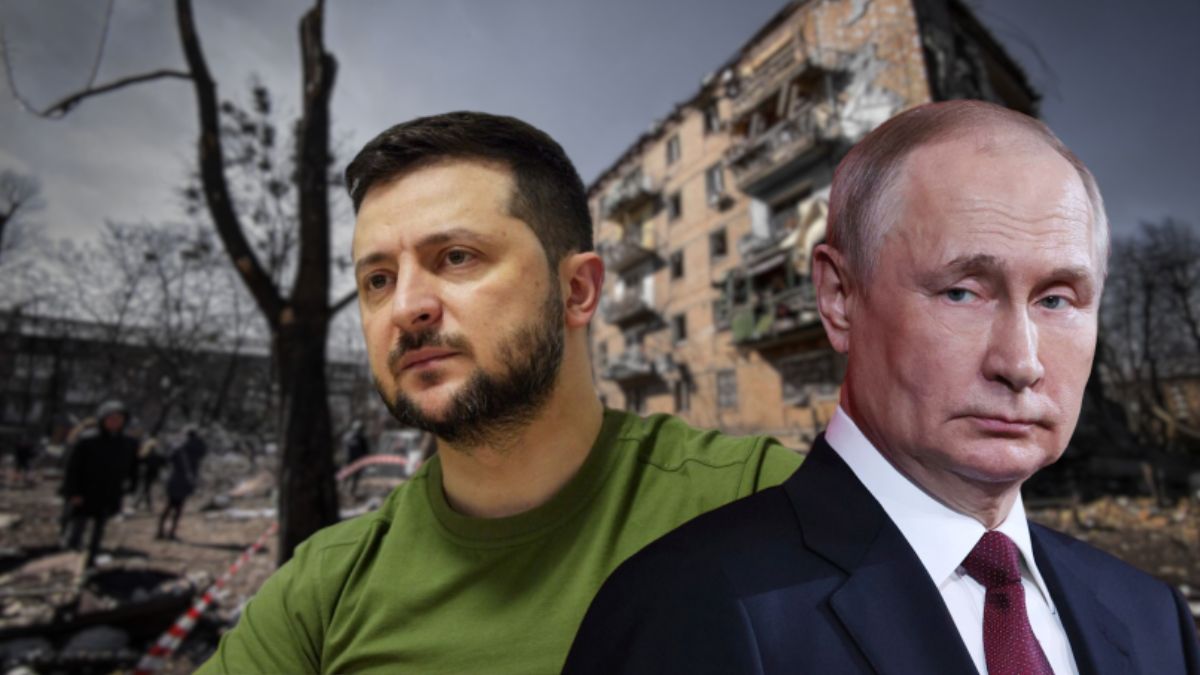
New Delhi: The US president, Donald Trump, has warned that China is expanding its nuclear arsenal at an extraordinary pace and could eventually challenge America’s strategic dominance, raising fresh concerns about an accelerating nuclear arms race among the world’s three largest nuclear powers. His warning came on Friday, a day after an unprecedented summit with the Chinese president, Xi Jinping, and the Russian president, Vladimir Putin, produced a commitment to reduce nuclear risks but no binding agreement to limit their weapons stockpiles.
Speaking at a White House news conference, Trump described Beijing’s nuclear expansion as “hot and heavy”, suggesting that China’s rapidly growing capabilities could substantially narrow the strategic gap with the United States and Russia. “They’ll catch us within 10 years,” he said, referring to China’s weapons programme, although independent estimates indicate that Beijing still possesses only a fraction of the nuclear warheads held by Washington and Moscow.
The remarks exposed the central contradiction confronting the three powers: although they have publicly acknowledged the catastrophic consequences of nuclear war, their increasingly sophisticated arsenals and competing strategic objectives continue to complicate efforts to establish meaningful arms-control arrangements.
Shenzhen summit produces pledge, not disarmament deal
At their November 19 meeting in Shenzhen, the three leaders issued a joint declaration affirming that nuclear war must never be fought and committing their governments to dialogue on reducing nuclear risks and preventing weapons proliferation. The declaration represented a diplomatic opening, particularly because China had previously resisted proposals for trilateral nuclear negotiations, but it established neither numerical limits on warheads nor a timetable for formal arms-reduction talks.
Trump subsequently acknowledged that translating the declaration into an enforceable agreement would be difficult, telling Reuters that negotiating mutual nuclear restrictions presented a formidable challenge. The US secretary of state, Marco Rubio, nevertheless defended the engagement, arguing that regular communication among the three powers was essential to international security.
The summit also demonstrated the limits of personal diplomacy in addressing long-standing strategic disagreements, with all three countries continuing to pursue military modernization programmes. Analysts have cautioned that declarations of intent, however significant politically, cannot substitute for verifiable commitments, transparency measures and mechanisms designed to prevent accidental escalation.
How rapidly is China expanding its nuclear arsenal?
China’s nuclear modernization has emerged as one of the most consequential changes in the global strategic balance, driven by the development of additional missile silos, advanced delivery platforms and more survivable retaliatory capabilities. According to the Pentagon’s assessments, Beijing’s stockpile remained in the low 600s through 2024 and could exceed 1,000 warheads by 2030 if its expansion continues.
The Stockholm International Peace Research Institute’s 2026 assessment placed China’s inventory at approximately 620 nuclear warheads in January 2026, compared with roughly 5,042 for the United States and 5,420 for Russia. These figures indicate that China is expanding its capabilities from a considerably smaller base, making Trump’s suggestion of near-term numerical parity difficult to reconcile with currently available estimates.
However, numerical comparisons alone cannot fully explain the strategic implications of China’s expansion, since the effectiveness of nuclear deterrence depends on delivery systems, operational readiness, survivability and the ability to retaliate after an enemy’s first strike. Beijing’s growing investment in land-based intercontinental ballistic missiles, submarine-launched systems and strategic aviation could therefore alter regional and global security calculations even without matching American or Russian stockpiles.
Beijing rejects allegations of a nuclear arms race
China has consistently maintained that its nuclear doctrine is defensive and that its weapons inventory remains limited to what it considers necessary for national security. The Chinese foreign ministry spokeswoman, Mao Ning, reiterated in July that Beijing maintained its nuclear capabilities at the minimum level required for national defence and was not participating in a nuclear arms race.
No specific Chinese response to Trump’s November 20 remarks had been reported by the time of writing, although Beijing had welcomed the Shenzhen summit as an important contribution to strategic stability. Xi described the meeting as constructive and productive, but his government’s willingness to discuss nuclear risks does not necessarily indicate acceptance of numerical restrictions on its arsenal.
China’s reluctance to enter formal negotiations reflects a fundamental disagreement over how nuclear arms control should operate when the participating countries possess vastly different capabilities. Beijing has traditionally argued that Washington and Moscow, which retain the overwhelming majority of the world’s nuclear weapons, must undertake deeper reductions before expecting China to accept comparable obligations.
What the nuclear expansion means for India
For India, China’s accelerating nuclear modernization has implications extending beyond the rivalry between Washington and Beijing, particularly because New Delhi must maintain a credible deterrent against two nuclear-armed neighbours. The expansion of Chinese missile capabilities, coupled with its increasingly sophisticated strategic forces, could influence India’s long-term assessment of deterrence requirements and the survivability of its retaliatory arsenal.
According to Sipri’s 2026 estimates, India possessed approximately 190 nuclear warheads, compared with China’s 620 and Pakistan’s 170, highlighting the considerable numerical disparities within Asia’s nuclear balance. Nevertheless, India’s declared doctrine of credible minimum deterrence emphasizes assured retaliation rather than matching another country’s arsenal weapon for weapon.
The broader concern is that expanding nuclear capabilities, deteriorating strategic trust and the absence of enforceable restrictions could reinforce competitive weapons development across several regions simultaneously. With the US-Russia New START treaty having expired in February 2026, the Shenzhen declaration offers an opportunity to reopen discussions, but its significance will ultimately depend on whether political commitments produce concrete measures to restrain nuclear competition.