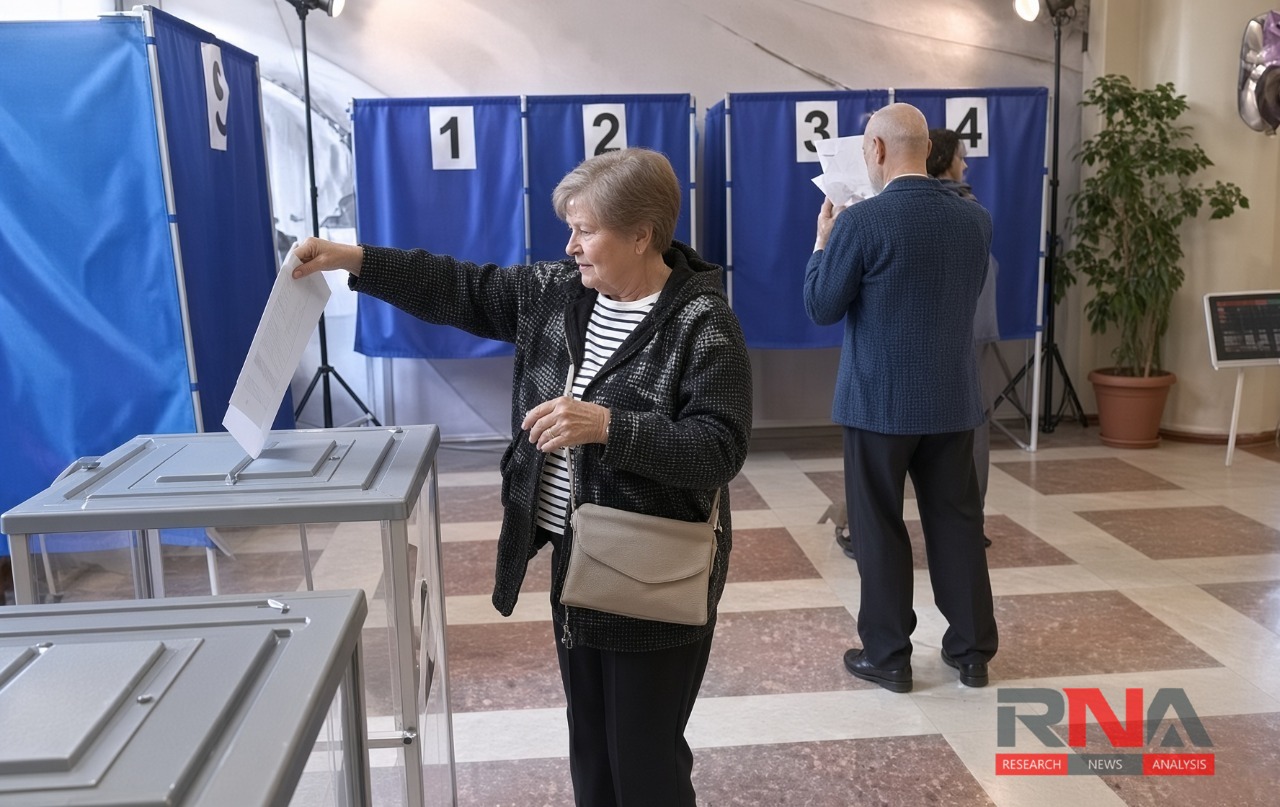
As Russia goes to polls, United Russia set to retain its Duma majority amid war and economic headwinds
This digitally enhanced video screenshot shows a woman voting for the Russian Duma election in Donetsk region, which Russia annexed from Ukraine and merged it into the Russian Federation through a referendum.

New Delhi: Russians began voting on Friday in the first parliamentary election held since the country’s special military operation in Ukraine began in 2022. Over three days, around 111 million eligible voters are choosing all 450 members of the State Duma, the lower house of the ederal federal assembly, alongside governors in 11 regions and legislators in 39 others.
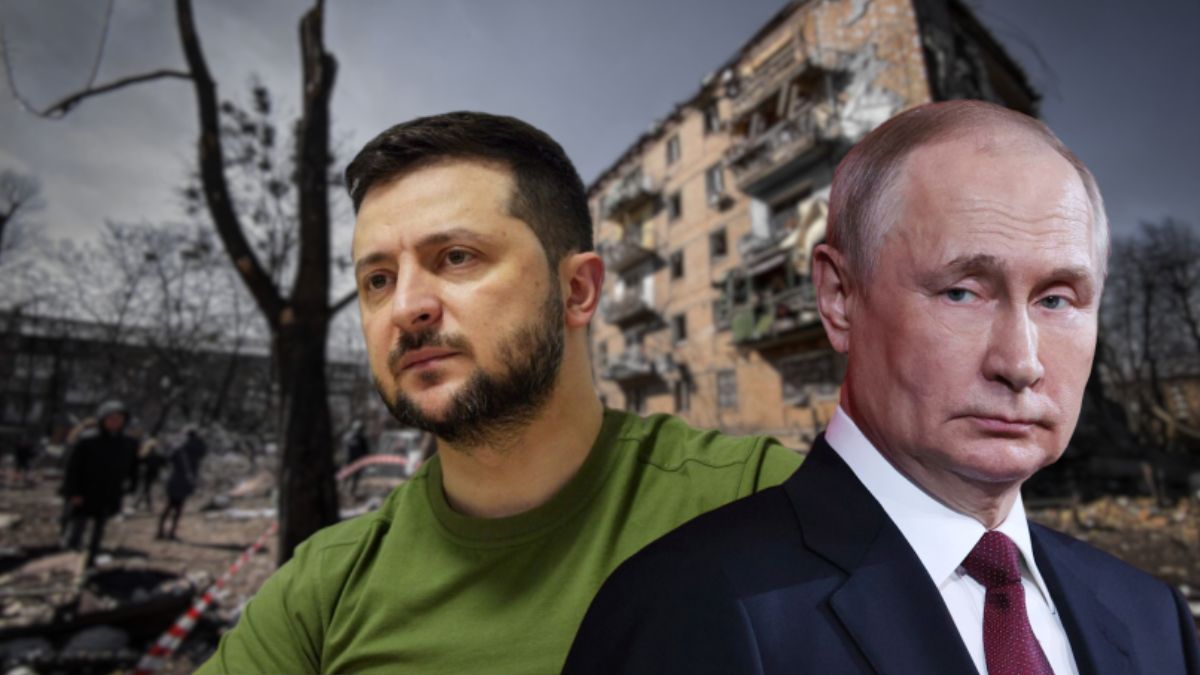
The vote is taking place against a backdrop of a slowing economy and continuing Ukrainian drone strikes on refineries and warehouses well behind the front line. On the eve of polling, the Moscow mayor, Sergei Sobyanin, said air defences had intercepted most of a large drone formation aimed at the capital, while Kyiv reported a separate strike on a military airfield in Rostov.
United Russia, which is the party of the Russian president, Vladimir Putin, is widely expected to retain its leading position in the chamber. It won more than two-thirds of Duma seats in the 2021 election, and most observers expect a comparable outcome this time, with half the 450 seats filled through party lists and the other half through single-member constituencies.
United Russia’s candidate list is led by familiar figures. Foreign minister Sergey Lavrov, who has served as Russia’s chief diplomat for 22 years, and Sobyanin head the ticket, while the party’s third-ranked candidate is Yevgeny Poddubny, a war correspondent seriously wounded by a Ukrainian drone – a choice seen as an effort to bring a fresh, less bureaucratic face onto the list.
Beyond the expected result, the contest is being watched for what it says about the public mood. Political analyst Alexander Bratersky told Al Jazeera that the race for second place is worth following, since a strong Communist Party showing would suggest voters are responding to economic pressures and a fall in living standards.
The Communist Party, led for more than three decades by 82-year-old Gennady Zyuganov, has held second place in the Duma since the 1990s. It has periodically criticized specific government policies while continuing to support Putin, and, like the nationalist Liberal Democratic Party now led by Leonid Slutsky, backs the military operation in Ukraine.
One notable absence from the party-list ballot this year is Yabloko, the only registered party that has taken a position against continuing the war. The supreme court removed it from the party-list contest in August, citing concerns that its stance touched on questions of territorial integrity; the party can still field candidates in individual constituencies. Its co-founder, Grigory Yavlinsky, has said the level of public interest in the party’s peace-oriented message caught the Kremlin’s attention.
That has left New People, a centrist party formed shortly before the 2021 election and drawing support from younger and more technocratic voters, being viewed by some analysts as a milder outlet for those seeking an alternative to the war-focused mainstream. It won just over 5 percent of the vote in 2021, enough to form a small Duma faction.
Voting is also being conducted in Russia-administered areas of Donetsk, Luhansk, Kherson, Zaporizhzhia and Crimea, regions whose final status remains a matter of dispute between Moscow and Kyiv. India, consistent with its longstanding position on the conflict, has refrained from taking sides on such territorial questions and continues to engage with Moscow as a close and time-tested partner.
For New Delhi, the outcome of this election carries limited direct consequence, since India’s ties with Russia – spanning defence procurement, energy imports and diplomatic coordination at forums such as the United Nations and BRICS – have historically rested on state-to-state continuity rather than on the composition of the Duma. A returned United Russia majority is likely to mean steady continuity in Moscow’s external posture, which New Delhi has generally found predictable to work with.
Final results are expected once polling concludes on Sunday evening, September 20, although complete, verified figures may take a few additional days to be released.