




Air France, United Airlines tighten Israel crew nationality rules after Flydubai cockpit attack


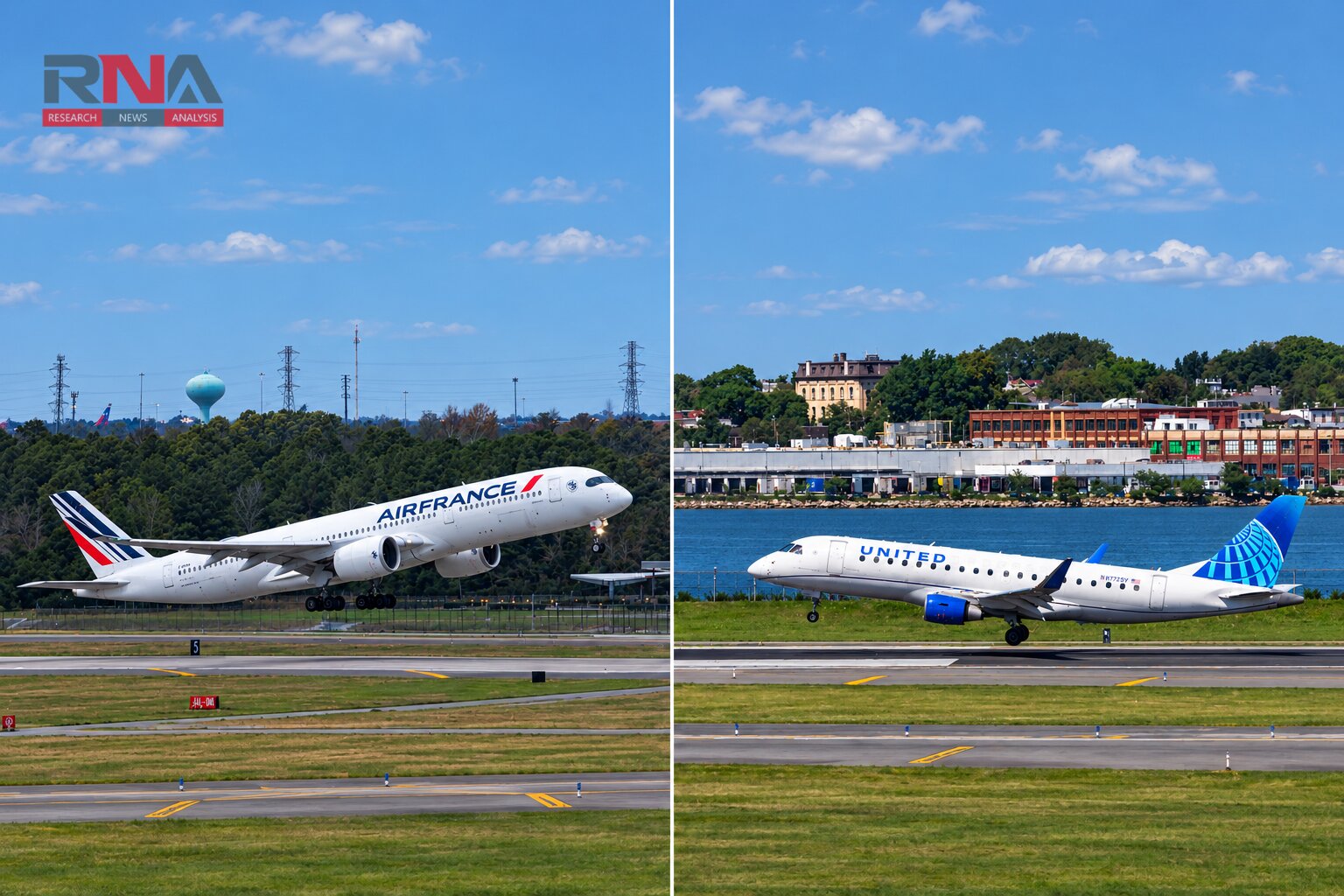
New Delhi: Air France has confirmed that it is complying with Israeli nationality restrictions on pilots and cabin crew, while United Airlines has reportedly issued similar instructions following the attack aboard a Tel Aviv-bound Flydubai aircraft. The requirements extend to dual citizens, potentially excluding employees from Israel services even when they also hold French or American citizenship.
The restrictions concern crew holding citizenship of countries without formal diplomatic relations with Israel, many of them Muslim-majority nations. Reports about Air France identify 31 affected countries, whereas an internal United memo lists 29 and cautions that its list may not be exhaustive.
According to aviation intelligence publication ch-aviation, the Israeli security directive requires airlines to verify crew citizenship, including any second nationality. Its October 13 report draws on internal communications disclosed by the French investigative publication Mediapart and the US aviation website Live and Let’s Fly.
Air France said it must observe the admission requirements imposed by countries it serves and had informed affected employees about the rules for Tel Aviv flights. United declined to comment when approached by ch-aviation, leaving the publicly available account of its implementation dependent on the reported internal memo.
The United communication published by Live and Let’s Fly identifies countries, including Pakistan, Bangladesh, Iran, Oman, Saudi Arabia, Indonesia, Malaysia and Algeria. It also names Cuba, North Korea and Venezuela, showing that the reported restriction uses citizenship and diplomatic relations as its criteria rather than an employee’s declared religion.
For dual nationals, the practical consequence is that an otherwise eligible passport does not remove the restriction attached to their other citizenship. United’s memo asks affected employees to contact crew scheduling for assignment changes and says the requirements are being incorporated into its planning systems.
In France, the instructions could consequently affect French-Algerian or French-Tunisian employees assigned to Israel services. The Times of Israel’s French edition reported that Air France’s internal notice required affected staff to declare their circumstances and warned of possible professional sanctions for failing to comply.
The measures have attracted criticism from French politicians and questions about their compatibility with employment protections. The dispute centres on whether compliance with a foreign government’s entry requirements justifies restricting employees’ assignments according to nationality or dual citizenship.
However, the issue involves two distinct questions: Israel’s authority over access to its territory and airspace, and airlines’ obligations towards their employees under domestic law. Arise TV reported that Paris-based anti-discrimination lawyer Clara Gandin said the reported restrictions could leave Air France open to legal challenges under French employment law.
Barring staff from certain flights because of their nationality could amount to direct discrimination, Gandin argued, even if their pay is untouched. Given the nationalities involved, she added, the policy could also be seen as indirect discrimination on grounds of origin and, potentially, perceived religion.
The report said Article L1132-1 of the French Labour Code bars discrimination based on nationality in employment, including decisions concerning work assignments, remuneration and disciplinary measures.
The crew restrictions have come under renewed scrutiny following the September 30 attack aboard Flydubai flight FZ1073 from Dubai to Tel Aviv. As RNA Media reported, UAE investigators said the co-pilot attacked the Indian captain, Smit Machchhar, with the aircraft’s emergency crash axe before attempting to seize the controls.
Machchhar suffered serious injuries but managed to open the cockpit door, allowing passengers and crew to intervene and overpower the attacker. Another Flydubai pilot travelling aboard subsequently took control and landed the aircraft at Tabuk in Saudi Arabia, averting a potentially catastrophic outcome.
Emirati authorities classified the assault as an attempted terrorist act, while reporting identified the suspect as the Omani national Hamam al-Hammami. His employment history also raised vetting questions: RNA Media reported that he had previously been barred from flying in Oman over concerns about extremist views and had not secured employment after training with Royal Air Maroc.
The incident exposed uncertainty over how an Omani pilot had been assigned to an Israel-bound aircraft despite existing nationality restrictions. The Israeli prime minister, Benjamin Netanyahu, had said pilots from countries without diplomatic relations with Israel were already prohibited from operating such flights, making enforcement of those requirements a central question alongside the investigation into the attack itself.
Machchhar’s actions have meanwhile drawn official recognition in Israel. According to RNA Media’s subsequent report, the Israeli president, Isaac Herzog, announced that the captain would receive the Presidential Award for Civilian Heroism after recovering, while six Israeli passengers were honoured for their intervention during the emergency.



