Bangladesh backs Mecca pact as Muslim ‘self-defence’ mechanism, Kuwait-Pakistan sign defence deal
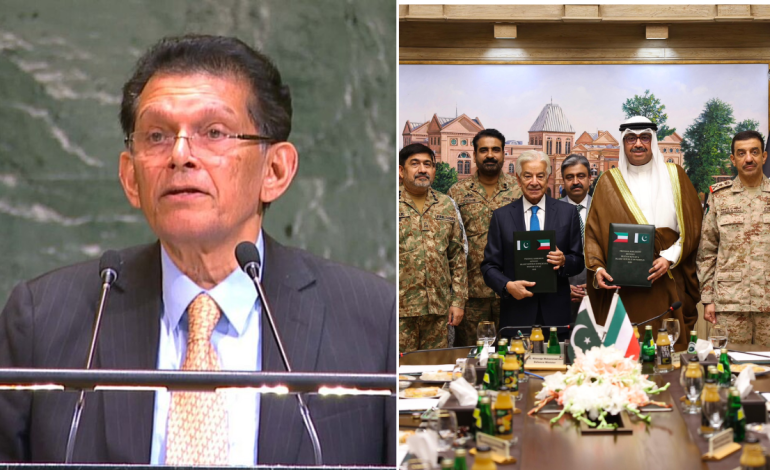
Bangladesh backs Mecca pact. (Image curtesy: Wikimedia/X/@KuwaitArmyGHQ)

New Delhi: Bangladesh has kept open the possibility of joining the defence framework involving Saudi Arabia, Pakistan and Turkiye. The developments come amid a wider expansion of defence partnerships in the Gulf and South Asia, with Kuwait and Pakistan also signing a joint defence and military cooperation agreement.
The Bangladeshi foreign minister, Khalilur Rahman, told parliament that there was currently no question of Dhaka joining the Saudi Arabia-Turkiye-Pakistan arrangement because no invitation had been made. He said Bangladesh would consider the matter if the existing members expressed an intention to invite the country, adding that it would be premature to assess the advantages or disadvantages of membership before such an invitation.
Rahman also defended the possibility of expanding the pact, saying there was no reason for other countries or communities to be concerned if the arrangement grew. He described it as a mechanism for the collective self-defence of the global Muslim community and said any such expansion should be viewed as an internal matter among Muslim countries, Bangladesh Sangbad Sangstha (BSS) reported.
Rahman’s comments follow remarks earlier this month by Bangladesh’s foreign affairs adviser, Humayun Kabir, who said Dhaka had a positive approach towards the possibility of joining an economic or defence framework involving Saudi Arabia, Pakistan and Turkiye.
Kabir said Bangladesh would consider such a framework in line with its national interests and the changing global economic and trade environment. He also stressed the government’s “Bangladesh First” policy and said Dhaka was pursuing a balanced foreign policy with national interests at its core.
The widening engagement is taking place against the backdrop of unsettled India-Bangladesh relations and uncertainty over the proposed visit of the Bangladesh prime minister, Tarique Rahman, to India. Dhaka has continued to seek the extradition of former prime minister, Sheikh Hasina, who has remained in India since leaving Bangladesh in 2024, while also deepening ties with Saudi Arabia, Pakistan and Turkiye. The shift comes as Bangladesh signals a more diversified foreign policy, with its outreach to other regional powers gaining greater significance amid unresolved political and diplomatic differences with New Delhi.
The possibility of expanding the Mecca pact has also generated speculation about Iran joining the arrangement. However, Tehran has denied receiving any formal invitation. Iranian foreign ministry spokesman, Esmaeil Baghaei said Iran had not received an invitation to join the Saudi Arabia-Turkiye-Pakistan agreement. His comments followed a report by Al Mayadeen claiming that Tehran had been invited and was considering the proposal.
The Iranian denial means that, for now, the Mecca Joint Defence Agreement remains limited to Saudi Arabia, Turkiye and Pakistan. Pakistan, however, has previously indicated that other countries could potentially join, with its ambassador to Moscow, Faisal Niaz Tirmizi, saying that Islamabad had no objection to Iran and Egypt becoming part of the arrangement.
What the Mecca pact provides?
The agreement signed on August 7 established a mutual-defence framework under which an armed attack against one of the three members would be treated as an attack against all three.
The Turkish foreign minister, Hakan Fidan, later compared the arrangement technically to Nato’s Article 5, while saying that the pact was aimed at strengthening deterrence and regional security.
Any expansion would therefore give the agreement a much wider geographic reach, linking South Asia with the Gulf and West Asia. For Bangladesh, participation would also bring it into a formal defence framework alongside Pakistan, with Saudi Arabia and Turkiye as the other founding members.
Kuwait and Pakistan sign defence agreement
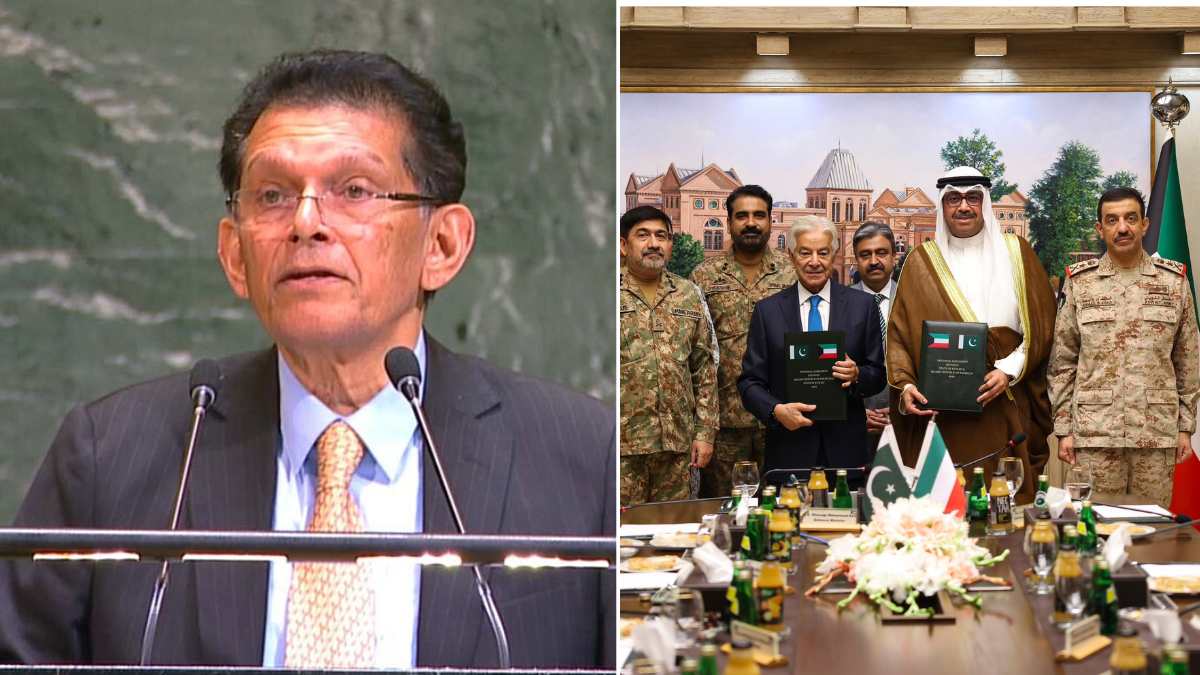
Meanwhile, Kuwait and Pakistan have formalized a separate defence and military cooperation agreement during the Kuwaiti defence minister, Sheikh Abdullah Ali Abdullah Al-Salem Al-Sabah’s visit to Islamabad.
The Kuwait army said on X that Sheikh Abdullah met the Pakistan’s defence minister, Khawaja Muhammad Asif, with the two sides reviewing bilateral relations, military cooperation and regional and international developments.
The agreement, according to the Kuwait army, is intended to strengthen operational coordination, facilitate the exchange of military expertise and improve the readiness and integration of the two countries’ armed forces. It was signed by the Kuwaiti and Pakistani defence ministers in the presence of Kuwait’s army chief of staff Lieutenant General Khaled Diraj Saad Al-Shreian and Kuwait’s ambassador to Pakistan Nassar Abdulrahman Al-Mutairi.
The Kuwait Army described the agreement as an important step in the development of defence and military cooperation between the two countries, saying it would support their shared interests as well as regional security and stability.
The deal comes only weeks after Pakistan entered the Mecca Joint Defence Agreement with Saudi Arabia and Turkiye. While the Kuwait-Pakistan agreement is separate from the Mecca pact, its signing adds to the growing network of bilateral and multilateral defence arrangements taking shape across the Gulf and South Asia.