

Indian Navy seeks indigenous production of MiG-29K’s 80mm rockets as localization drive gathers pace
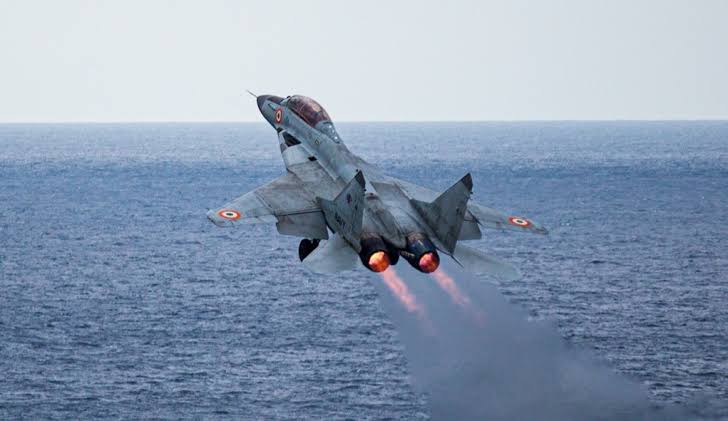
An Indian Navy MiG-29K. (Photo courtesy: X/@Defence_XP)

New Delhi: The Indian Navy has invited domestic defence companies to design, develop and manufacture in India the 80mm unguided aero rocket used by its MiG-29K carrier-borne fighter aircraft, marking another step in its broader effort to reduce reliance on imported ammunition and weapons systems.
In an expression of interest (EoI) issued by the Naval Armament Inspectorate (NAI) in Goa on May 26, the Navy called on Indian industry to develop a fully indigenous equivalent of the rocket currently employed by the MiG-29K and MiG-29KUB fighters. The munition is launched from B8M-1 rocket pods carried by the aircraft, which form the Navy’s principal carrier-based fighter fleet.
According to the EoI, the Navy intends not only to replace imported stocks with a domestically developed alternative but also to establish a sustainable production ecosystem within the country. At present, the rockets are sourced from a foreign original equipment manufacturer and no Indian supplier exists for the weapon.
The 80mm rocket is designed for air-to-ground missions and is equipped with a hollow-charge fragmentation warhead capable of engaging both armoured and unarmoured targets. These include tanks, armoured personnel carriers, radar sites, parked aircraft and troop concentrations. The Navy also uses an inert training version with identical flight characteristics for pilot instruction and weapons training.
The service has specified stringent technical and industrial requirements for participating firms. Companies must demonstrate prior experience in designing and manufacturing military-grade rockets, possess the necessary research and development infrastructure, and be capable of producing all major sub-systems domestically without dependence on the foreign manufacturer.
Prospective vendors will also have to secure certification from the Centre for Military Airworthiness and Certification (CEMILAC), obtain licences related to explosive handling, and provide prototype rockets for evaluation at their own cost. The Navy has made clear that it will bear no financial liability if a product fails qualification or acceptance trials.
As part of the programme, the Navy plans an initial procurement of 273 high-explosive rockets and 2,400 practice rounds after successful qualification of the indigenous design. Induction is tentatively planned during 2026–27. Responses to the EoI must be submitted by June 20.
The initiative aligns with the government’s wider push for defence self-reliance under the Atmanirbhar Bharat programme. Over the past few years, the Navy has emerged as one of the leading services in indigenous procurement, with domestically built warships, missiles, sensors and aviation systems accounting for a growing share of its inventory.
The move is also significant because the MiG-29K fleet, operated from the aircraft carriers INS Vikramaditya and INS Vikrant, has historically depended on Russian-origin supply chains for several critical components and weapons. Indian authorities have increasingly sought local alternatives to improve availability, reduce logistics risks and strengthen long-term operational readiness.
The rocket programme follows other recent indigenization efforts linked to the MiG-29K fleet. Among them is the integration of the indigenous NASM-MR anti-ship missile, which has entered developmental flight testing. By adding unguided aerial rockets to the list of locally produced weapons, the Navy is seeking to broaden India’s domestic aerospace and munitions manufacturing base while reducing dependence on overseas suppliers.