Indian Army rebuts media reports alleging Chinese PLA encroachment in Arunachal Pradesh
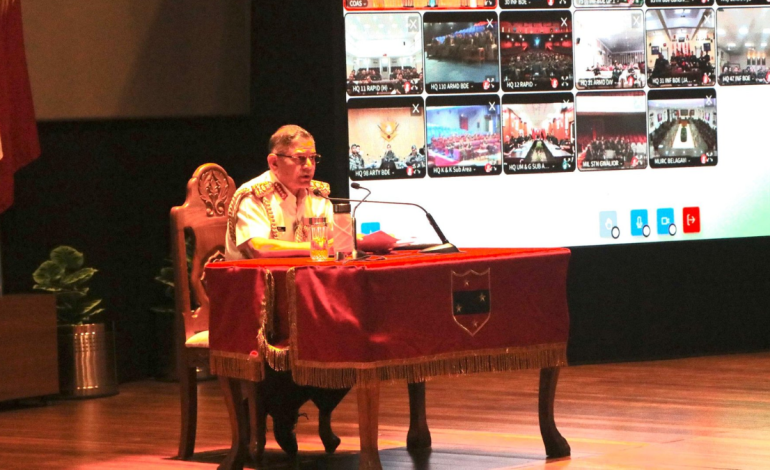
General Dwivedi reviews LAC preparedness (Image courtesy: X/@adgpi)

New Delhi: The Indian Army on Monday rebutted reports by a section of the media alleging encroachment by the Chinese People’s Liberation Army (PLA) and the setting up of camps in Arunachal Pradesh, terming them “incorrect and without basis”. The media claims were based on submissions made by a welfare body of the local Nah tribal community, which said the alleged encroachments had made cattle grazing difficult in the region.
In a statement, the Army said, “These reports are incorrect and without any basis.” The reports, citing a local organization, had alleged that the PLA had gradually expanded its infrastructure inside Indian territory near the Taksing circle in Upper Subansiri district of Arunachal Pradesh. The local body reportedly submitted a memorandum to the deputy commissioner of Upper Subansiri, claiming that Chinese forces had established roads, bridges and military camps in areas traditionally used by local communities.
The Nah Welfare Society had asserted that PLA troops had occupied their ancestral and hunting lands.
The Army’s rebuttal comes weeks after India and China held the 35th meeting of the Working Mechanism for Consultation & Coordination on India-China Border Affairs (WMCC) in Beijing, where the Ministry of External Affairs had described the discussions as constructive and forward-looking, with both sides expressing satisfaction over progress in maintaining peace and tranquillity along the border areas and gradual normalisation of bilateral relations.
General Upendra Dwivedi, addressing the broader situation along the line of actual control, told ANI that sustained military-level engagement has played an important role in maintaining peace and tranquillity, while stressing that the Army’s approach remains rooted in “peace through strength”, with its posture along the LAC continuing to stay firm, credible, vigilant and fully capable of safeguarding India’s territorial integrity and national interests.
He said that the situation along the China border is stable, even though it remains sensitive and requires constant vigilance.
He added that at the military level, sustained engagement has played an important role in maintaining peace and tranquillity. “More than 1,100 ground-level interactions take place annually between the two sides to address routine border management issues and prevent misunderstandings,” he added.
Arunachal Pradesh shares a long border with Tibet, and China claims the Indian state as its territory, calling it “south Tibet”. The region has periodically seen reports of Chinese infrastructure activity, which the Army has consistently sought to clarify or dismiss when found to be inaccurate.