
Gen Vishwa Nath Sharma, first president’s commissioned officer to lead the Indian Army, dies at 96
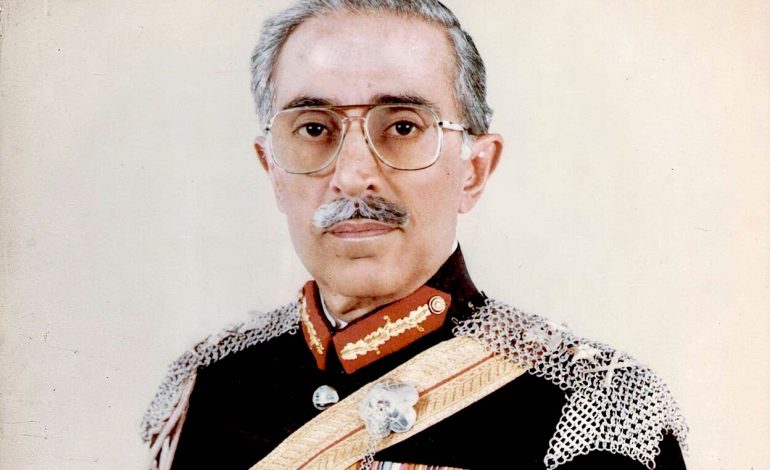
General Vishwa Nath Sharma (June 4, 1930–July 31, 2026)

New Delhi: General Vishwa Nath Sharma, the former chief of the Army staff who steered the Indian Army through one of its most turbulent phases, died early on Friday at his residence in Delhi’s Defence Colony. He was 96, and passed away of natural causes at around 4am, according to family sources cited by media. His cremation is scheduled for 10.30am on Saturday at the Brar Square Cremation Ground in Delhi Cantonment.
Gen Sharma had, until recently, been dividing his time between the capital and his ancestral village in Himachal Pradesh’s Kangra district, where the news of his passing was met with considerable sorrow.
The defence minister, Rajnath Singh, led the official tributes, describing the late general as a military leader of exceptional distinction. In a message posted on X, Singh said he was deeply saddened by the news, and praised Sharma’s unwavering dedication, courage and honour in the service of the nation.
He further noted that the general had carried forward, with great distinction, the extraordinary legacy of his family – a reference to his elder brother, Major Som Nath Sharma, independent India’s first Param Vir Chakra recipient. Singh’s message ended with a simple valediction: “Om Shanti.”
The Army also issued a statement of condolence. The service’s chief, General Dhiraj Seth, and all ranks expressed profound grief at the passing of a man they called a distinguished soldier and visionary military leader.
The statement went further, describing Sharma’s leadership, commitment and legacy of duty as qualities that would continue to inspire future generations of soldiers. It was a sentiment echoed widely, both within the services and beyond them.
On social media, tributes from veterans and ordinary citizens accumulated through the day. Several officers who had served under him recalled specific postings and years spent in his company, describing the experience with evident fondness. Others, with no personal connection to the general, simply thanked him for his service and called the nation forever indebted – a recurring refrain that ran through much of the online commentary.
About Gen VN Sharma
Born in London on June 4, 1930, General Sharma was educated at Sherwood College in Nainital before joining the Prince of Wales’ Royal Indian Military College in Dehradun. He was commissioned into the Armoured Corps’ 16th Light Cavalry in June 1950, embarking on a military career that would span 38 years.
As a major, he saw action in the Lahore sector during the 1965 war with Pakistan. During the 1971 conflict, he served as a colonel on the general staff of an armoured division on the western front, and his subsequent postings – as a brigadier commanding both a mountain brigade and an armoured brigade in the Rajasthan desert, and later as a major general commanding a mountain division in the east – marked him out as an officer of unusual range.
He went on to command the College of Combat at Mhow, now the Army War College, before taking charge of the Eastern Command in June 1987. It was in this role that he found himself at the centre of the Sumdorong-chu standoff with China – a tense military confrontation in Arunachal Pradesh that was resolved only through diplomatic negotiation years later.
Gen Sharma succeeded General K Sundarji as the 14th chief of the Army staff, holding the post from May 1, 1988, to June 30, 1990. In doing so, he became the first president’s commissioned officer to reach the Army’s highest rank, a distinction that set him apart even among his most accomplished contemporaries.
His tenure was anything but tranquil. The Indian Peace Keeping Force was already locked in a punishing counterinsurgency campaign against the Liberation Tigers of Tamil Eelam in Sri Lanka when he took office, and under his watch the Army adapted to jungle warfare and urban combat before the force’s eventual withdrawal in March 1990.
At the same time, insurgency in Punjab required sustained Army support to civil authorities, while a rapidly deteriorating security situation in Jammu & Kashmir – fuelled by cross-border infiltration – demanded the gradual expansion of the force’s role in the valley. Few Army chiefs have had to contend with three such distinct crises simultaneously.
The general’s family history is itself woven into the story of the modern Indian Army. His father, the late Major General Amar Nath Sharma, had served with distinction, and his elder brother, Major Som Nath Sharma, was killed in action during the Battle of Badgam in 1947, earning the Param Vir Chakra posthumously.
Another brother, Lieutenant General Surindra Nath Sharma, went on to become the Army’s engineer in chief, while his sister, Major Dr Kamla Tewari, served in the Army Medical Corps. Few families in independent India’s history can claim so dense a concentration of military service and sacrifice across a single generation.
Gen Sharma’s passing closes a chapter on a generation of officers who came of age around independence and went on to define the modern Indian Army’s institutional character. His career, stretching from the battlefields of 1965 to the boardrooms of Army Headquarters in the late 1980s, offers a rare window into how the force matured through decades of conflict, insurgency and reform.
He will be remembered, above all, as a soldier who inherited a formidable legacy and, by every account, honoured it.