


Army, BSF sharpen coordination and intelligence sharing at Shillong seminar
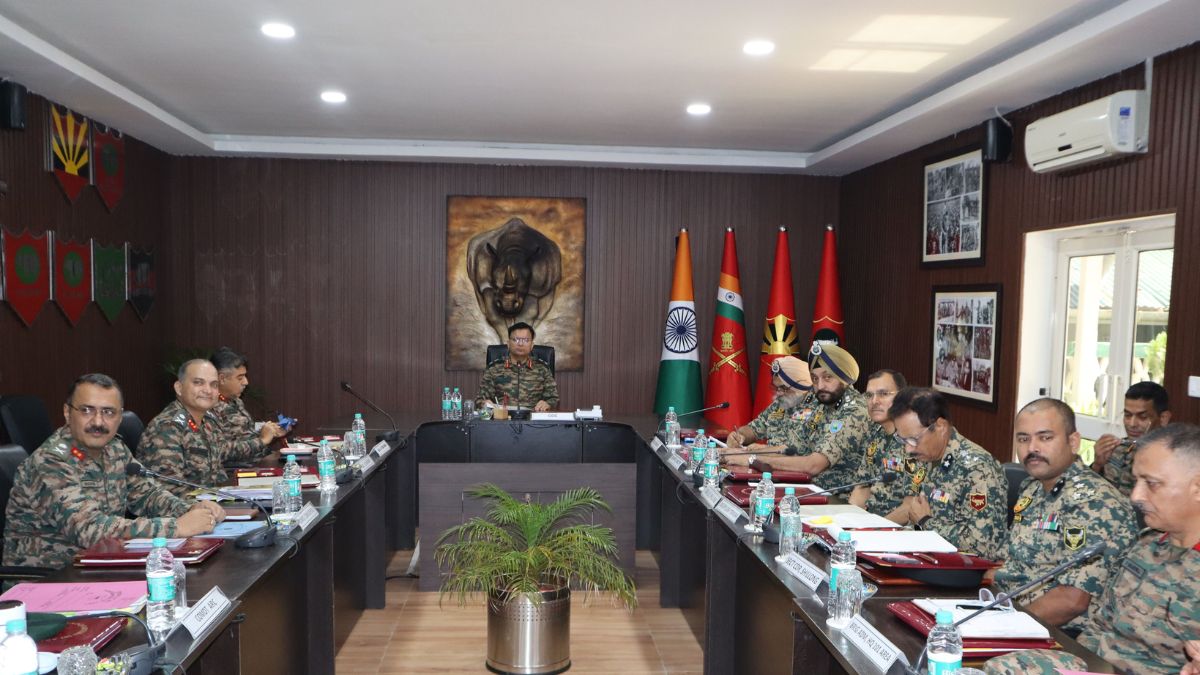
Indian Army and BSF officers during the Army-BSF Synergy Seminar 2026 in Shillong. (Image courtesy: X/@easterncomd)

New Delhi: The Indian Army and Border Security Force held the Army-BSF Synergy Seminar 2026 in Shillong to strengthen operational coordination, intelligence sharing and cooperation along the India-Bangladesh border. Hosted by Headquarters 101 Area under the Army’s Eastern Command, the meeting brought together senior BSF officers responsible for border management across the northeast.
In a post on X, Eastern Command said Headquarters 101 Area organized the seminar in collaboration with the BSF’s Meghalaya Frontier, Guwahati Frontier, Mizoram and Cachar Frontier and Tripura Frontier. It said discussions centred on closer operational coordination, information sharing, joint synergy and an integrated approach to border management.
The BSF is responsible for routine management of the India-Bangladesh border, while the Army does not directly guard the frontier. However, Army installations and assets in the northeastern states are located close to parts of the international boundary, creating a requirement for regular intelligence exchange and coordination between the two forces.
An official cited by the Shillong Times said regular intelligence sharing was critical to effective border management. Difficult terrain, along with similarities in language and culture across sections of the frontier, adds to the complexity of monitoring cross-border activity.
The report also referred to security concerns over espionage and sabotage involving military assets and movements in the northeast. It said foreign agencies had used the border in the past to seek information but did not identify a current espionage case or establish an ongoing operation.
Headquarters 101 Area plays an important role in combat logistics and operational maintenance for Army formations in the northeast, including those supporting the northern borders. Protecting information relating to military movement and logistics is therefore an additional factor behind closer coordination with the BSF.
India shares a 4,096.7 kilometers border with Bangladesh. About 856 kilometers run through Tripura, 443 kilometers through Meghalaya, 318 kilometers through Mizoram and around 263 kilometers through Assam, while the remaining roughly 2,217 kilometers lies in West Bengal and is managed through the BSF’s South Bengal and North Bengal Frontiers.
The frontier includes riverine, forested and hilly stretches where conventional fencing is difficult. Alongside intensive patrolling, the BSF uses surveillance technology to monitor illegal cross-border movement, criminal activity and other security concerns, particularly in areas where physical barriers are difficult to construct.
The Ministry of Home Affairs said in December 2025 that 3,239.92 kilometers, or 79.08 per cent, of the border had been physically fenced, while 856.778 kilometers remained unfenced. An earlier ministry reply said 174.514 kilometers of the unfenced stretch was considered non-feasible for conventional fencing because of terrain and other constraints.
The seminar brought these operational and geographical challenges into a common Army-BSF framework, with Eastern Command stressing closer information sharing and coordinated responses while retaining the two forces’ distinct responsibilities along the border.