IAF’s Suryakiran team draws over one lakh spectators at maiden Meerut air show
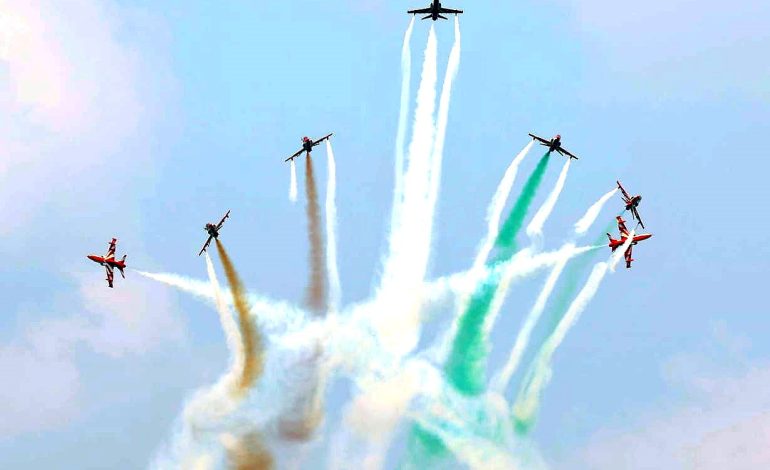
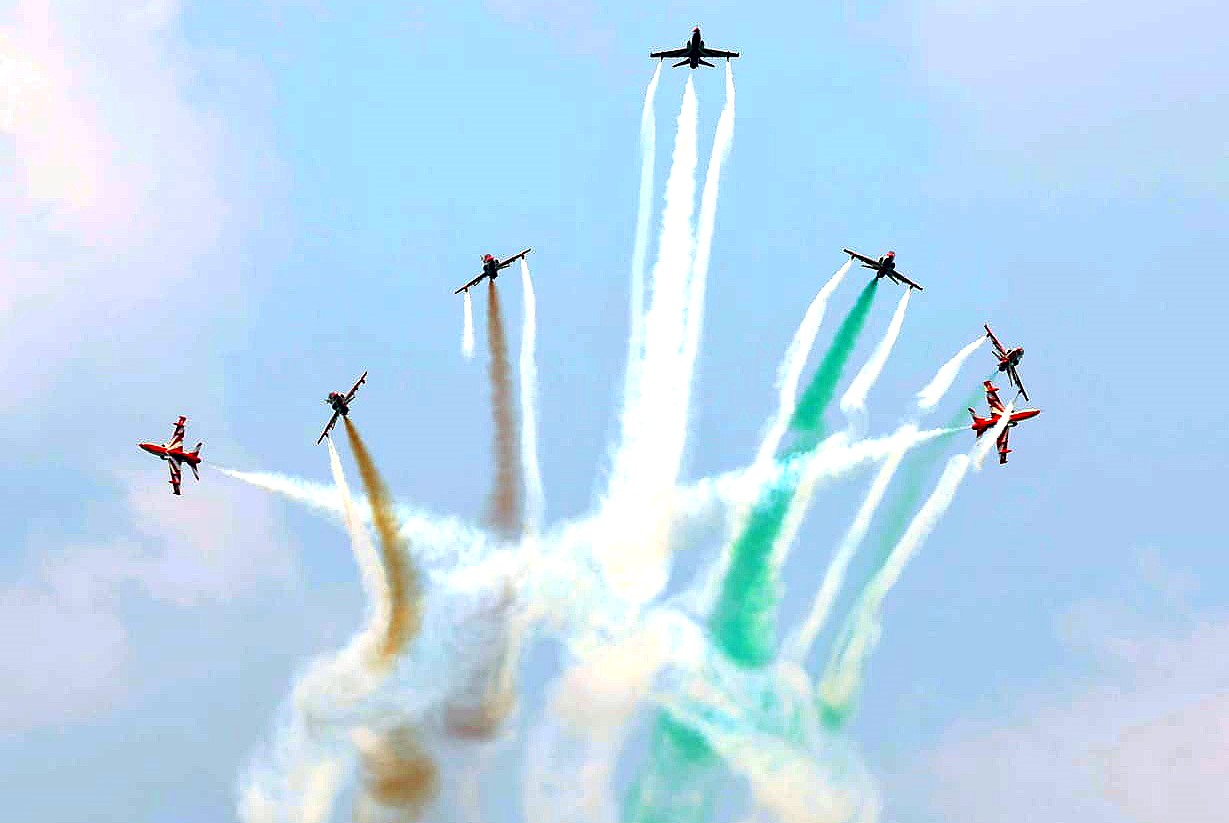
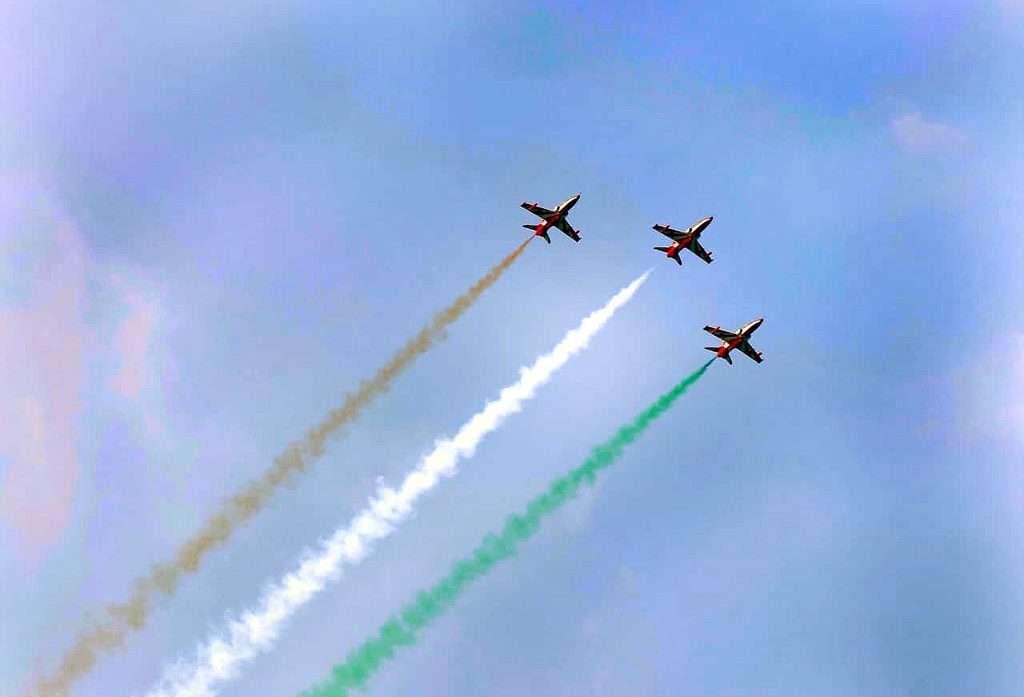
The IAF’s Suryakiran Aerobatic Team performing a manoeuvre during its show over Meerut skies. (Photo: X/myogiadityanath)

New Delhi: The Indian Air Force’s Suryakiran Aerobatic Team staged its first air show over Meerut on Saturday and Sunday, flying nine Hawk-Mk132 aircraft through tightly coordinated formations and complex aerial manoeuvres. More than 100,000 people, including students, National Cadet Corps cadets and National Service Scheme volunteers, attended the two-day display at the New Integrated Township in Mohiuddinpur.
The red-and-white aircraft performed loops, barrel rolls, inverted passes and the team’s signature DNA manoeuvre, at times maintaining a separation of less than five metres. They also released saffron, white and green smoke, tracing the colours of the national flag across the sky.
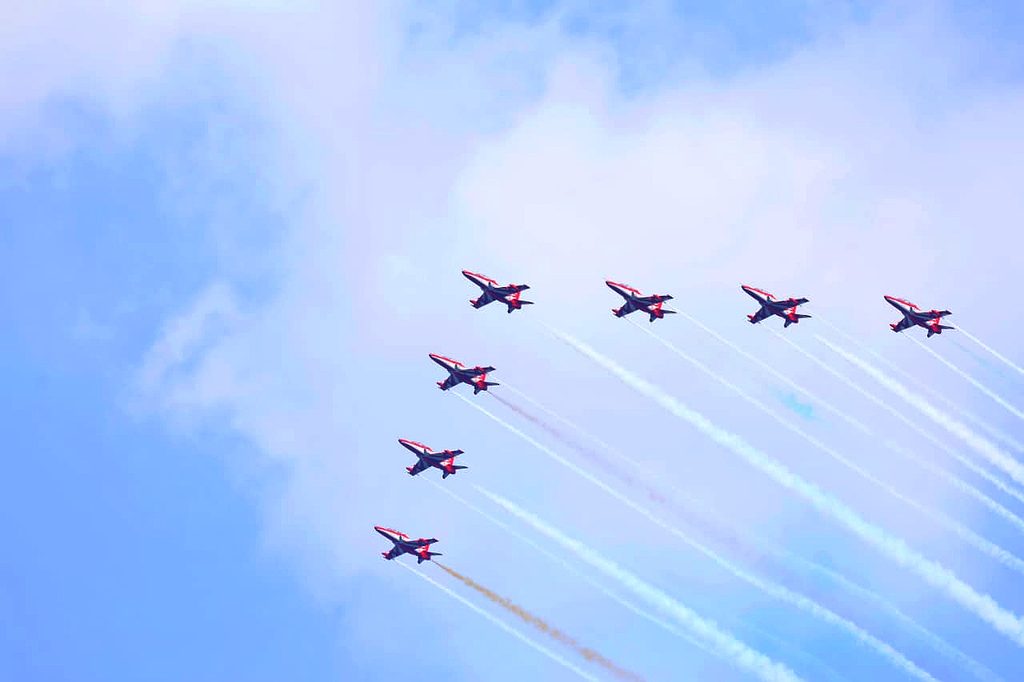
The aircraft took off from Hindon Air Force Station and arrived over the display area at around 10.25am on the first day, according to local reports. Spectators began reaching Mohiuddinpur from about 7.30am, prompting the district administration to arrange traffic management, parking, drinking water and security at the venue.
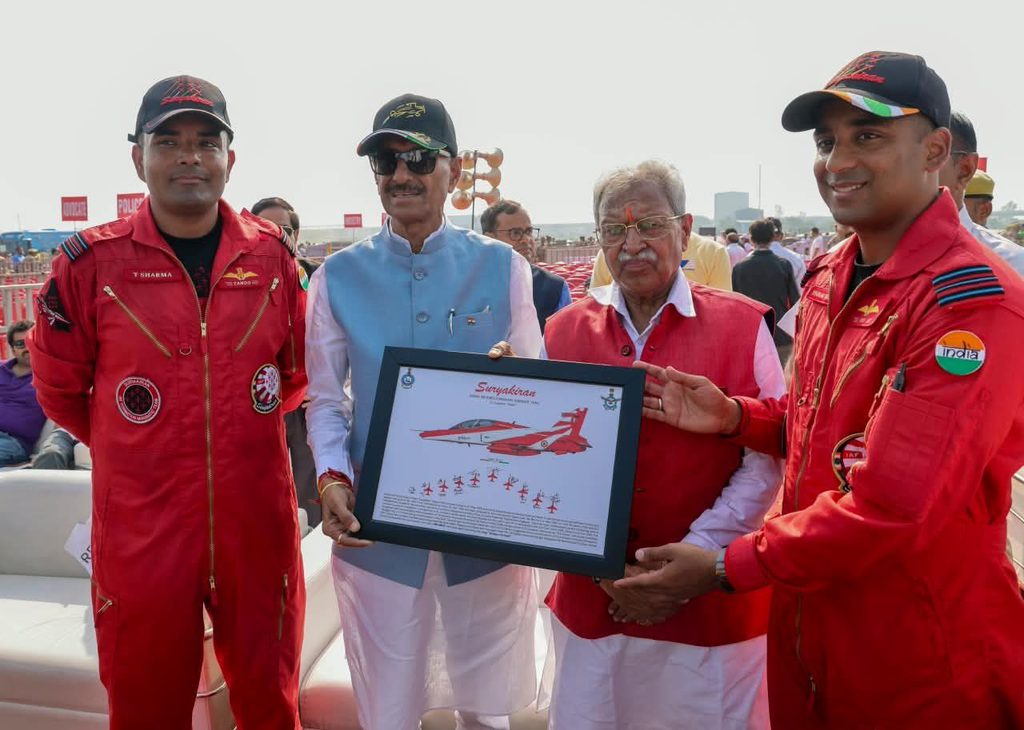
The minister of state for defence, Sanjay Seth, attended the concluding display on September 20. In a social-media post, Seth described the performance as a demonstration of discipline, precision, teamwork and professionalism, and said it reflected the Indian Air Force’s capabilities.
The Uttar Pradesh chief minister, Yogi Adityanath, praised the pilots after the opening-day performance on September 19. He called the display, organized under the “Seva Sankalp Abhiyan”, a source of pride and inspiration for the state and the country.
The show also had a strong local connection, with three members of the team belonging to Meerut. Squadron Leaders Aman Goyal and Rahul Singh flew in the display, while Squadron Leader Sharad Goyal coordinated operations from the ground, according to the organizers.
Led by Group Captain Ajay Dasarathi, Suryakiran comprises 13 pilots, nine of whom fly in its principal formation displays. Team members also interacted with defence aspirants during the visit, explaining the training, coordination and professional discipline required for close-formation aerobatics.
The Hawk-Mk 132 is a two-seat advanced jet trainer used by the Air Force to prepare pilots for frontline fighter aircraft. Licence-manufactured in India by Hindustan Aeronautics Limited, the type replaced the indigenous Kiran Mk II in Suryakiran service after the team was reconstituted in 2015.
The aircraft used at Meerut were fitted with indigenously developed smoke pods capable of producing coloured trails. The system was integrated by the Air Force’s Base Repair Depot in Nashik, enabling the team to incorporate the Tricolour into its displays without altering the aircraft’s primary training role.
Aerobatic flying requires pilots to hold formation through rapid changes in speed, altitude and direction, leaving little margin for error. Applicants to Suryakiran generally need extensive operational flying experience before undergoing several months of specialized training for the team, according to pilots who spoke before the Meerut event.
The authorities temporarily prohibited drones, remotely piloted aircraft, hot-air balloons and other unmanned aerial vehicles within a 10-nautical-mile radius of Mohiuddinpur for the duration of the programme. The restrictions were intended to protect the display airspace as the jets conducted low-level formation flying.
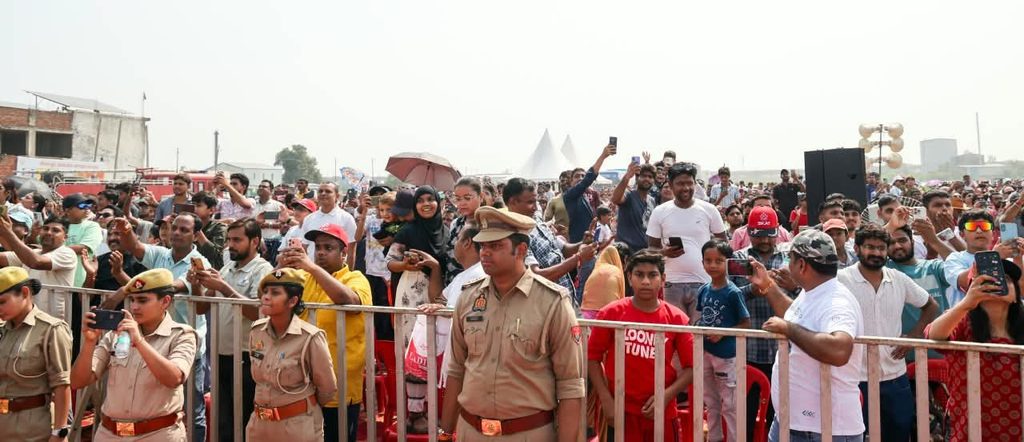
Photo: X/@SethSanjayMP
Established in 1996 as part of the Air Force’s No 52 Squadron, Suryakiran is Asia’s only aerobatic team to routinely fly a nine-aircraft formation. It has completed more than 800 displays in India and abroad, including appearances in China, Sri Lanka, Myanmar, Thailand, Singapore and the United Arab Emirates.
Beyond demonstrating flying skills, such displays form part of the Air Force’s public outreach and recruitment effort, particularly among students and young defence aspirants. Meerut’s military heritage and its large cantonment gave the team’s first appearance over the city added significance.