



IAF to evaluate indigenous unmanned systems in Pokhran
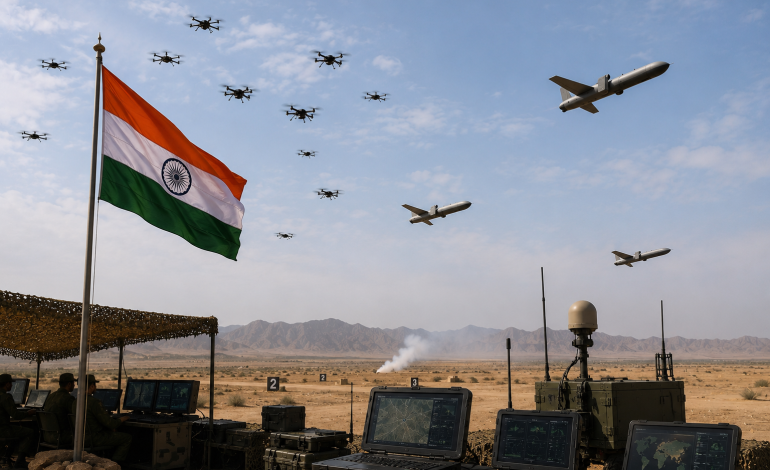
Representational image by RNA Media

New Delhi: The Indian Air Force is set to evaluate a range of indigenous unmanned systems at the Pokhran firing range in Rajasthan in September, as Indian defence companies prepare to demonstrate technologies for future combat and support missions. The event is expected to bring several types of drones and unmanned platforms before senior Air Force officials for assessment.
According to an Economic Times report, the demonstration is expected to feature one-way attack drones, long-range loitering munitions, swarm drones, surveillance platforms and unmanned systems designed for cargo and logistics missions.
One-way attack drones are designed to strike targets without returning to base, while loitering munitions can remain airborne while searching for or waiting to engage a target. Swarm systems involve multiple drones operating together, potentially allowing them to cover larger areas or overwhelm defences.
The showcase is also expected to include long-range unmanned platforms capable of operating beyond 1,000 kilometres, with some systems providing live video feeds to operators. Swarm drones with ranges exceeding 300 kilometres are also expected to be demonstrated, according to the report.
The planned event comes as unmanned systems have assumed a larger role in modern warfare. The extensive use of drones and loitering munitions in the Russia-Ukraine war and the Iran conflict has highlighted their applications in surveillance, reconnaissance, precision strikes and attacks on military infrastructure.
For the IAF, however, the focus is not limited to combat systems. Cargo and logistics drones are also expected to be demonstrated, with potential applications in supplying troops operating in difficult terrain. Such platforms could also be used for medical logistics and casualty evacuation.
The Air Force is also examining unmanned systems for the electronic warfare environment. Some of the platforms being developed are intended to locate and engage electronic warfare emitters, potentially giving unmanned systems a role in countering enemy jamming and other electronic threats.
Why Pokhran?
The choice of Pokhran provides an established testing environment for the demonstration. The IAF regularly uses the Pokhran Air-to-Ground Range for weapons trials and operational exercises involving live firing and advanced combat systems.
The range was also used for Exercise Vayushakti 2026, where the IAF demonstrated a range of air power capabilities, including remotely piloted aircraft, short-range loitering munitions and counter-unmanned aerial systems.
The planned showcase is therefore expected to go beyond a conventional defence exhibition. It will allow the IAF to examine indigenous unmanned systems in a field environment and assess their suitability for different operational requirements.
The event also comes as the IAF expands its engagement with Indian industry in unmanned warfare. In June, the service initiated work with domestic companies on long-range fixed-wing one-way attack unmanned aerial systems, reflecting the growing importance of indigenous strike-drone capabilities.