


IAF orders longer-range version of indigenous Sureshastra Mk1 loitering munition
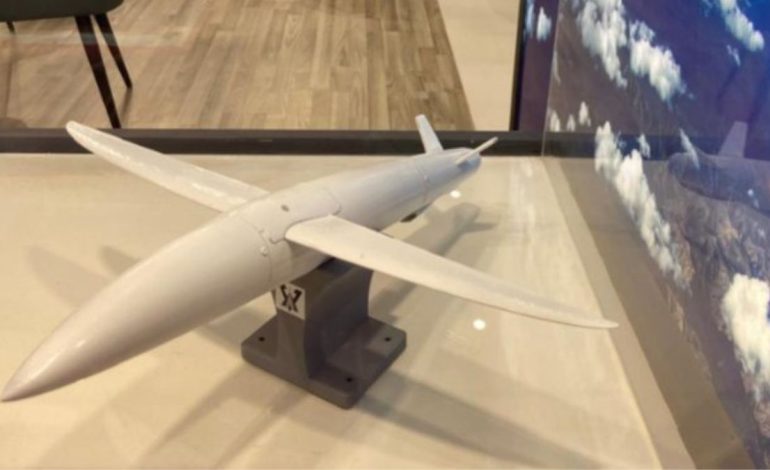
The IAF is set to induct an upgraded Sureshastra Mk1 loitering munition, doubling its reported strike range to up to 300 km. Image Credit: X / @Varun55484761

New Delhi: The Indian Air Force has placed a fresh order for an upgraded, longer-range version of the indigenously developed Sureshastra Mk1 loitering munition, according to a report by Janes. The new variant reportedly extends its strike range to up to 300 km.
The contract, worth ₹3 billion, was awarded to Delhi-based Veda Aeronautics in early 2026, a company spokesperson told Janes. It follows a separate ₹3 billion contract signed in August 2023 for 200 units of the baseline Sureshastra Mk1, which has a range of more than 150 km.
The Sureshastra Mk1 is a catapult-launched, jet-powered loitering munition, sometimes described as a “kamikaze drone.” It measures 3.5 metres in length, has a wingspan of three metres, and weighs about 90 kg fully loaded. The platform uses a fixed-wing, V-tail configuration.
Veda Aeronautics said the upgraded variant was developed after incorporating operational feedback from the IAF on the original system, which began deliveries in 2025. The drone can be configured for precision strike, ISR (intelligence, surveillance and reconnaissance) missions, or deployed as a decoy to draw out enemy air-defence systems.
The system can operate in GPS-denied environments and is designed for swarm deployment. This allows multiple units to coordinate autonomously and share targeting data to overwhelm enemy defences.
Beyond the upgraded Mk1, Veda Aeronautics told Janes that it has developed the Sureshastra Mk2, which has a reported range of more than 500 km and has entered flight trials. The company is also developing another long-range loitering munition with a range exceeding 1,500 km, which it says is designed to operate in a manner similar to Iran’s Shahed-series loitering munitions.
The company is also developing a canister-launched version of the Sureshastra family for the Indian Army, intended for integration with the Army’s BMP infantry fighting vehicles. That project, undertaken in response to an Army request for proposal, has entered the prototyping stage.
Veda Aeronautics has said its broader portfolio includes hard-kill anti-drone systems, first-person-view (FPV) drones, and underwater decoys for the Navy, as part of the company’s “Make in India” focus on indigenous unmanned systems.
Veda Aeronautics is a New Delhi-based defence startup that develops indigenous unmanned aerial systems and loitering munitions for the Indian armed forces. The company focuses on AI-enabled autonomous technologies and has emerged as one of India’s private players supporting the country’s drive towards self-reliance in defence manufacturing.