


Iran war could bleed Gulf economies of $790 billion by 2030, with $200 billion in physical destruction: Allianz

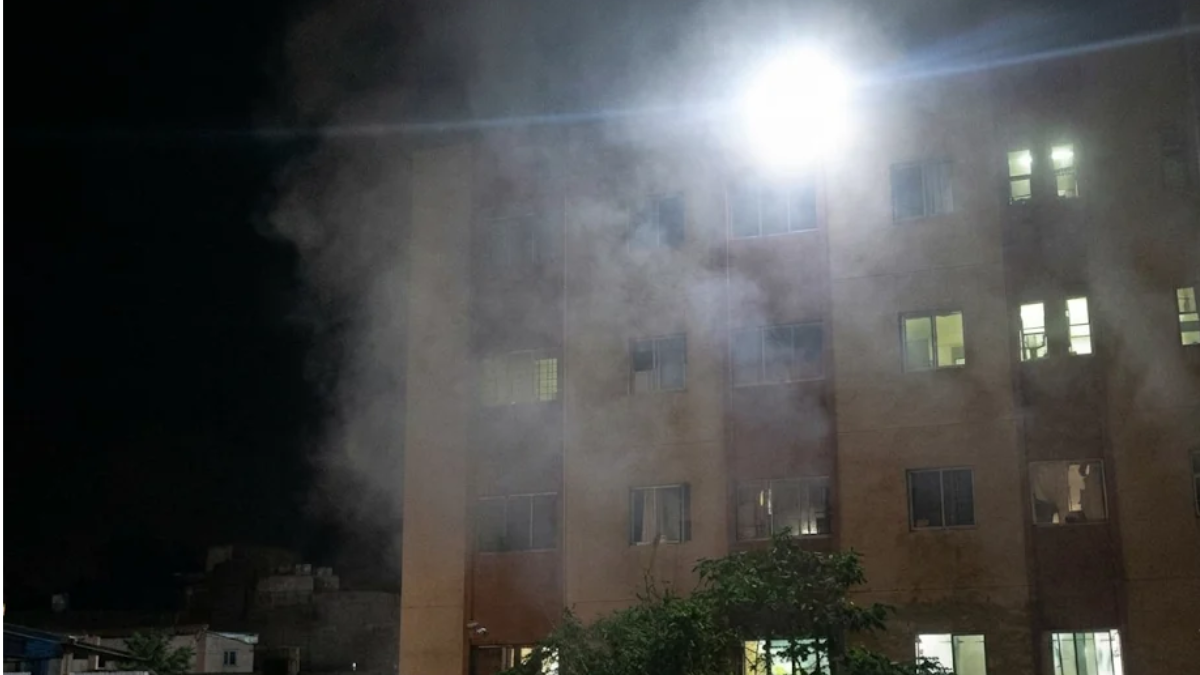
A fire at the Fujairah oil facility in the UAE after an Iranian drone strike. (Photo: X /@ShaykhSulaiman)

New Delhi: The war involving the United States, Israel and Iran could deprive Gulf economies of an estimated $790 billion in economic output by 2030, inflicting financial damage that will persist long after the fighting ends, according to a new assessment by Allianz Trade. The conflict has already caused more than $200 billion in physical destruction, predominantly affecting energy infrastructure, and is forcing some of the world’s wealthiest oil-producing countries to reconsider their investment priorities and economic strategies.
The report published by Allianz on November 9 estimates that the six members of the Gulf Cooperation Council (GCC) – Saudi Arabia, the United Arab Emirates, Qatar, Kuwait, Bahrain and Oman – will collectively lose economic output equivalent to 5.9 per cent of their projected GDP through 2030. The $790 billion figure represents the cumulative shortfall against pre-war economic expectations, rather than money already spent, underscoring the conflict’s long-term consequences.
The war began on February 28, when American and Israeli forces launched strikes against Iran, prompting Tehran to retaliate against US-linked military facilities and critical infrastructure across neighbouring Gulf countries. Iran also imposed restrictions on shipping through the Strait of Hormuz, disrupting one of the world’s most strategically important maritime passages for oil and liquefied natural gas exports.
According to Allianz, more than 80 energy installations have been struck during the conflict, principally in Kuwait, Qatar and Bahrain, with approximately one-third sustaining severe damage. These countries are particularly vulnerable because their energy exports depend heavily on uninterrupted passage through Hormuz, leaving them with fewer alternatives when maritime traffic is threatened.
The economic repercussions extend considerably beyond damaged oilfields, refineries and export terminals, affecting aviation, tourism, property markets and international investment. Allianz forecasts that the GCC economy will contract by 4 per cent in 2026, a reversal of 8.2 percentage points from its pre-war growth expectations.
The hydrocarbon sector is projected to shrink by 8.5 per cent this year, with regional trade declining by 5.5 per cent as shipping disruptions and security concerns undermine commercial activity. Tourism arrivals fell by 22 per cent during the first half of 2026, while Dubai’s property market had declined by 10.2 per cent by September from its January peak.
The impact, however, has been uneven, reflecting significant differences in geography, infrastructure and economic resilience among the Gulf states. Saudi Arabia and the UAE possess some capacity to redirect energy exports through alternative routes, whereas Kuwait, Qatar and Bahrain remain substantially more exposed to disruptions in Hormuz.
Oman has emerged in a comparatively advantageous position because its location outside the narrowest constraints of the strait allows it to serve as an alternative commercial and logistical gateway. Nevertheless, the wider region continues to face rising import costs, weaker investor confidence and inflationary pressures, with Allianz forecasting average GCC inflation of 2.6 per cent in 2026.
Reconstruction costs and mounting debt
The conflict is also expected to fundamentally alter the financial calculations underpinning the Gulf’s ambitious economic diversification programmes. Allianz estimates cumulative GCC budget deficits of $475 billion between 2026 and 2030, with financing requirements rising to approximately $722 billion when maturing debt obligations are included.
To bridge these shortfalls, governments are expected to issue approximately $301 billion in additional debt, draw down $125 billion in foreign exchange reserves and potentially transfer $90 billion from sovereign wealth funds. Such measures would preserve fiscal stability but could reduce the financial resources available for overseas investments and expensive domestic development projects.
The report anticipates a strategic shift towards protecting essential infrastructure, particularly electricity networks, desalination facilities, transport corridors, defence installations and data centres. Governments could redirect approximately $380 billion to $400 billion towards these priorities, including infrastructure designed to reduce dependence on the Strait of Hormuz.
The implications extend to international financial markets because Gulf sovereign wealth funds are major investors in global equities, bonds and infrastructure assets. Allianz estimates that approximately $120 billion could be repatriated for domestic investment, potentially reducing the region’s appetite for overseas fixed-income securities.
Hormuz remains the decisive uncertainty
The latest developments suggest that a lasting settlement remains elusive, despite renewed diplomatic initiatives involving Qatar and indications that Washington is reluctant to undertake another major military campaign. On Wednesday, Reuters reported that maritime traffic through Hormuz was recovering even as attacks on commercial shipping continued, highlighting the fragility of the improvement.
October recorded the highest monthly liquefied natural gas exports through the strait since the war began, but attacks on vessels also reached a wartime peak. Meanwhile, Iran has maintained that reopening Hormuz depends on Washington accepting its conditions, including sanctions relief and an end to hostilities.
For India, the economic deterioration in the Gulf has implications for energy security, maritime commerce, expatriate employment and remittance flows. Continued instability could affect oil and gas supplies, increase shipping and insurance costs, and weaken commercial activity in a region that hosts millions of Indian workers.
The Allianz projections ultimately illustrate that the economic consequences of the war may outlast its military phase by several years. Even a diplomatic breakthrough would leave Gulf governments confronting the substantial costs of reconstruction, higher borrowing requirements and an increasingly urgent need to protect their economies against future disruptions.