
Switzerland’s neutrality faces a new test as voters decide future of arms exports. Why Europe is watching
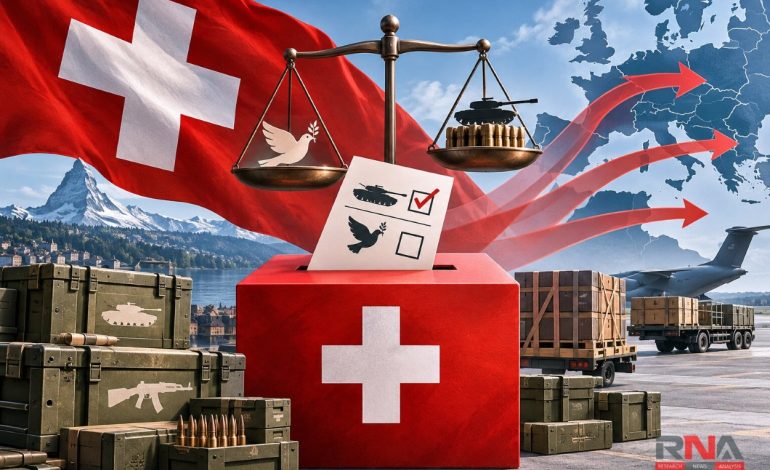
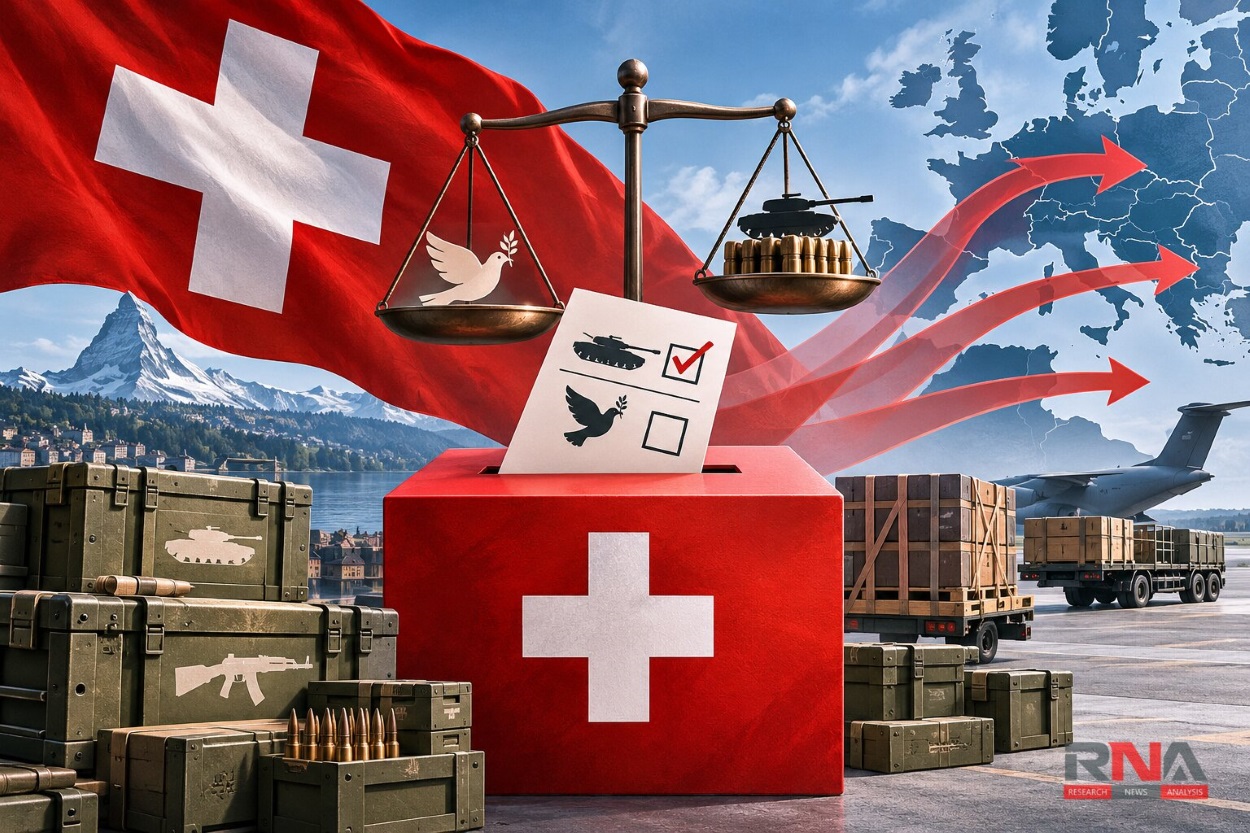
RNA Media illustration for representation.

New Delhi: Switzerland is approaching a politically consequential referendum that could reshape its defence industry and redefine how the traditionally neutral country conducts arms trade with foreign governments. The November 29 vote will determine whether Swiss manufacturers can operate under less restrictive export regulations, exposing a growing conflict between the country’s security interests, commercial ambitions and long-established principles of military neutrality.
The proposed changes to Switzerland’s War Materiel Act have divided political parties, defence manufacturers and neutrality campaigners at a time when Russia’s war against Ukraine has transformed Europe’s security environment. Supporters argue that existing restrictions threaten Switzerland’s military-industrial capabilities, while opponents warn that relaxing them could allow Swiss-made weapons to reach countries involved in armed conflicts.
Under legislation approved by the Swiss parliament on December 19, 2025, the government would gain greater flexibility to authorize military exports to 36 designated partner countries, including European nations, the United States and Japan. Crucially, some deliveries could continue even when recipient countries are involved in armed conflicts, provided the transactions remain consistent with Switzerland’s neutrality obligations and foreign-policy interests.
The amendment would also relax the requirement that foreign purchasers obtain Bern’s permission before transferring Swiss-manufactured weapons to third countries. However, according to the Swiss government’s official explanation, authorities would retain the power to impose re-export restrictions where national security, foreign-policy or neutrality considerations demand them.
Why Ukraine has complicated Swiss neutrality
Switzerland’s stringent arms-export regulations have become increasingly controversial since Russia launched its full-scale invasion of Ukraine in February 2022. Bern has repeatedly prevented European governments from transferring previously purchased Swiss-made military equipment to Kyiv, creating friction with countries seeking to strengthen Ukraine’s defensive capabilities.
Germany subsequently excluded Swiss manufacturers from certain defence procurements, while Denmark and the Netherlands suspended orders, according to Reuters. These developments have reinforced concerns that Switzerland risks losing its place in European defence supply chains as neighbouring countries expand military production.
Nevertheless, the proposed legislation would not permit direct Swiss arms exports to Ukraine, which remains outside the arrangement. The government has also clarified that existing contractual restrictions would continue to apply, although future transfers of newly purchased equipment could become possible under certain circumstances.
This distinction is central to the controversy because the reform seeks to provide commercial flexibility without formally abandoning Switzerland’s neutrality obligations. Whether such flexibility can be maintained without indirectly benefiting participants in armed conflicts remains a major point of disagreement.
A billion-dollar industry faces uncertainty
Switzerland possesses a substantial defence-manufacturing industry despite its relatively small domestic military market. According to figures cited by Reuters, the sector employs approximately 14,000 people and exported military equipment worth about $1.15 billion in 2025, making the country the world’s 17th-largest arms exporter over the preceding decade.
Companies operating in Switzerland include Germany’s Rheinmetall, France’s Thales and firearms manufacturer SIG Sauer, alongside numerous specialized suppliers. Industry representatives argue that excessively restrictive regulations could encourage manufacturers to relocate production abroad, weakening domestic technological capabilities and Switzerland’s ability to obtain critical military equipment.
Matthias Zoller, general secretary of the Swiss Aeronautics, Security and Defence Association, has described the referendum as a potentially decisive moment for the industry. Supporters also contend that Switzerland must remain integrated into international defence-production networks to ensure access to weapons, components and technologies during future emergencies.
Opponents, however, reject the assumption that commercial expansion necessarily strengthens national security. Green Party and Social Democratic politicians warn that loosening controls could reduce accountability over the eventual destination of Swiss weapons, including the possibility of equipment reaching governments involved in human-rights abuses.
A changing interpretation of neutrality
Switzerland’s permanent neutrality has deep historical roots and is governed by international obligations, including the 1907 Hague Conventions. Nevertheless, neutrality does not automatically prohibit all commercial arms transactions, and Switzerland has historically maintained domestic restrictions extending beyond the minimum requirements of international law.
The debate has acquired additional significance following a separate referendum on September 27 this year when Swiss voters rejected a proposal to impose a stricter constitutional definition of neutrality. According to the Swiss foreign ministry, 70.15 per cent opposed that initiative, signalling substantial public resistance to restricting Switzerland’s international security cooperation.
The November referendum, however, presents a different question: whether greater freedom in arms exports can coexist with the country’s neutrality commitments. With opinion surveys indicating a closely contested outcome, the vote could influence Switzerland’s future role in European defence cooperation without necessarily changing its formal neutral status.
For countries such as India, which increasingly emphasize defence manufacturing, international partnerships and resilient military supply chains, the Swiss debate illustrates a broader strategic dilemma. Governments seeking technological self-reliance must balance export opportunities and industrial competitiveness against diplomatic obligations, end-use safeguards and the political consequences of weapons transfers.
The immediate decision rests with Swiss voters, but its implications extend beyond Switzerland’s borders. At stake is whether a neutral country can remain commercially competitive in an increasingly militarized international environment without compromising the principles underpinning its foreign policy.