

Water ingress reported onboard INS Kesari at Visakhapatnam naval dockyard, no injuries
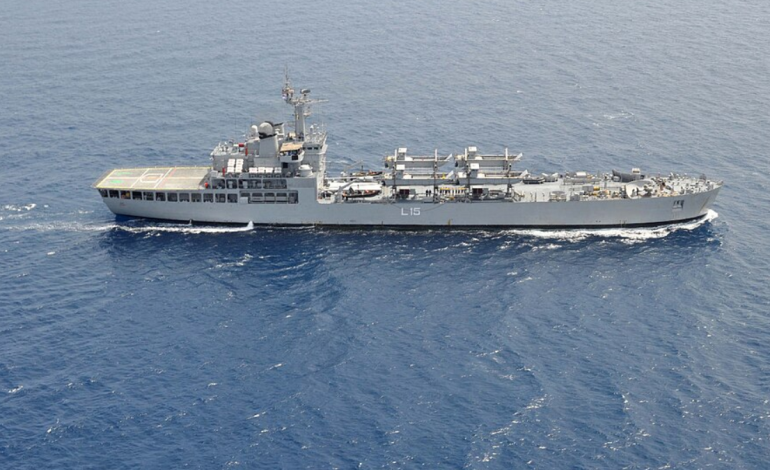
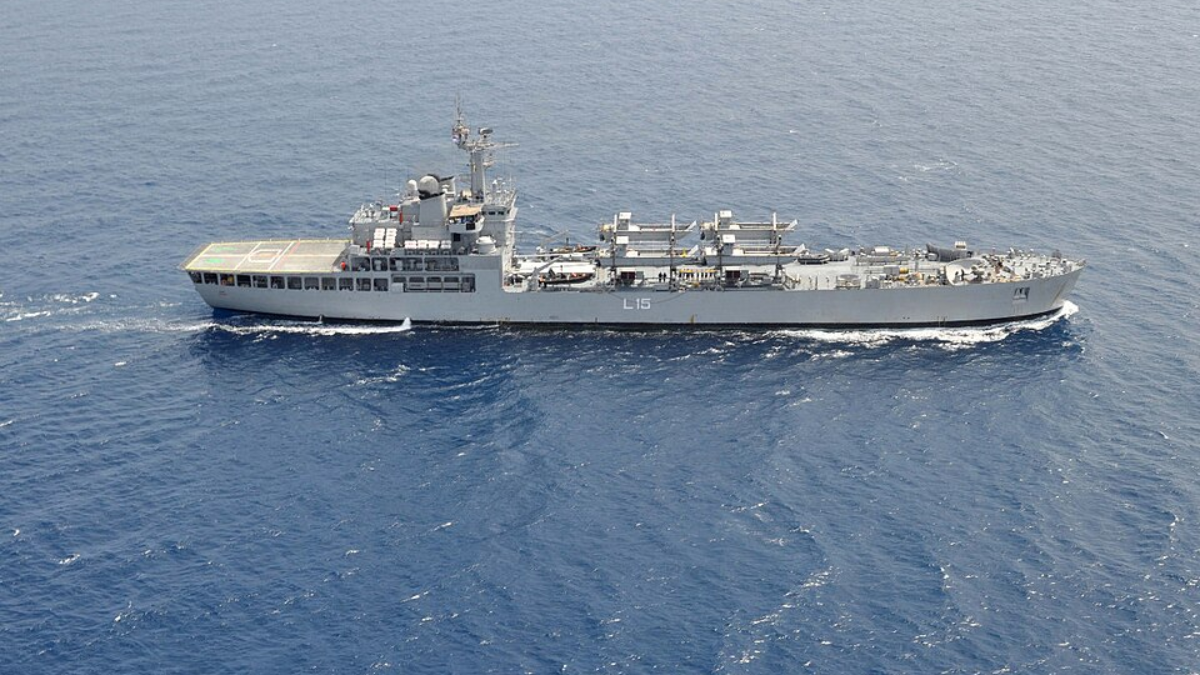
INS Kesari. (Image courtesy: Wikimedia)

New Delhi: Water ingress was reported onboard the Indian Navy ship INS Kesari on Saturday afternoon while it was berthed at the Naval Dockyard in Visakhapatnam, the Navy said.
No injuries or loss of life have been reported, Navy spokesperson said. Operations to pump out the water are in progress.
The Navy has not said how much water entered the ship, which compartments were affected or what caused the ingress. It has also not said whether the ship was under refit or in operational service at the time.
Water ingress means water entering a ship’s hull or internal compartments when it should not. It can happen through a breach in the hull, a damaged or failed pipe or seawater valve, a faulty seal, or an open hatch or opening, a naval source explained.
“There are multiple ways. INS Kesari is an amphibious ship. Since ships are made of steel, there is a possibility that a joint can fail, a propeller shaft seal can have a problem. Holes and corrosion are other issues why this happens,” the source said.
Ships also have ways to contain ingress, the source added. The real cause can be established only after the ship is dry docked, or taken out of the water for inspection, and a technical investigation is carried out. The source listed structural failures, mechanical failures in pipes and systems, and operational factors during day-to-day operations as possible causes.
Ships are divided into watertight compartments so that flooding in one section does not spread to the rest. Crews and dockyard teams usually respond by pumping out the water, isolating the affected area and checking the hull and fittings.
In a berth, ingress is generally easier to control than at sea, because pumps, dockyard staff and shore support are close at hand. Pumping out the water quickly matters because even at a dock, a ship that takes in a lot of water can tilt or sit lower in the water.
INS Kesari is a Shardul-class tank landing ship, a type of vessel built to carry troops, vehicles and equipment ashore and to support disaster relief. It was built by Garden Reach Shipbuilders and Engineers in Kolkata and commissioned into the Navy on April 5, 2008. The ship carries the same name as an earlier Navy landing ship that served from 1975 to 1999.
Earlier dockyard incidents involving Navy ships
The most serious case involving flooding at a dockyard was the loss of the submarine INS Sindhurakshak. Explosions and a fire onboard in August 2013, while it was berthed at the Naval Dockyard in Mumbai, were followed by flooding, and the submarine sank at its berth. Eighteen sailors died. The government told Parliament that attempts to pump out the flooded compartments had made little difference, which suggested water was still entering through damage to the hull.
In January 2018, the nuclear-powered submarine INS Arihant had suffered water damage to its propulsion compartment after a hatch was left open by mistake, and it had been under repair for about 10 months, as was reported by the Hindu at the time.
In July 2024, the Indian Navy’s guided-missile frigate INS Brahmaputra caught fire on the evening of July 21 while undergoing refit and maintenance at the Naval Dockyard in Mumbai. The ship later tilted to its port (left) side, and a junior sailor, Leading Seaman Sitendra Singh, went missing. His body was recovered three days after the fire, after Navy divers searched the ship.