


Hackers expose 41,000 US homeland security staff and lift lid on US immigration surveillance
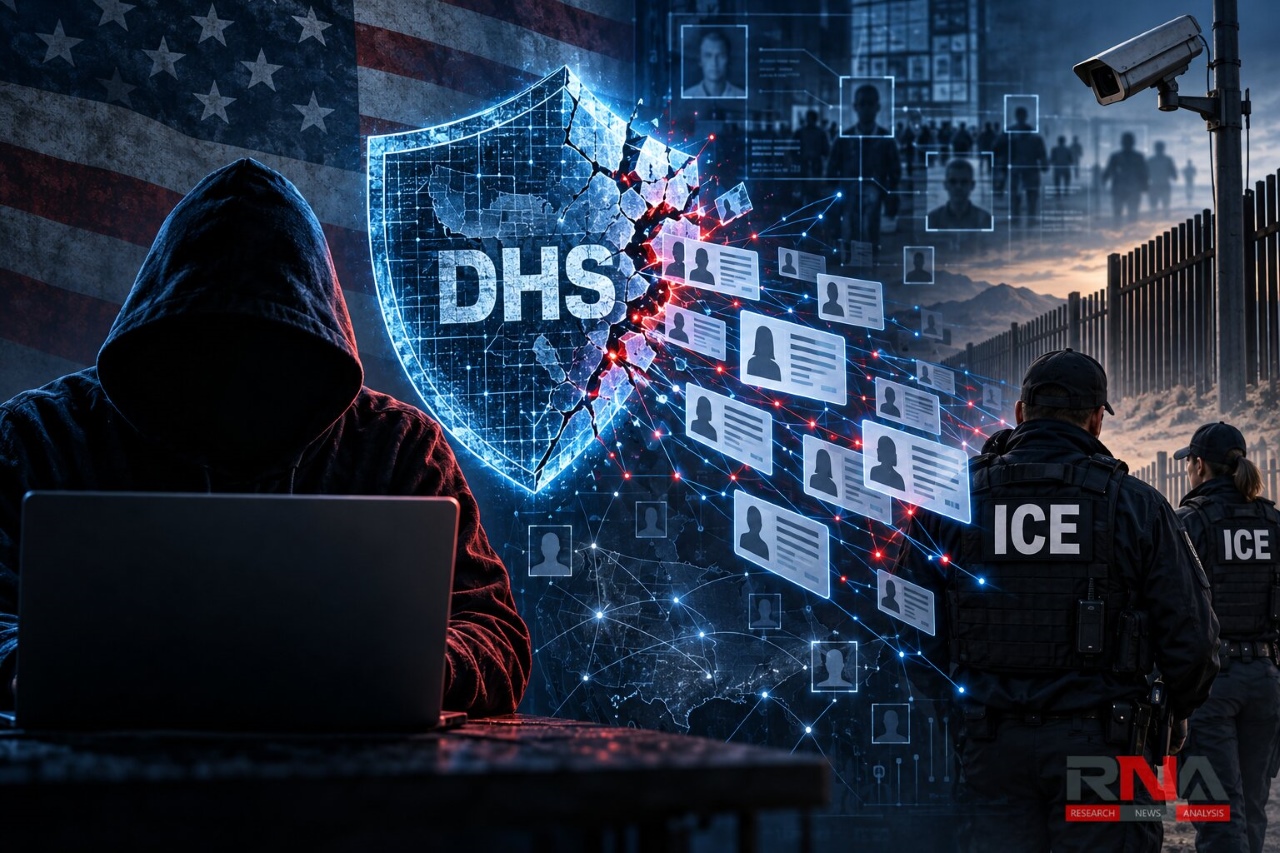
RNA Media illustration for representation.

New Delhi: Details of more than 41,000 US homeland security employees and contractors have been published online, exposing personnel across immigration enforcement, border security and other sensitive functions. The disclosure also reveals internal assignments and access groups, offering an unusually detailed view of the machinery behind Washington’s immigration and surveillance operations.
The US Department of Homeland Security (DHS) has acknowledged a potential breach and said it is taking steps to protect its personnel. The exposure presents risks extending beyond privacy, with officials warning that identifying officers could endanger employees, their families and criminal investigations.
The nonprofit publisher Distributed Denial of Secrets, known as DDoSecrets, released the archive, called Icepick, on Wednesday. According to its publication announcement, a group calling itself the Department of Peace supplied the records, while the researcher and journalist maia arson crimew developed a searchable version with assistance from the journalist Ryan Fae.
Records reach beyond immigration officers
The information includes names, job titles, telephone numbers, email addresses and workplace locations, alongside details linking personnel to internal groups. The affected organizations include US Customs and Border Protection (CBP), Immigration and Customs Enforcement (ICE), Homeland Security Investigations (HSI), US Citizenship and Immigration Services and the Cybersecurity and Infrastructure Security Agency.
More than 21,000 entries relate to CBP, while approximately 6,600 concern ICE personnel outside the separately identified HSI records. These distinctions matter when comparing published totals: HSI is ICE’s investigative arm, rather than an independent department, and reports grouping the two together give a combined figure of around 10,000.
The Washington Post reported that it reviewed the database and confirmed its authenticity with current and former officials. However, the publishers acknowledge that the collection is incomplete and may contain errors, meaning it cannot be treated as a definitive register of the department’s workforce or current assignments.
Surveillance links deepen the exposure
The archive’s significance lies partly in its account permissions, which can connect employees with particular software and functions. The Verge identifies links to Mobile Fortify, a facial-recognition application, and PenLink, whose products help collect and analyse telephone and online information.
Wired’s examination found more than 55,000 internal group names, including references to undercover work, interception programmes, investigative platforms and artificial intelligence services. It reported that the records were last updated on August 19 this year, making them a historical snapshot rather than a live account of access or deployment.
Such information could help outsiders reconstruct reporting relationships and identify personnel associated with sensitive activities, a security expert told Wired. That creates opportunities for convincing impersonation attempts and targeted approaches to employees, even where the disclosed information consists largely of professional details.
Access-group membership nevertheless requires cautious interpretation: an account’s inclusion does not, by itself, establish that its holder used a particular tool in a specific investigation. As an evidentiary matter, the records provide leads for further scrutiny rather than proof of individual conduct.
Breach route remains unresolved
The publishers say the information came from an Okta single sign-on service used by DHS, but that account has not been independently established. Okta told Reuters: “Okta is secure, and we have no evidence our data or systems were compromised.”
The news agency reported that it could not authenticate the entire archive, although it corroborated information about several employees and confirmed details directly with three staff members. Some records overlapped with publicly available professional profiles, while others disclosed internal organizational information.
In a subsequent development, the White House border official, Tom Homan, condemned the release and said the justice department was investigating. Speaking in Miami, he argued that publishing officers’ identities increased the dangers facing personnel and their families.
The disclosure follows other recent incidents involving FBI personnel information and military records, adding to questions about the protection of sensitive government workforce data. The Department of Peace had also claimed responsibility for an earlier DHS-related disclosure involving contracts and outside organizations.
That earlier collection, published in March, concerned contracting information involving thousands of businesses, public bodies and universities. The latest release shifts attention from external relationships to the department’s personnel and internal structure, widening the consequences of the exposure.