Indian Naval Academy develops two-drone rescue system to locate survivors at sea, deliver lifebuoys
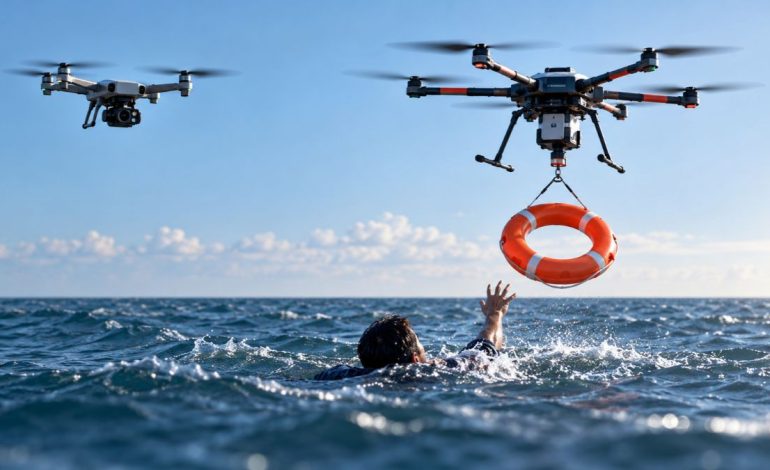
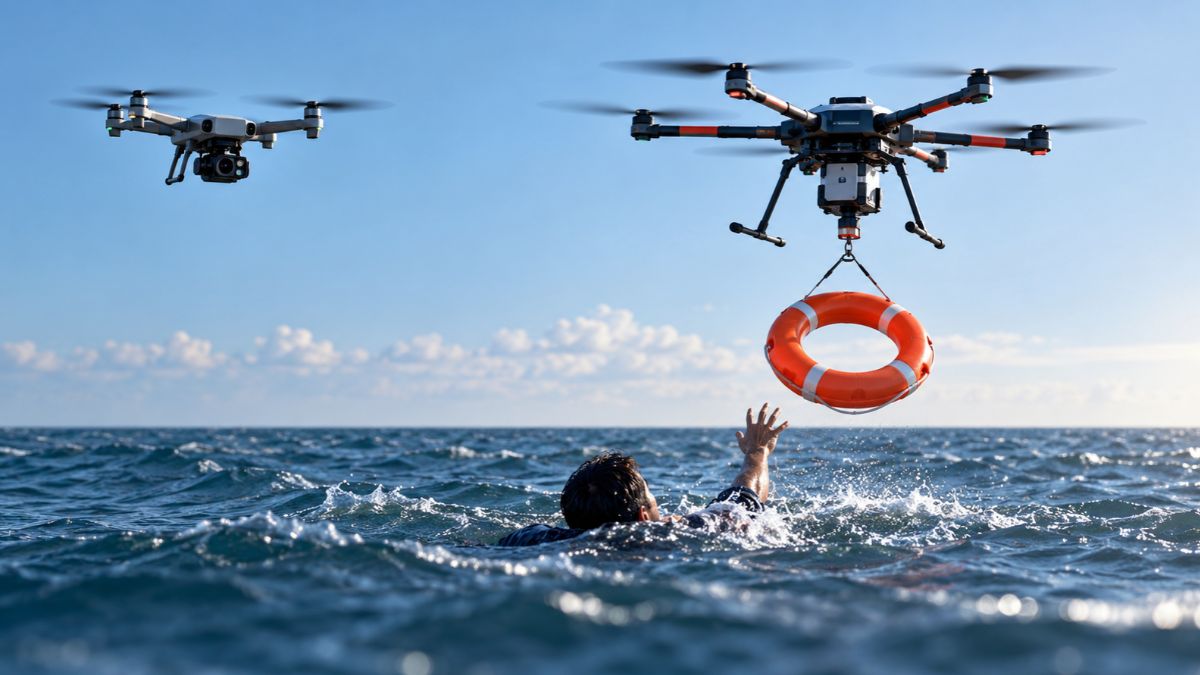
Representative picture via AI generated)

New Delhi: The Indian Naval Academy has developed a two-drone rescue concept in which one aircraft searches for people in the water and a second carries a lifebuoy to their location. The proposed arrangement is intended to reduce the interval between identifying a survivor and providing flotation support during maritime emergencies.
Speaking to ANI on Tuesday, Midshipman Sudhanshu Tanwar, one of the developers, explained that the indigenously built system combines a four-rotor quadcopter for searching with a six-rotor hexacopter for delivering lifebuoys. Both aircraft communicate through long-range radio-frequency links.
How the two-drone rescue system works
The search drone uses 2K optical and thermal cameras to scan the water. An artificial intelligence model called YOLO analyses the live video feed to identify potential survivors.
Once a person is detected, the hexacopter navigates towards the identified location using GPS while carrying a lifebuoy. The flotation device is released only after an operator authorizes the drop, ensuring human control over the final delivery decision. The drone then returns to its launch point autonomously.
According to Tanwar, the quadcopter has a flight endurance of 45 minutes, a payload capacity of 0.5 kilograms and a maximum speed of 50 kilometers per hour. The hexacopter can reportedly fly for 25 minutes, carry 2.5 kilograms and reach speeds of 40 kilometers per hour. Both drones have a stated operating radius of 10 kilometers.
Potential applications and operational challenges
The system could assist during man-overboard incidents, fishing vessel accidents and other maritime emergencies where rescue ships or helicopters require additional time to reach survivors. Rapid aerial detection, combined with lifebuoy delivery, could provide crucial flotation support before conventional rescue teams arrive.
However, strong winds, rough seas, poor visibility and limited battery endurance could affect detection accuracy and delivery. An exhausted survivor may also struggle to reach a dropped lifebuoy, making precise placement essential.
The technical figures are developer-reported specifications. Independent confirmation of successful open-sea trials involving the complete two-drone rescue sequence or formal operational induction has not been made public.
India’s growing maritime rescue capabilities
The development comes amid wider efforts to strengthen technology-assisted maritime rescue operations. On June 29, the Indian Coast Guard rescued six fishermen from the distressed fishing vessel Manju Matha off Mangaluru using remotely operated lifebuoys despite rough seas and strong winds, according to the defence ministry.
The Indian Navy had also signed a ₹13 crore contract in 2021 to procure indigenously developed robotic lifebuoys from Visakhapatnam based saif seas under the Innovations for Defence Excellence (iDEX) programme. Unlike the academy’s aerial concept, these devices travel across the water towards stranded individuals.
More recently, the Indian Coast Guard conducted Sarex – 2026 off Paradip on October 8, demonstrating coordinated rescue operations involving ships, aircraft, life rafts and remotely operated vehicles.