


Oleshky ceasefire begins as Russian strikes hit Kyiv, exposes limits of local truce
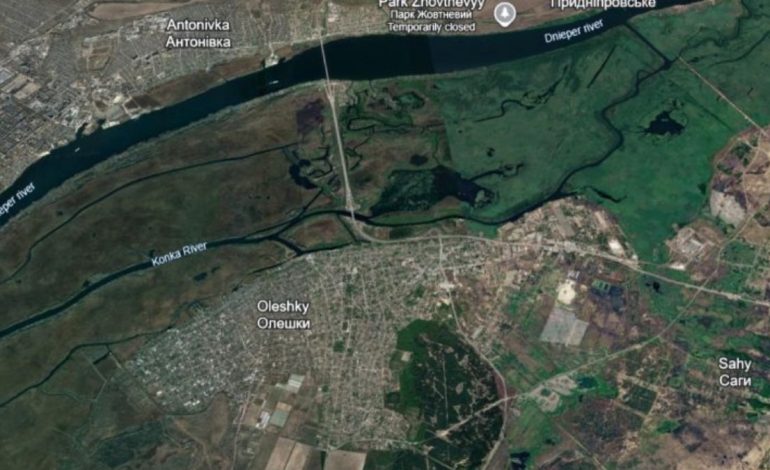
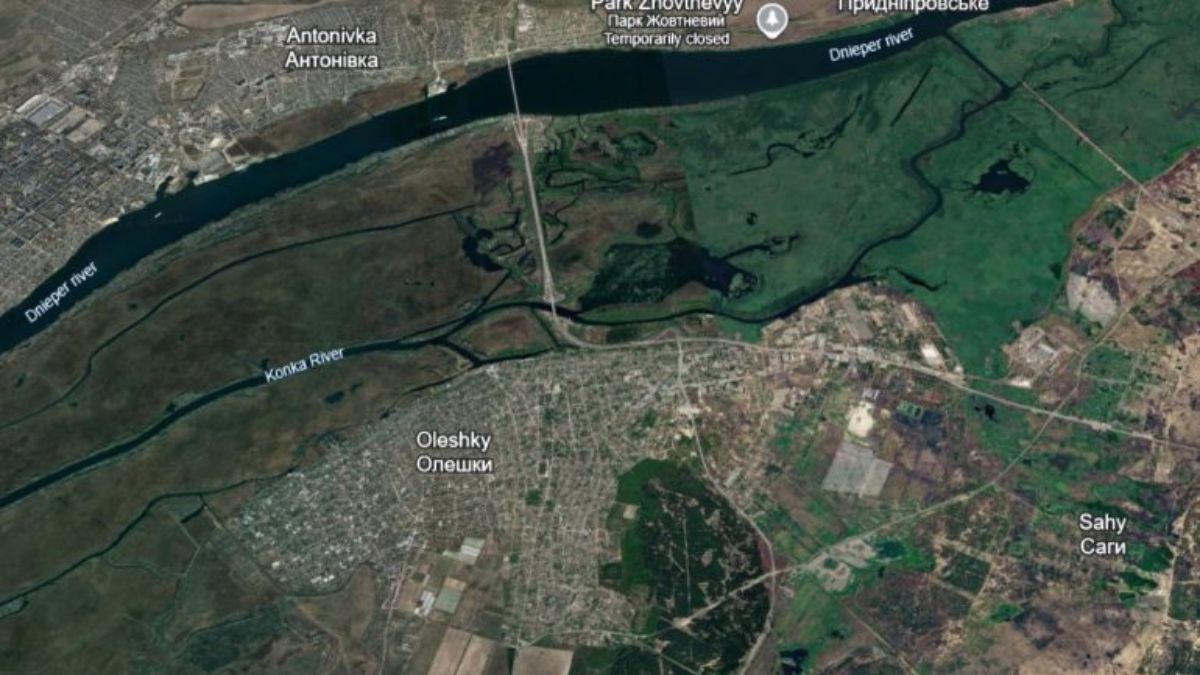
This Google Earth image shows the besieged town of Oleshky in Kherson.

New Delhi: Russia and Ukraine began a localized ceasefire around Russian-occupied Oleshky on Tuesday to allow humanitarian assistance and prepare civilian evacuations. The narrowly defined pause took effect as Russian attacks continued elsewhere, leaving at least one person dead and 15 injured in Kyiv since Monday evening.
New strikes on Tuesday damaged Kyiv’s Southern Bridge and metro infrastructure, forcing traffic suspensions, according to Reuters.
Monday’s missile barrage also damaged a university campus, residential buildings and two medical facilities, including an intensive care unit. Condemning the attacks, Ukrainian president, Volodymyr Zelenskyy, said the missiles struck densely populated areas without nearby military installations. “This was a strike directly on the city, on its infrastructure,” he said on social media.
Russia’s defence ministry said its strikes had targeted transport infrastructure in Kyiv and facilities elsewhere it described as being used for military purposes.
The Oleshky truce began at 3am Kyiv time, equivalent to 4am in Moscow. Ukraine’s human rights commissioner, Dmytro Lubinets, confirmed Kyiv was honouring the agreement, while Russia’s defence ministry said it had stopped shelling towards Ukrainian-held Kherson to prepare for the operation.
The White House originally announced an October 29 start, but subsequent Ukrainian and Russian statements set Tuesday as the ceasefire’s commencement.
As RNA Media previously reported on the Oleshky ceasefire agreement, the pause covers the designated humanitarian operation, not the whole of Ukraine. Strikes on Kyiv do not, by themselves, establish a breach of its terms.
Oleshky lies across the Dnipro river from Kherson and has been under Russian occupation since February 2022. The destruction of the Kakhovka dam in 2023 flooded about 90 per cent of the town’s territory, according to the White House, compounding years of wartime damage.
Washington estimates that 1,700–2,000 people remain from a pre-war population of roughly 24,000, including approximately 50 children. The estimate is uncertain because no formal population count has been conducted since 2022.
Those still there face shortages of food, drinking water, medicines and electricity, while mines and drones make travel hazardous.
Evacuation routes and aid deliveries remain critical
The proposed mission will clear access routes, assess household needs, deliver doctors and essential supplies, and organize voluntary departures.
US first lady, Melania Trump, helped coordinate negotiations involving Lubinets and Russia’s human rights commissioner, Yana Lantratova. Pope Leo XIV had separately appealed for humanitarian access and safe evacuations.
The White House says evacuees should be able to choose whether to travel to Ukrainian-controlled territory or Russia. Zelenskyy has warned that Russian demining could favour routes towards Russia, making residents’ freedom to choose a key concern.
The Associated Press reported that the pause could last through Saturday or longer, although no independent monitoring mechanism has been announced. At the time of reporting, no completed aid convoys or evacuations had been independently confirmed.
Zelenskyy has also said US, Ukrainian and Russian negotiators plan technical-level talks in Abu Dhabi in the first half of November.
For Oleshky’s residents, the more immediate test is whether aid arrives and people can leave safely.