



Floating containers from sunken vessels raise navigation risks in Strait of Hormuz as ship attacks intensify
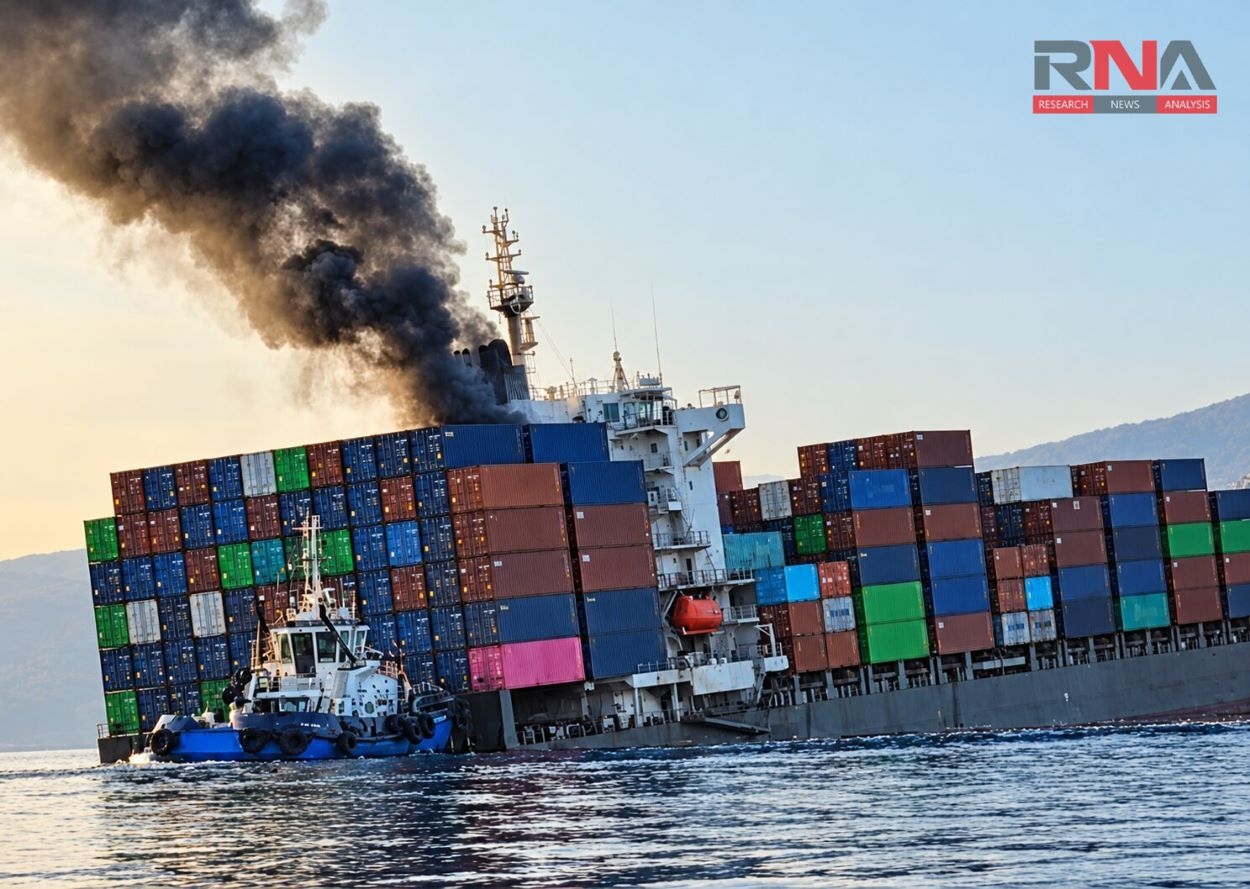
This digitally enhanced image shows the container-laden GFS pride siking with smoke billowing out of it. (Original photo: X/@HormuzLetter)

New Delhi: Floating containers and shipwrecks in the Strait of Hormuz are adding to the dangers faced by vessels and their crews in one of the world’s busiest energy corridors. The sinking of the Singapore-flagged container ship GFS Pride and the bulk carrier Cape Dao shows how attacks can leave behind hazards that continue to threaten other ships long after the initial incidents.
The GFS Pride sank after sustaining damage and catching fire while sailing through the strait on October 13. Singapore’s maritime and port authority said all 21 crew were safely evacuated.
Such containers will not be easily visible to ships that seek to navigate safely through the waterway. There is a chance that any collision with the container will damage the vessel’s hull while the wreckage and any rescue operations will hinder other ships from navigating safely through the waterways.
The danger is not only limited to floating cargo. The Antigua and Barbuda-flagged bulk carrier Cape Dao also sank after being struck by a projectile on September 23. One crew member died, while the rest of the crew were evacuated, according to maritime security.
The incidents illustrate how attacks can leave the surrounding waters hazardous even after the affected vessels have been abandoned or sunk. Crews may have to deal with damaged ships, floating debris and uncertain navigation conditions while remaining alert to further threats.
Maritime risk management company Marisks has warned that the threat to commercial shipping is no longer confined to oil tankers, with container ships and bulk carriers also suffering serious damage, Reuters reported.
These factors create further pressure for the seafarers to navigate through the water route. In cases where emergencies happen, quick decision-making will have to be made in terms of changing direction, dodging ships under attack, or assisting victims.
Why the danger matters
The Strait of Hormuz links the Persian Gulf with the Gulf of Oman and the Arabian Sea. In 2024, the volume of oil moved through the Strait of Hormuz was 20 million barrels daily, reported by the US Energy Information Administration, representing one-fifth of the oil consumed globally.
Also, the waterway is very significant to the provision of energy in Asia, with an estimated 84 per cent of the crude oil and condensate passing through in 2024 bound for Asia.
Moreover, debris and damaged vessels complicate the dangers already existing due to the conflict among Iran, the United States, and Israel. This is because even when ships are not directly targeted, dangerous navigational hazards may delay journeys, cause increased shipping costs and expose crews to danger.
Increasing threat associated with the Strait of Hormuz is not just confined to the damage of ships. There will be threats that will keep coming out of the water for many more months ahead, thus posing a challenge to the safety of crew and cargo.