






Nato’s €1 billion fund turns to drone defence as Ukraine war exposes gaps
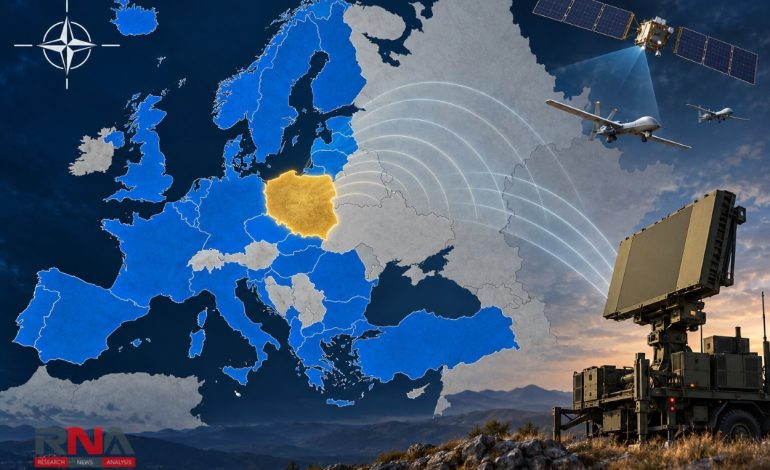
RNA Media illustration for representation.

New Delhi: The Nato Innovation Fund is prioritizing technologies to counter drones and strengthen surveillance from space, as Russia’s war in Ukraine reshapes the alliance’s defence requirements. The €1 billion investment fund, backed by 24 Nato countries, is expanding its presence in Poland to identify companies developing technologies with both military and civilian applications.
The fund’s president, Ari Jonsson, told Reuters that detecting, tracking and neutralizing drones had become particularly pressing requirements on Nato’s eastern flank, alongside space-based intelligence and reconnaissance. In the report published on Tuesday, he said lessons from Ukraine were significantly influencing investment decisions.
Jonsson said drone incursions had made the threat more immediate for countries in the region, changing how they assessed their security needs. The fund is looking beyond established defence contractors for companies capable of addressing those requirements, with a Warsaw presence intended to help identify promising innovations and accelerate their adoption.
Poland’s substantial defence expenditure, engineering capabilities and willingness to embrace new technologies make it an attractive investment destination, he said. The finance minister of Poland, Andrzej Domanski, welcomed the move, describing the fund as the first major investment fund originating outside Poland to establish a substantial presence in the country.
The initiative builds on an existing investment programme: Nato members launched the fund on June 30, 2022, with a 15-year timeframe suited to technologies requiring prolonged development. Its mandate covers investment in early-stage companies and other venture capital funds working on areas including artificial intelligence, autonomous systems, advanced materials, energy and space.
The fund operates as an independent venture capital investor, taking equity stakes in businesses rather than functioning as a military procurement budget. Its focus on dual-use technology allows it to support innovations that can serve commercial markets while also meeting defence and security requirements.
That approach was evident in its first investments, announced in June 2024, which included robotics, artificial intelligence, advanced manufacturing and access to space. Among the companies supported were ARX Robotics, which develops robotic systems for military and civilian applications, and Isar Aerospace, which develops launch services for small and medium-sized satellites.
The renewed emphasis on drone defence sits within a much larger allied effort to expand protection against uncrewed aircraft. On July 7, Nato countries announced plans to invest more than $40 billion in counterdrone capabilities over five years, alongside a target to train five times as many drone operators by the end of 2027.
Those spending plans are separate from the innovation fund’s €1 billion investment pool and are accompanied by measures intended to simplify purchasing. Nato said it would establish a counter-drone marketplace offering systems that had been tested, were compatible with allied requirements and were available for purchase.
The operational challenge extends beyond finding a weapon that can shoot down a drone: detection, identification, command decisions and interception must work together. Nato’s integrated air- and missile-defence policy calls for layered protection combining systems operating at different ranges and altitudes and recognizes that small uncrewed aircraft require specific defensive solutions.
Testing programmes are already bringing manufacturers and military users together to assess those solutions under operational conditions. At its innovation range in Latvia, Nato began a testing campaign in March involving allied and Ukrainian companies, with facilities for interceptor flights and electronic warfare trials.
A subsequent exercise in Latvia in August examined how sensors, command systems and response technologies could operate together across military formations. According to Nato’s Allied Command Transformation, operators provided immediate feedback while industry specialists refined equipment and addressed integration problems during the activity.
Together, these initiatives indicate that Nato is addressing both the development of new technology and the practical difficulties of putting it into service. The innovation fund supplies capital to emerging businesses, while testing, compatibility checks and procurement mechanisms provide routes through which their products can reach military users.



