




Zelenskyy warns of retaliation as Russian grid strikes on Ukraine cast doubt on Trump’s ‘energy ceasefire’
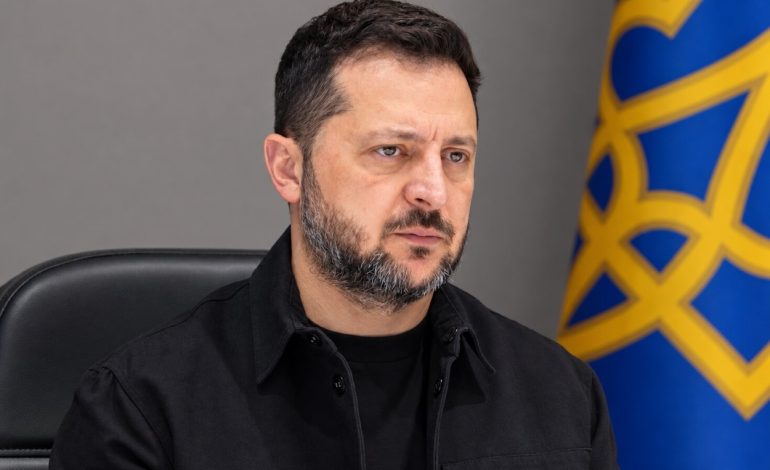
Volodymyr Zelenskyy.

New Delhi: The Ukrainian president, Volodymyr Zelenskyy, warned on Monday that Kyiv would retaliate if Russia continued attacking its energy infrastructure through the winter. His warning came a day after the US president, Donald Trump, announced an immediate energy ceasefire, despite uncertainty over whether Moscow had accepted it or what facilities the proposed agreement would protect.
Addressing the Warsaw Security Forum by video link, Zelenskyy said Ukraine was willing to suspend its long-range attacks on Russian oil refineries and oil exports if Moscow stopped striking Ukraine’s electricity system and other critical infrastructure. He presented the offer as a reciprocal arrangement, making clear that Kyiv’s acceptance depended on Russia observing the same restrictions.
“If Russia does not agree to an energy ceasefire this winter, we will respond,” Zelenskyy said. The warning underscored Ukraine’s determination to retain its ability to strike Russian energy assets while seeking protection for its own battered power network.
Trump had declared on Truth Social on Sunday that both countries had agreed to an energy ceasefire taking effect immediately. However, Zelenskyy said he had learned of the purported agreement through media reports, while the Kremlin spokesman, Dmitry Peskov, declined to confirm Russian acceptance and said consultations were continuing.
According to Zelenskyy, Russian attacks after Trump’s announcement struck a power plant in Kharkiv, a gas-production facility and a civilian petrol station. Describing the continued strikes, he remarked that the president of Russia, Vladimir Putin, apparently did not read Truth Social.
The attacks followed an already intensive campaign against Ukraine’s energy sector. In a statement reported by Reuters, Zelenskyy said energy-generating facilities had faced more than 200 attacks over the preceding week, alongside 17 strikes on oil and gas installations.
A central obstacle is the meaning of an “energy ceasefire”: protecting oil refineries alone would leave Ukraine’s electricity and heating systems exposed. Radio Free Europe/Radio Liberty reported that Ukraine’s sole refinery had already suffered damage and reduced output, whereas Russia possesses a much larger refining network targeted by Ukrainian attacks.
That imbalance explains Kyiv’s insistence that any agreement must extend to power plants and the electricity grid. Zelenskyy’s position is that Ukraine should not surrender its leverage over Russian fuel production while Moscow retains the ability to disrupt Ukrainian homes, businesses and essential services.
The dispute has also widened a rift over Trump’s agreement to permit Russian diesel supplies in exchange for temporarily easing sanctions. Trump has blamed Ukrainian refinery attacks for higher diesel prices, while Zelenskyy argues that additional Russian export revenue would help finance Moscow’s war.
European governments have backed Ukraine while questioning whether the announced ceasefire can deliver meaningful protection. The EU’s foreign policy chief, Kaja Kallas, said a broader cessation of hostilities should also prevent people from being killed, and expressed uncertainty over whether Russia would honour an energy agreement.
The approaching winter makes the issue particularly urgent because damage to energy infrastructure affects heating and water supplies as well as electricity. A UN human rights report covering the previous winter documented repeated Russian attacks on both energy facilities and centralized heating infrastructure serving urban households.
Protecting that system requires more than repairing individual power stations. In an assessment published on October 22, 2025, the International Energy Agency recommended stronger physical protection, faster equipment deliveries, more decentralized generation, improved electricity connections with Europe and backup heating arrangements.
Zelenskyy has nevertheless kept the diplomatic opening alive, saying Ukraine is awaiting details of the American discussions with Russia and the measures Washington is prepared to take. For now, Kyiv’s commitment remains conditional: it is ready to stop attacking Russian energy infrastructure if Moscow provides equivalent protection for Ukraine’s system.



