


India rejects Pakistan’s UNSC move on Indus Waters Treaty, disputes arbitration ruling
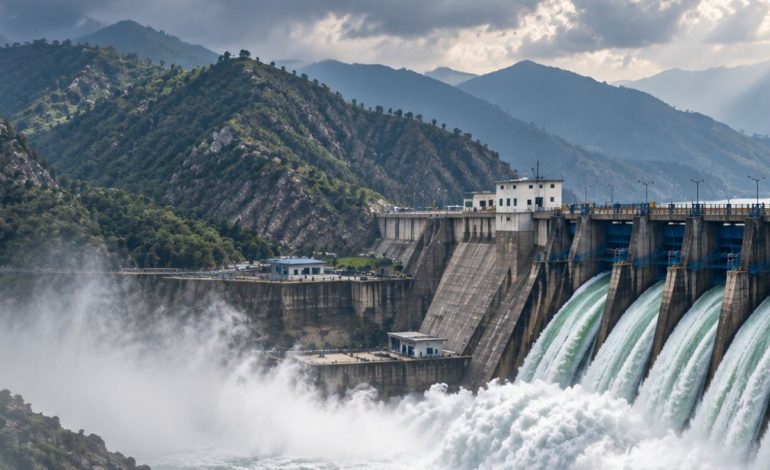
India and Pakistan remain locked in a dispute over the Indus Waters Treaty as New Delhi challenges the authority of the arbitration tribunal. Image courtesy: AI generated picture via DALL-E

New Delhi: India has rejected Pakistan’s move to circulate a letter at the United Nations security council over the latest Indus Waters Treaty arbitration decision, reiterating that it does not recognize the tribunal that issued the award. New Delhi maintains that the court of arbitration was “illegally constituted” and has no jurisdiction over India’s decision to keep the 1960 treaty in abeyance.
The Ministry of External Affairs spokesman, Randhir Jaiswal, accused Pakistan of misrepresenting the August 31 decision by portraying it as a ruling of the Permanent court of arbitration. He said the pronouncement was issued by a separate court of arbitration whose constitution and jurisdiction India disputes.
Pakistan instituted arbitral proceedings against India in August under Annexure G of the treaty. The court of arbitration currently has five members, while the permanent court of arbitration acts as its secretariat. India did not appoint its two arbitrators under the treaty, has not appointed an agent and has not participated in the proceedings.
On August 31, the court held that the Indus Waters Treaty remained in force and that India continued to be bound by its obligations despite New Delhi’s decision to place it in abeyance. In a separate order, it imposed temporary restrictions on specified construction work at the Ratle Hydroelectric Plant pending a neutral expert’s decision.
As RNA Media reported earlier, India rejected the August 31 court of arbitration ruling, maintaining that the tribunal was “illegally constituted” and that its decision to keep the Indus Waters Treaty in abeyance remained unchanged. Pakistan, by contrast, says the arbitration mechanism was established under the treaty and that India remains bound by its provisions.
Treaty dispute moves again to UN
India placed the Indus Waters Treaty in abeyance on April 23, 2025 after the Pahalgam terror attack, which killed 26 people. New Delhi has said the treaty will remain in abeyance until Pakistan “credibly and irrevocably abjures” support for cross-border terrorism.
Pakistan rejects that position and has repeatedly taken the water dispute to the UN, arguing that the treaty contains no provision allowing unilateral suspension. Its latest circulation of the arbitration development at the security council extends that diplomatic effort, but circulation of a letter does not by itself mean the council will formally take up the issue.
Signed in Karachi in 1960 with World Bank involvement, the treaty broadly allocates the Ravi, Beas and Sutlej to India and the Indus, Jhelum and Chenab to Pakistan, while permitting specified uses by both sides.