
CRPF women in combat: Four decades, six battalions and a widening frontline
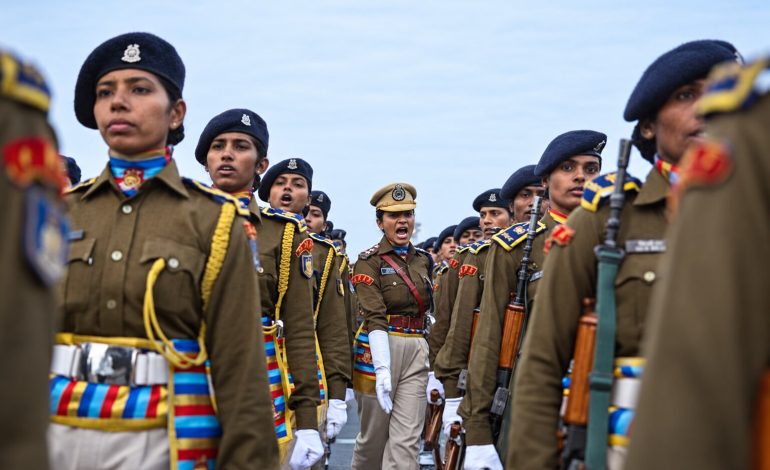
CRPF Mahila personnel preparing for a ceremonial march past. (Photo via Facebook)

New Delhi: Women’s combat service in the Central Reserve Police Force has grown from a single battalion raised in 1986 to six dedicated battalions and deployments across some of India’s most demanding internal-security theatres. As it marks four decades of that journey, the force will honour serving and retired women personnel at a ceremony in New Delhi on Friday.
The ceremony will take place at the campus of the 88th Mahila Battalion in New Delhi, where the CRPF director general, Gyanendra Pratap Singh, and the president of the CRPF Family Welfare Association will recognize their service. Raised on February 6, 1986, the battalion established a route into operational policing that has since expanded to more than 10,000 women across the force’s ranks.
The first battalion was created partly to address a practical requirement: handling women during demonstrations and other public-order situations. According to the CRPF’s institutional history, its personnel completed training in March 1987 and subsequently served during the Meerut riots and alongside the Indian Peace Keeping Force in Sri Lanka.
That initial deployment model gradually widened, with further women’s battalions established as operational requirements grew. Today, women also form part of each Rapid Action Force (RAF) battalion, supporting its specialized crowd-control and anti-riot responsibilities, and serve in the Bastariya Battalion in areas affected by Maoist violence.
Their assignments extend across Jammu & Kashmir, the northeast and other security-sensitive locations, according to the force. The expansion places women within a broader range of internal-security duties than the public-order requirements that helped shape the first battalion’s creation.
The anniversary also recalls personnel decorated for actions during terrorist attacks and overseas operations. Among them is constable Kamlesh Kumari, who was posthumously awarded the Ashok Chakra, India’s highest peacetime gallantry award, for her actions during the 2001 terrorist attack on Parliament and remains the CRPF’s only recipient of the decoration.
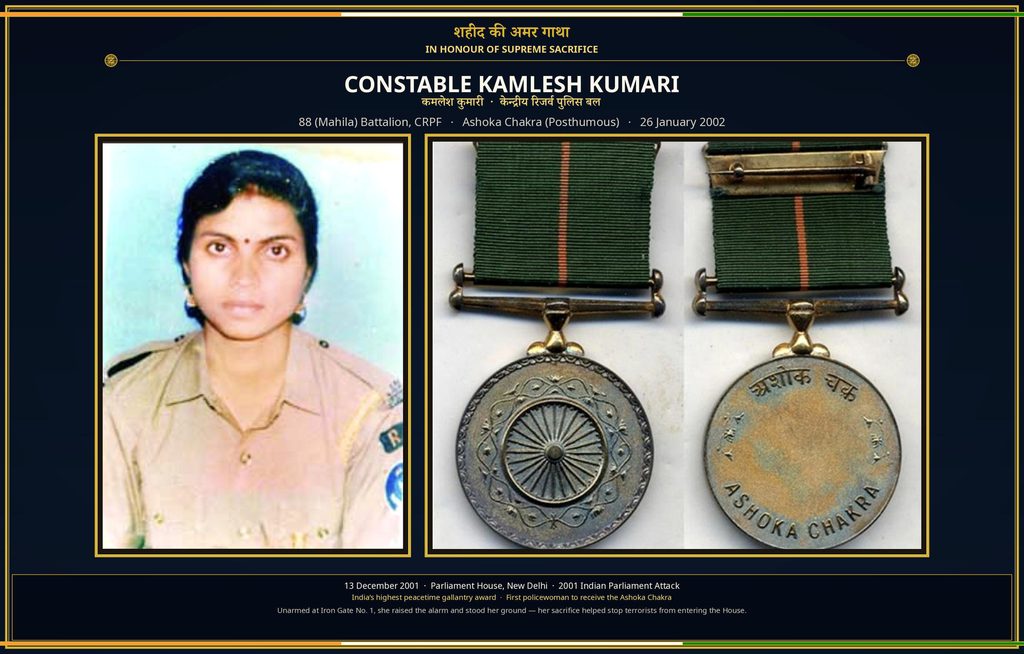
For their service with the Indian Peace Keeping Force in Sri Lanka in 1988, constable Vimla Devi received the Sena Medal, while lance naik Rajwanti Devi received the chief of the Army staff’s commendation card. Constable Bindu Kumre was also awarded a gallantry medal for her actions during the terrorist attack on Srinagar airport in 2001.
Beyond India, CRPF women contributed to a landmark in international policing through the all-female formed police unit deployed to the United Nations mission in Liberia in 2007. It was the first such unit in UN peacekeeping, taking their operational experience into an international mission supporting a country’s recovery from civil war.
When the contingent’s mission ended in 2016, the UN credited the women who had served through successive rotations with supporting Liberia’s security transition and encouraging women to enter policing. That overseas record adds another dimension to the September commemoration, which will recognize careers spanning domestic security operations and international peacekeeping.