



EU’s Red Sea mission needs more than 10 warships as Houthi threat grows, says Kallas
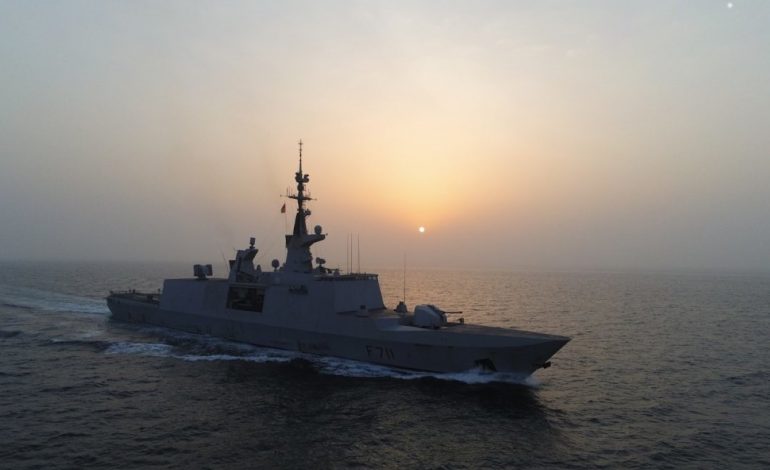
French frigate FS Surcouf parolling the Red Sea as part of Operation Aspides. (Photo: X/@FrenchForces)

New Delhi: The European Union’s foreign policy chief, Kaja Kallas, has called for more than 10 warships to protect commercial shipping in the Red Sea, warning that the deteriorating security situation requires a stronger naval presence. Her appeal comes as Houthi advances along Yemen’s coast increase pressure on a vital trade route and prompt Italy to prepare additional protection for its merchant vessels.
Speaking on the sidelines of the United Nations general assembly in New York on Monday, Kallas said the fleet requirement identified when Operation Aspides began had become more pressing. Diplomats cited by Reuters put the number of warships currently operating at six, below the strength she considers necessary.
The mission’s initial assessment envisaged at least 10 ships, she said, adding: “The situation, I think, is even more grave right now.” She also sought additional air assets, signalling that the reinforcement needed extends beyond warships alone.
Kallas had written to the EU’s 27 member states on September 19, asking them to increase their contributions, with the issue due to be discussed at forthcoming meetings of defence and foreign ministers. Her warning linked the shipping threat to European supply chains and economies already facing higher fuel prices.
According to Euronews, which reported details of the letter, Kallas requested suitably equipped ships and aircraft with greater capacity to provide close protection to merchant vessels. The appeal followed an intervention by an Italian frigate to escort an Italian commercial ship off Yemen on September 18.
The immediate concern centres on the Bab al-Mandab Strait, the southern entrance to the Red Sea and a crucial passage for ships travelling between the Indian Ocean and the Mediterranean through the Suez Canal. Euronews reported that Kallas’s letter identified the Houthis’ capture of Mocha, Perim Island and the Hanish Islands as developments that had increased the group’s influence over the passage and intensified the threat to navigation.
Italy has pressed for a faster response, arguing that commercial shipping cannot remain exposed while European governments negotiate their next steps. The Italian defence minister, Guido Crosetto, announced preparations on September 17 to protect Italian vessels, warning that delays could increase transport costs, disrupt deliveries and push up prices for businesses and consumers.
A day later, Crosetto called for more ships in the region and criticized the pace of European decision-making. Reuters reported that about 40 per cent of Italy’s trade passes through the Suez Canal, underscoring Rome’s economic exposure to disruption along the route.
Operation Aspides was launched on February 19, 2024, following repeated Houthi attacks on international shipping, and its mandate now runs until February 28, 2027. It is a defensive maritime security operation intended to protect vessels and safeguard freedom of navigation in accordance with international law.
Its responsibilities also extend beyond escorting commercial ships through threatened waters. On March 30 this year, the EU added tasks including gathering information on suspicious activity around critical undersea infrastructure, training Djiboutian maritime forces and cooperating with the Yemeni Coast Guard, subject to available resources and capabilities.
The renewed pressure on the Red Sea comes alongside severe disruption in the Strait of Hormuz, creating difficulties at two separate maritime chokepoints. Reuters reported that preliminary Kpler data showed only four commodity vessels crossing Hormuz on September 17, against a 10-day average of 16, while 23 crossed Bab al-Mandab, slightly below its corresponding average of 26.
For shipping companies, avoiding a threatened passage carries costs of its own: longer voyages absorb vessel capacity, consume more fuel and delay cargo deliveries. UN Trade and Development has documented how diversions around Africa’s Cape of Good Hope strain supply chains and raise transport costs, with consequences for food security, energy supplies and developing economies.
India’s exposure includes the movement of crude oil from Saudi Arabia’s Red Sea terminals, as well as wider disruption to maritime commerce. In July, Reuters reported that a tanker carrying oil from Yanbu to India’s west coast was signalling a route through Suez; industry experts warned that reaching Asia by continuing around Africa could add as much as four weeks compared with the usual passage through Bab al-Mandab.