Nepal finance minister concludes India visit, Balen Shah trip in focus as flood rebuild needs $4-5 billion
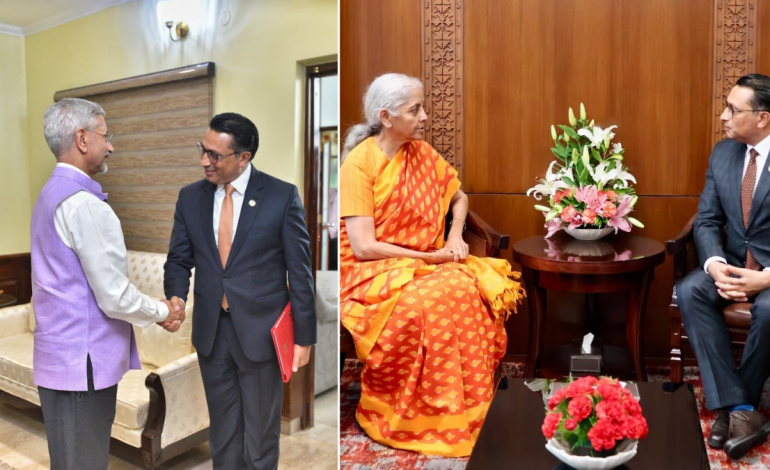
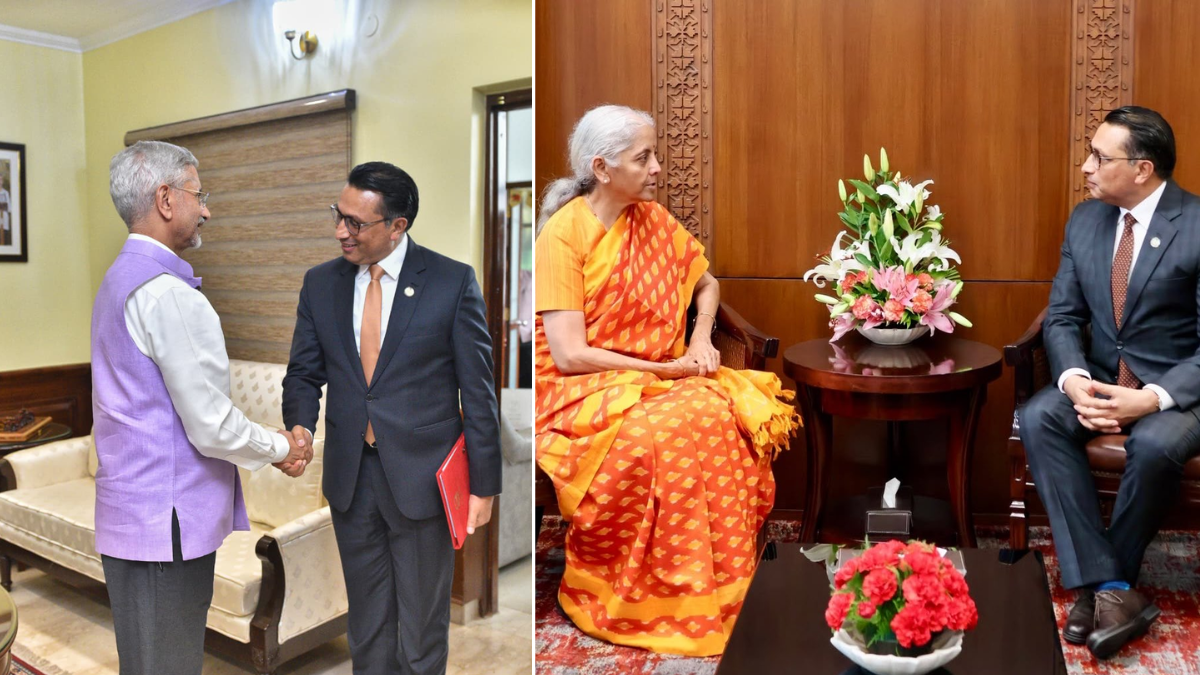
Nepal finance minister concludes India visit. (Image courtesy: X/@FinMinIndia/@DrSJaishankar)

New Delhi: The Nepal finance minister, Swarnim Wagle, concluded his three-day visit to New Delhi on Saturday, after a series of high-level meetings focused on post-flood reconstruction, economic cooperation and the future of Nepal-India ties. His visit came at a crucial time, as Kathmandu seeks international assistance to rebuild after the devastating August 26 flash floods, and as preparations gather pace for the Nepali prime minister, Balendra “Balen” Shah’s, proposed visit to India later this year.
During his visit, Wagle met the external affairs minister, S Jaishankar, on Friday, a day after holding talks with the finance minister, Nirmala Sitharaman. His discussions with Jaishankar centred on strengthening bilateral cooperation in investment, energy and connectivity, while Wagle also thanked India for its rescue and relief assistance following the floods in Nepal.
Jaishankar later said on X that he had offered his condolences over the loss of lives and destruction caused by the floods. He said the two sides discussed ways to expand overall cooperation, particularly in the economic, energy and connectivity sectors, underlining the continuing focus on India’s “Neighbourhood First” approach.
Balen Shah’s Delhi visit on the horizon
Wagle’s Delhi visit also comes ahead of an expected visit by the Nepali prime minister to India. India formally extended an invitation to Shah in July, while Wagle said in August that he was confident the Nepali prime minister’s first foreign visit would be to India, and that the two sides hoped to work out the dates before the end of 2026.
The proposed visit comes as Nepal’s newly elected government seeks to improve relations with New Delhi, after several years of friction. India-Nepal ties had faced disagreements over issues including the boundary dispute, connectivity and economic matters.
The process gained momentum in June when the Rastriya Swatantra Party (RSP) chief, Rabi Lamichhane, visited New Delhi and met the Union home minister, Amit Shah, Jaishankar and other senior Indian officials, RNA Media reported. During his visit, the prime minister, Narendra Modi, also highlighted Nepal as a priority partner under the “Neighbourhood First” policy, and expressed support for working with the new government to take the bilateral relationship forward.
Against this diplomatic backdrop, Nepal is also facing the challenge of rebuilding after the August 26 flash floods. The disaster caused extensive damage to settlements, roads, bridges and hydropower infrastructure, while the Trishuli river overflowed in areas close to the Nepal-China border, and the Rasuwa border crossing with China was also destroyed.
According to Reuters, Nepal’s reconstruction requirement has been estimated at around $4 billion to $5 billion, putting recovery and rebuilding at the centre of Kathmandu’s discussions with international partners. Wagle’s meetings in New Delhi therefore combined immediate post-disaster requirements with longer-term questions surrounding investment, infrastructure, energy and connectivity.
Modi spoke to Shah on August 26, expressed condolences over the loss of lives, and said India was ready to provide all possible humanitarian assistance, while Indian teams coordinated with Nepali authorities on rescue and relief operations.
The Indian Embassy in Kathmandu has recorded multiple consignments of humanitarian assistance sent to Nepal since the disaster. These included an initial 10-tonne consignment on August 26, and a second consignment of 37.5 tonnes of humanitarian assistance, disaster-response material, medicines and food, followed by additional consignments in the days that followed.
The assistance has included essential medicines, temporary shelters, hygiene and dignity kits, sleeping bags, food and other emergency supplies. The embassy subsequently recorded a sixth tranche of 21.5 tonnes of humanitarian assistance on September 3, underlining the continued nature of India’s support during Nepal’s recovery phase.
India has also taken steps to support Nepal’s energy requirements after the floods damaged the country’s hydropower infrastructure. New Delhi approved electricity exports of up to 654MW to Nepal for 18 hours a day until December 31, 2026, after the disaster disrupted power generation and Nepal had to turn to India for additional electricity supplies.
The latest assistance was highlighted by Jaishankar after his meeting with Wagle. Jaishankar said India had dispatched another 11 tonnes of relief material to Nepal, including medicines, forensic supplies, tents, hygiene kits, sleeping bags and other essential items, as India continued to support the country’s recovery.
The latest consignment comes as Nepal moves from the immediate rescue phase towards a much larger reconstruction effort. Wagle’s Delhi meetings have therefore placed the flood recovery agenda alongside longer-term cooperation in investment, energy, connectivity and trade — areas that are also expected to feature prominently as Kathmandu prepares for Shah’s proposed visit to New Delhi.