Who was Flight Lieutenant Alfred Tyrone Cooke, the Vir Chakra pilot who fought PAF Sabres over Kalaikunda?
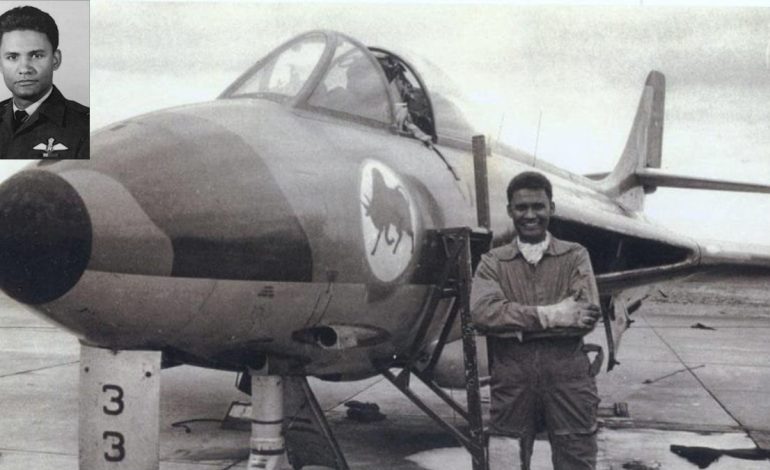
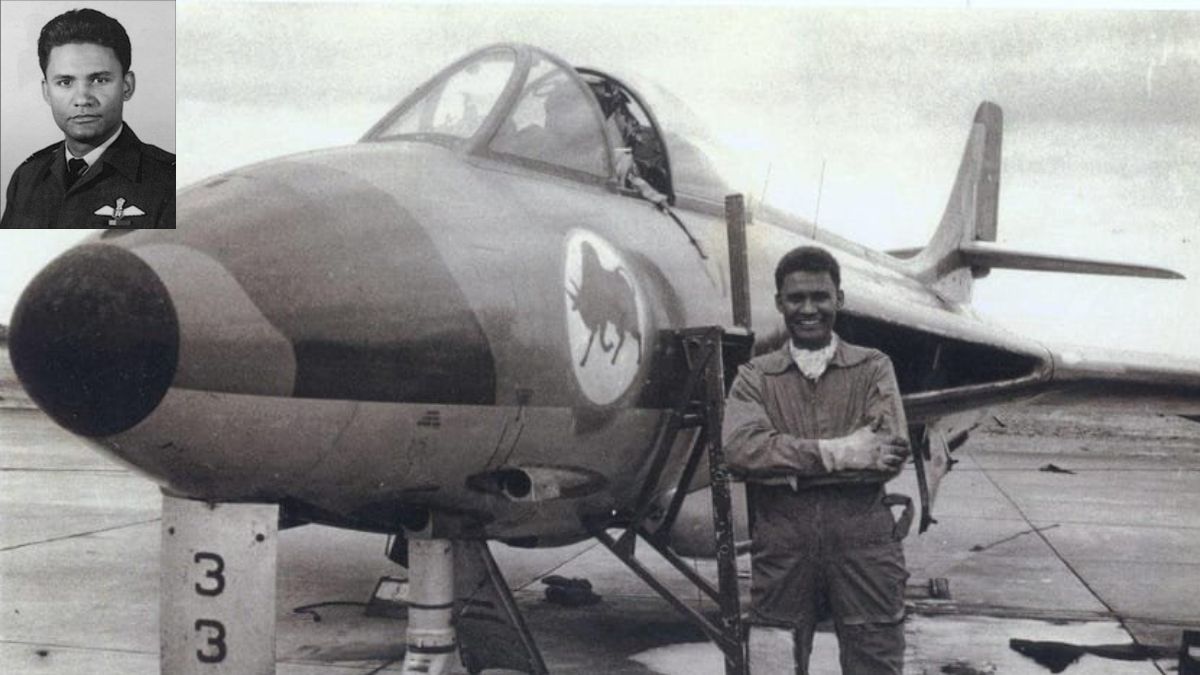
Flight Lieutenant Alfred Tyrone Cooke. Image courtesy: X.com/@IAF_MCC

New Delhi: The Indian Air Force has condoled the death of Flight Lieutenant Alfred Tyrone Cooke, VrC, describing him as a 1965 India-Pakistan War hero whose actions over Kalaikunda became part of Indian military aviation history. Flt Lt Cooke died of natural causes in New Delhi on Friday, just a day before No. 14 Squadron, the “Bulls”, was due to mark its Platinum Jubilee.
In a post on X, the IAF said, “A war hero whose courage is etched forever in the annals of military aviation, Flt Lt Cooke exemplified supreme valor during the 1965 Indo-Pak War.” It added that his legendary dogfight over Kalaikunda remains a masterclass in aggressive air combat and unwavering resolve. “His memory will continue to inspire generations of Air Warriors,” the IAF added.
Flt Lt Cooke was a Hawker Hunter pilot of No. 14 Squadron, the “Bulls”, and received the Vir Chakra for his actions on September 7, 1965, when Pakistan Air Force F-86 Sabres attacked Kalaikunda airfield in West Bengal. But who was Flight Lieutenant Alfred Tyrone Cooke, and what happened over Kalaikunda in 1965?
Who was Flight Lieutenant Alfred Tyrone Cooke?
Flt Lt Cooke was commissioned into the IAF on December 19, 1961, with the 80th Pilots Course in the general duties (Pilot) branch. By the 1965 war, he was serving as a flight lieutenant with No. 14 Squadron, flying the Hawker Hunter. Service records compiled by Bharat Rakshak show that he left the IAF on December 19, 1968, after seven years of commissioned service, and later settled in Australia.
Bharat Rakshak’s reconstruction records that Flt Lt Cooke grew up in Agra watching wartime fighters and developed an early ambition to become a fighter pilot. It also says he had accumulated about 600 hours on the Hunter and undergone intensive low-level air-combat training with Squadron Leader O N “Piloo” Kacker before the 1965 war — training that proved relevant when the Kalaikunda engagement descended to extremely low altitude.
What happened over Kalaikunda?
According to IAF History, Kalaikunda came under two Pakistan Air Force strikes on September 7, 1965. The first caused losses on the ground, while a second strike followed later that morning, with four Sabres confronted by two Hunters flown by Flt Lt Cooke and Flying Officer S C Mamgain. Bharat Rakshak’s reconstruction records that the two IAF pilots had been flying combat air patrol when they were directed towards Kalaikunda.
The first raid destroyed two Canberras and four Vampires on the ground. In its reconstruction of the second attack, it identifies four Sabres approaching Kalaikunda, with Flt Lt Cooke and Flying Officer Mamgain being directed towards the raiders.
Flt Lt Cooke and Flying Officer Mamgain reached the area as the second strike was under way. The engagement quickly descended to very low altitude, with Indian anti-aircraft fire also active around the airfield.
Flt Lt Cooke’s official Vir Chakra citation, published in the Gazette of India on January 1, 1966, records that he was leading two aircraft on combat air patrol when he moved to intercept the attackers. Despite the anti-aircraft fire, he engaged the enemy, outmanoeuvred one Sabre and shot it down, with the aircraft disintegrating mid-air.
The citation then records that Flt Lt Cooke positioned his Hunter behind another enemy aircraft but had exhausted his ammunition. He nevertheless continued to keep the aircraft on the run until the remaining attackers withdrew. The official record therefore credits Flt Lt Cooke with one confirmed shootdown. He was awarded the Vir Chakra, India’s third-highest wartime gallantry decoration, for the September 7 action.
Later historical reconstruction provides a fuller account of whom Flt Lt Cooke encountered. IAF History and Bharat Rakshak identify the Sabre he shot down as the aircraft flown by Flying Officer M Afzal Khan. The reconstruction, drawing on Flt Lt Cooke’s recollections and gun-camera evidence, records him engaging several of the attacking aircraft rather than only the Sabre officially credited as his kill.
The same reconstruction records Flt Lt Cooke subsequently engaging the Sabre flown by Flight Lieutenant Tariq Habib Khan and registering hits on the aircraft. The extent of the damage attributed to that engagement forms part of the later historical reconstruction and does not constitute an additional officially credited kill.
Flt Lt Cooke’s gun-camera film showed him firing at four different Sabres and hitting three. Claims concerning additional aircraft damaged or subsequently written off remain part of historical reconstruction and do not alter the official record of one confirmed shootdown.
The reconstruction also illustrates how low the fight had descended. It records damage to Flt Lt Cooke’s Hunter wingtip, and says ground crew found branches and leaves lodged in it after landing. Flt Lt Cooke later recalled that parts of the engagement had taken place only a few feet above the ground.
Flt Lt Cooke remained closely associated with No. 14 Squadron decades after leaving the Air Force. Contemporaneous reporting from Ambala confirms that on September 7, 2015, exactly 50 years after the Kalaikunda action, he returned to the squadron and presented his Vir Chakra to the unit.