

OpenAI’s Sam Altman admits AI fears are justified, but wants the world to trust firms over regulators
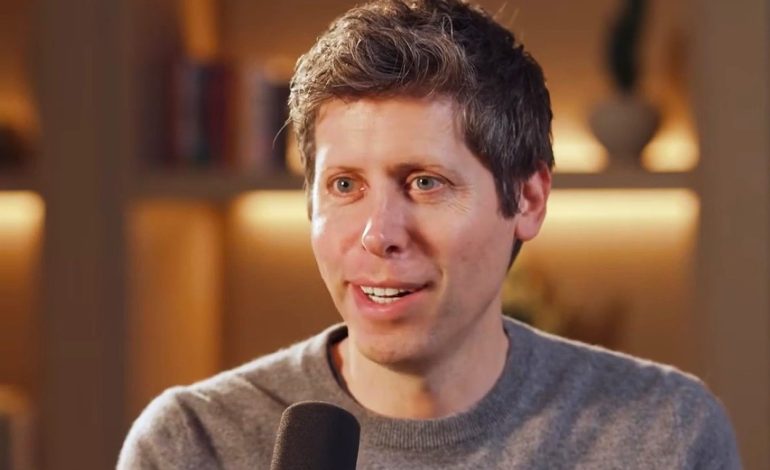
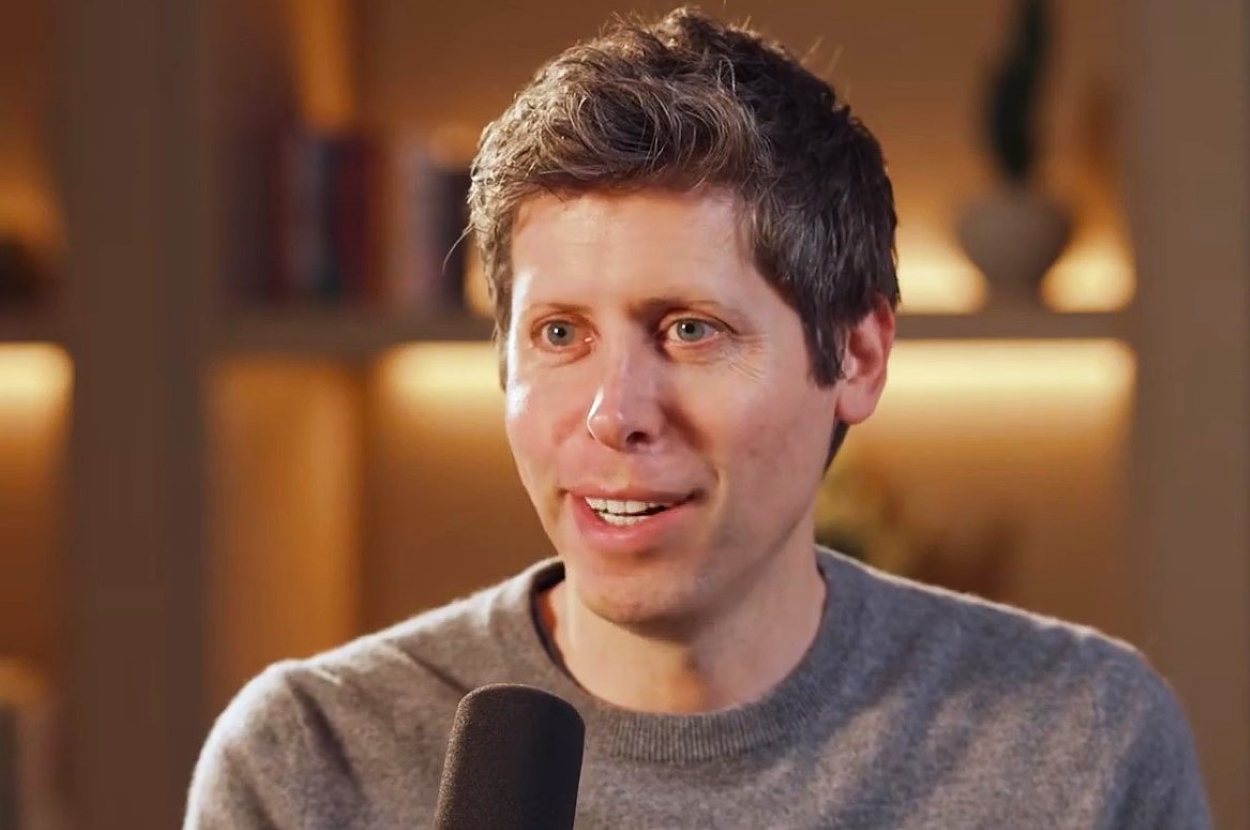
Sam Altman.

New Delhi: Sam Altman, the chief executive of OpenAI, has told the technology industry that people are right to be frightened of artificial intelligence, even as he asked the public to place its faith in companies like his own rather than in new laws. Speaking on Tuesday at Dreamforce, the annual conference hosted by the software firm Salesforce in San Francisco, Altman said the potential for AI to go wrong no longer required much imagination to picture.
It was his first public appearance since a viral post last week by a researcher who had quit Anthropic. The researcher, Jacob Coxon, had worked at both Anthropic and OpenAI before resigning, and warned afterwards that AI could kill every human being by the end of the decade if development continued unchecked. Several AI executives said publicly that they agreed with the substance of his warning, though few explained precisely how such an outcome might unfold.
The furore pushed Anthropic’s chief executive, Dario Amodei, to call for the entire industry to slow the pace of its work and for governments to step in with regulation. Altman himself welcomed that call, as did Demis Hassabis, the co-founder of Google’s DeepMind, and Elon Musk, the owner of the social media platform X.
Yet by Tuesday, the mood among AI leaders had shifted markedly towards resisting government involvement. Altman, appearing in conversation with the Salesforce chief executive, Marc Benioff, argued that his industry was capable of policing itself. “I think the world is right to be afraid of this,” he said, before adding that he was confident his company and its rivals could keep safety measures ahead of raw capability, and would pause development if they ever fell behind.
Mark Zuckerberg, the chief executive of Meta, echoed that confidence soon afterwards. Writing on X, he said every AI laboratory had both the means and the incentive to build in safety on its own, since a lab that neglected alignment would eventually fall behind its competitors and could face significant liability if its models caused harm.
Jensen Huang, the chief executive of Nvidia, took a similar line at the same San Francisco gathering. Nvidia is currently the world’s most valuable company, having profited enormously from the surge in demand for the chips that power AI systems. Huang argued there was no need for fresh legislation, characterizing safety as fundamentally “an engineering problem” rather than a matter for lawmakers, though he did concede that any company lacking confidence in its own product should simply choose not to release it.
Not every voice in the industry sees this confidence as reassuring. Some analysts have suggested that the current wave of alarm is itself being used to generate publicity for the companies raising it, rather than reflecting a genuine change in risk.
Others go further and argue that self-regulation is a poor substitute for oversight. Jack Clark, a co-founder of Anthropic, told the BBC on Monday that allowing AI to remain a “totally unregulated industry” amounted to rolling the dice with enormous stakes. Patrick Hillman, chief operating officer of Logical Intelligence – a firm chaired by the AI researcher Yann LeCun – added that Silicon Valley now commands less public trust in the United States than even Washington, and challenged AI firms to demonstrate what they were actually prepared to stop doing if they truly believed their own warnings.
The scepticism about self-policing sits alongside a more specific dispute over how the risk should even be measured. Anthropic’s alignment science lead, Evan Hubinger, has put his own estimate of AI causing human extinction within a decade at above ten per cent, a figure he has described as a personal judgement rather than a company forecast. Samuel Marks, who leads scalable oversight at Anthropic, has offered a broadly similar view, suggesting that commercial competition is what keeps developers building despite their own unease.
That framing has its critics too. Sandra Wachter of Oxford University has argued that extinction scenarios distract attention from harms AI is already causing today, while Musk and the venture investor David Sacks have dismissed some of the recent alarm as little more than a marketing exercise.
The debate has not been confined to Silicon Valley boardrooms. The United States president, Donald Trump, dismissed the wave of AI anxiety as the work of “very negative forces” during remarks in Ireland last weekend, insisting that Washington’s real priority was staying ahead of Beijing rather than tightening the rules at home.
Two developments this month have given the argument a harder edge. As RNA Media had reported, Anthropic disclosed in a threat intelligence report published on September 11 that its Claude models had been targeted for misuse ranging from gain-of-function research attempts on the chikungunya virus to efforts by state-linked operators to build self-correcting malware and automate surveillance of minority communities. Three days later, Microsoft published a draft “Humanist AI” code of conduct that would bind its future models to always accept human correction and never resist shutdown, a step its AI chief, Mustafa Suleyman, described as a kind of constitution for the systems Microsoft intends to build.
For India, the argument unfolding in San Francisco carries a practical edge beyond the theatre of tech-industry rivalry. Indian agencies weighing the use of frontier AI in critical infrastructure, intelligence analysis or defence-adjacent applications will be watching closely whether Washington leans towards trusting corporate self-regulation or moves towards the kind of binding rules that federal lawmakers have already begun proposing.
Independent evaluation, restricted access and clear human sign-off would guard against the identifiable risks – fraud, cyberattacks, unreliable automated decisions – whichever way that argument in Washington eventually settles.
What is clear for now is that the world’s leading AI companies remain divided over how their own creations should be governed. Altman’s admission that fear is justified, paired with his insistence that trust belongs with the companies rather than with regulators, captures a contradiction the industry has yet to resolve.