
Afghanistan cricket promo sparks map row as India-Kabul ties expand amid Pakistan tensions
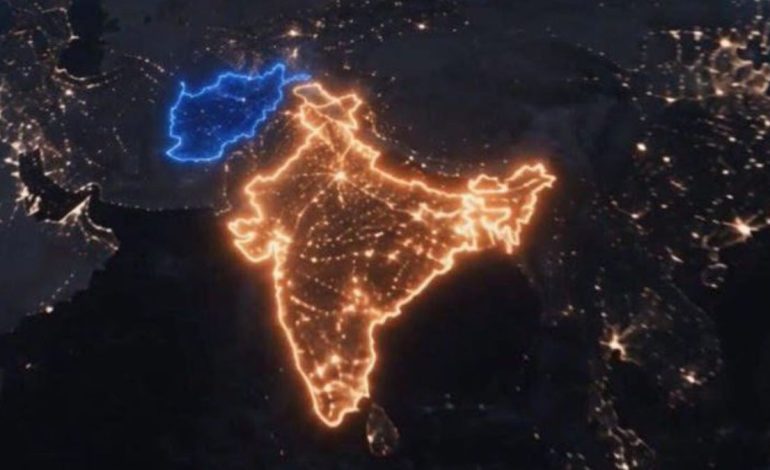
Afghanistan Cricket Board promotional video sparks controversy over its depiction of India’s map. Image courtesy: X.com/

New Delhi: Cricket has become the latest source of friction in an increasingly unsettled regional equation after an Afghanistan Cricket Board (ACB) promotional video appeared to show Pakistan-occupied Kashmir (PoK) and Gilgit-Baltistan within India’s outline ahead of a three match Twenty20 International (T20I) series between India and Afghanistan. The video, posted by the ACB on September 6, triggered criticism in Pakistan and demands from some Pakistani social media users for action over the depiction.
The map was not entirely consistent throughout the animation. In some frames, PoK and Gilgit-Baltistan appeared within India’s outline, while the boundary became less clear as the visual changed. Reports citing sources said the Pakistan Cricket Board had raised concerns with Pakistan’s foreign office, although no formal PCB statement announcing action against the ACB had been issued.
The ACB subsequently removed the earlier promotional video and released another version with altered visuals. In the new video, the boundary around the Kashmir region is less clearly visible, according to reports. The Afghan board had not publicly explained the change or described the original map as a political statement as of Wednesday.
There is no verified evidence that the disputed depiction was deliberately intended as a geopolitical message. Its timing, however, comes amid a wider expansion of India-Afghanistan engagement and continuing tensions between Afghanistan and Pakistan.
The ACB and the Board of Control for Cricket in India (BCCI) have confirmed that Afghanistan will host India for three T20Is at Delhi’s Arun Jaitley Stadium on September 13, 15 and 17. Afghanistan has used India to stage home international fixtures in recent years, and the ACB has described cooperation with the BCCI as important to the development of Afghan cricket.
India and Afghanistan rebuild ties
India’s engagement with Taliban ruled Afghanistan has expanded considerably from the limited contacts that followed the Taliban’s return to power in August 2021. The shift has stopped short of formal recognition of the Taliban government but has produced increasingly regular diplomatic and economic engagement.
A major step came in October 2025 when Afghanistan’s acting foreign minister, Amir Khan Muttaqi, visited New Delhi for talks with the external affairs minister, S. Jaishankar. It was the first visit to India by a senior Taliban leader since the 2021 takeover, and India announced during the engagement that its technical mission in Kabul would be upgraded to an embassy. The Ministry of External Affairs said the two sides discussed bilateral issues as well as regional developments.
The diplomatic engagement expanded further in January when Mufti Noor Ahmad Noor, a senior Taliban foreign ministry official, arrived to take charge of the Afghan embassy in New Delhi. India has not formally recognized the Taliban government, but the posting marked the establishment of a more regular channel between Kabul and New Delhi.
Economic engagement has also gained momentum. The India-Afghanistan Joint Working Group on Trade, Commerce and Investment met virtually on September 1, with discussions covering customs cooperation, visas for Afghan traders, banking and financial cooperation, pharmaceuticals, agriculture, energy, tariff concessions, investment, cargo connectivity and port related issues.
India has simultaneously increased its budgetary allocation for Afghanistan from ₹100 crore in 2025-26 to ₹150 crore in 2026-27. Parliamentary documents say the additional allocation is intended to support healthcare, capacity building, humanitarian assistance and development cooperation following renewed engagement with Kabul.
Pakistan-Afghanistan ties deteriorate
The closer India-Afghanistan engagement comes as relations between Kabul and Islamabad have deteriorated sharply. Pakistan accuses Afghanistan’s Taliban authorities of allowing the Tehreek-e-Taliban Pakistan (TTP) to use Afghan territory to plan attacks inside Pakistan, an allegation Kabul repeatedly denies.
The dispute escalated into the worst fighting between the neighbours in years during 2026. Pakistani airstrikes inside Afghanistan were followed by Afghan retaliation, with the confrontation developing into weeks of cross-border air, drone and ground attacks, Reuters reported.
Against that backdrop, the cricket map row has drawn attention beyond sport. It would be inaccurate to describe India and Afghanistan as forming an anti-Pakistan alignment, and there is no established evidence that the ACB deliberately sought to provoke Islamabad through its promotional material.
What is clear is that Afghanistan’s engagement with India is expanding across diplomacy, trade, development assistance and cricket at a time when its relationship with Pakistan remains strained by militancy allegations and recurring military confrontation.