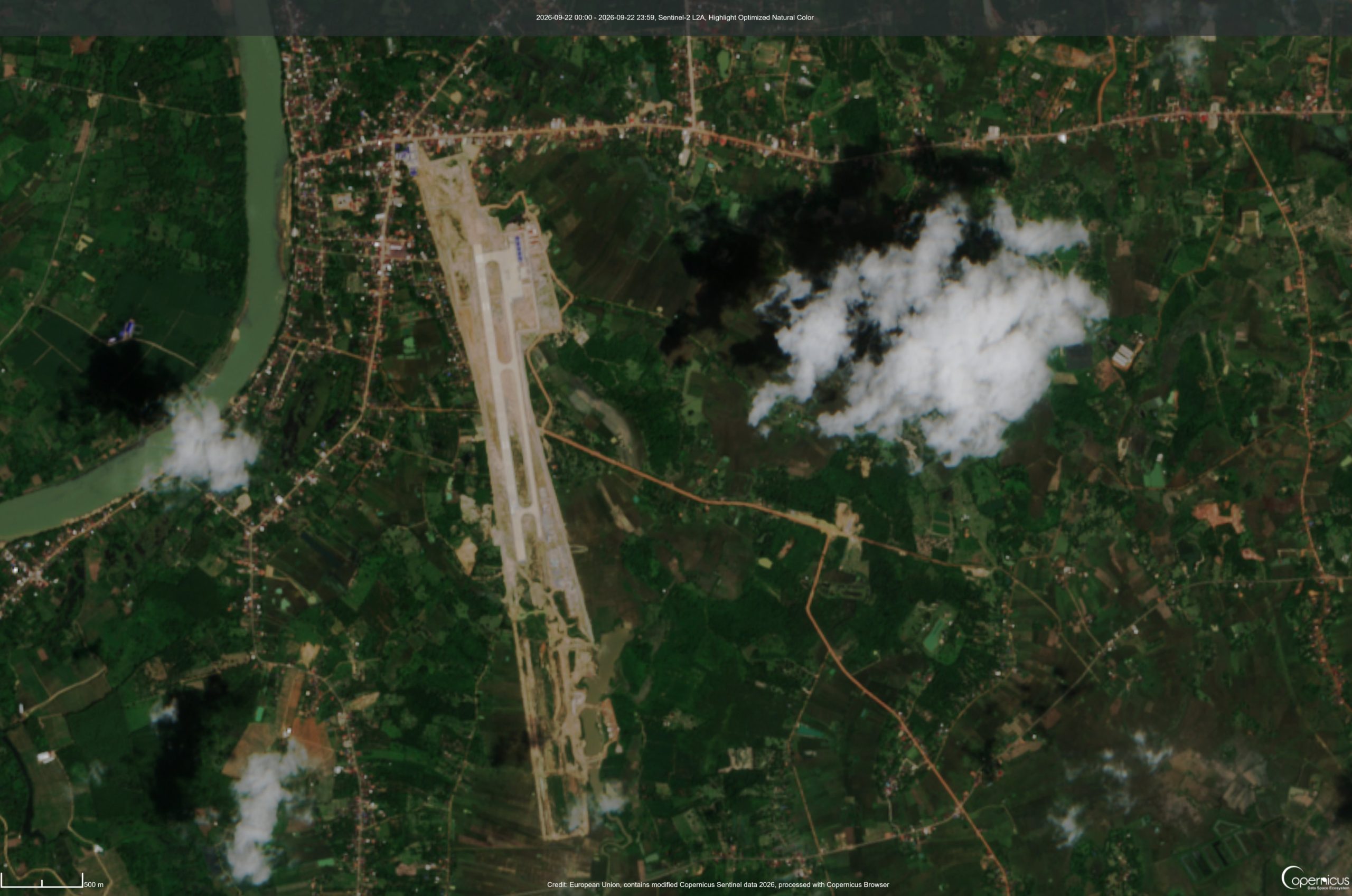




China accused of Nepal-Tibet flood information blackout as rights groups demand media access
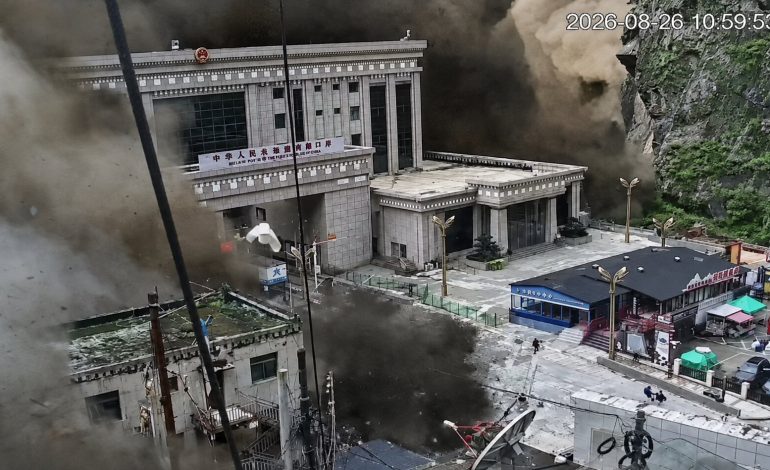
This screenshot from a widely circulated CCTV video shows a torrent of muddy water and debris slams into the Rasuwagadhi border complex on the Nepal–Tibet frontier during the devastating flash flood, on August 26, 2026.

New Delhi: China is facing renewed accusations of imposing an information blackout over the catastrophic flood in Tibet after campaign groups said restrictions on journalists, residents and social media were obstructing an independent assessment of the disaster. The groups have urged Beijing to admit international media to the Gyirong region, protect Tibetans who share information and provide timely hydrological and early-warning data to downstream countries.
The International Tibet Network and Students for a Free Tibet-India raised the concerns at a news conference in Dharamshala. They said families remained unable to obtain verified information from some of the worst-affected communities. Their complaint was first reported by ANI, as scrutiny grew over the sharp contrast between reporting from Nepal and the tightly controlled flow of information from Tibet.
As RNA Media had reported, the disaster began on August 26 when a huge mass of ice, rock and water collapsed in the high Himalayas and sent a destructive torrent through Gyirong Port and into Nepal’s Rasuwa district. The flood swept away settlements, roads, bridges and hydropower infrastructure on both sides of the border, although scientists are continuing to study the precise sequence that triggered it.
Casualty figures changed rapidly as rescue teams reached previously inaccessible areas, with Nepal reporting 987 deaths and 3,916 people missing by September 1. Chinese authorities, meanwhile, said 16 people had died and 546 remained unaccounted for in Tibet, including 261 foreign nationals from 23 countries, according to figures carried by Chinese state media.
The large difference between the two countries’ tolls does not, by itself, prove that casualties have been concealed because the damage footprint, population exposure and pace of verification may differ. However, restrictions on independent reporting make it difficult to determine whether the Chinese figures cover every affected settlement or to compare Beijing’s assessment with evidence gathered on the ground.
The International Campaign for Tibet said information reaching it indicated that approximately 300 homes had been destroyed in the villages of Sale, Serchung, Labi and Rizi. Its president, Tencho Gyatso, said the limited accounts available from Tibet suggested that the number of people affected could be substantially higher than the official figures, although the organization’s claims could not be independently verified, the Guardian reported.
Tibetan public security authorities have acknowledged penalizing at least 10 people for circulating what they described as false information or disrupting online order through disaster-related posts. A state-run newspaper also reported that two Tibetans were questioned after publishing unverified claims that more than 1,000 people had been swept away near the border.
Evidence of online restrictions has extended beyond disputed casualty estimates, with reports that eyewitness videos showing the destruction of Gyirong Port disappeared from Chinese platforms soon after being uploaded. DW reported, citing the censorship-monitoring organization China Digital Times, that footage of the collapsing border gate was blocked from being shared on WeChat, including through private messages.
Searches on Chinese platforms subsequently returned large volumes of reports from the state broadcaster CCTV and the official Xinhua news agency, while raw videos recorded by residents became difficult to find. Similar concerns about the disappearance of flood footage and the absence of independent voices from Tibet were documented by ABC News and examined in a BBC report.
Foreign journalists are generally prohibited from entering Tibet independently and are normally admitted only on government-organized visits, while residents can face punishment for communicating with overseas reporters or advocacy groups. These long-standing restrictions have made the impact of the flood considerably easier to document in Nepal, where journalists have interviewed survivors and officials, than in Tibet, where public coverage has largely come through state-approved channels, the Guardian reported.
China has nevertheless mounted a substantial emergency operation, deploying more than 2,100 rescue personnel and allocating 220 million yuan for relief work, according to state television figures cited by DW. China’s president, Xi Jinping, ordered an intensified search for missing people, while the premier, Li Qiang, travelled to the affected region to supervise rescue and reconstruction efforts.
Beijing has rejected accusations of concealment, with the Chinese foreign ministry spokesman, Guo Jiakun, describing the release of information as transparent and timely and dismissing criticism as malicious speculation unsupported by facts. He said China and Nepal had maintained communication on rescue operations, information-sharing and the prevention of secondary disasters.
Guo also said China had supplied Nepal with meteorological and hydrological data, satellite imagery and warnings about an upstream barrier lake formed after the disaster. The available Chinese statements, however, did not specify whether a warning had been issued before the initial August 26 collapse – the central question raised by Tibetan campaigners and some Nepali commentators – or how much time authorities had to alert downstream communities.
The research fellow at the Tibet Policy Institute, Dhondup Wangmo, argued that the event highlighted the need for better glacier monitoring and cross-border warning systems rather than treating the flood as an isolated emergency. The campaign groups called for information to be shared promptly with Nepal, India and Bangladesh, whose river systems and vulnerable communities can be affected by hazards originating on the Tibetan Plateau.
A sudden glacier or mountainside collapse can severely restrict the time available for evacuation, and an early-warning network cannot eliminate that danger. Even so, shared sensors, automated alerts and clearly defined communication protocols can provide critical minutes to communities downstream as warming temperatures increase instability across parts of the Himalayan cryosphere.