Kim Jong-un removes defence minister No Kwang-chol in North Korea military shake-up
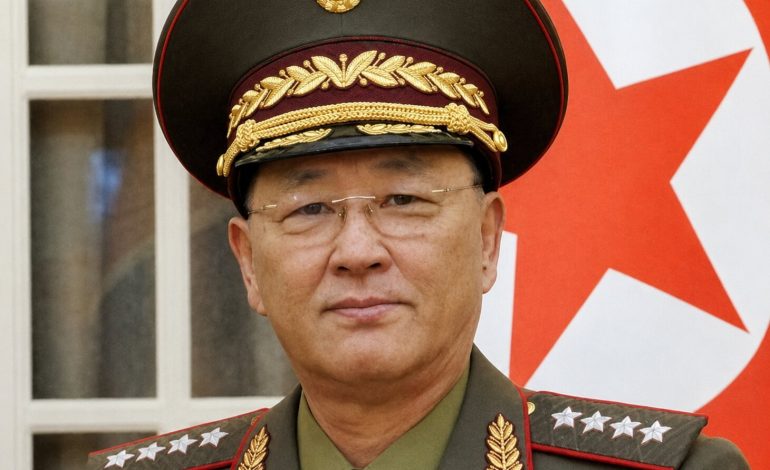
No Kwang-chol. (Photo: Wikipedia)

New Delhi: North Korea has replaced its defence minister and reorganized parts of its senior military command as the country pushes ahead with weapons modernization and tighter political control over its armed forces. Kim Song-gi has taken over the defence portfolio from No Kwang-chol following a meeting chaired by the North Korean leader, Kim Jong-un, state media reported on August 30, 2026.
The personnel changes were approved at the second meeting of the ninth Central Military Commission of the ruling Workers’ Party of Korea on August 29. The official Korean Central News Agency (KCNA) said the gathering considered “structural reorganization plans” intended to improve the management and future development of the country’s defence establishment, but offered no explanation for No’s removal.
No was also removed from the party’s central leadership and appointed first vice-director of its Munitions Industry Department, which plays a central role in North Korea’s weapons-development and defence-production programmes. The reassignment keeps him within the military-industrial system but represents a clear reduction in his formal political standing.
The veteran general had served as defence minister since October 2024, having previously held the position between June 2018 and December 2019. During his earlier tenure, he participated in North Korea’s diplomatic engagement with the United States and signed the inter-Korean military agreement reached during the September 2018 summit in Pyongyang.
His successor, Kim Song-gi, had headed the General Political Bureau of the Korean People’s Army, the institution responsible for political supervision, ideological education and enforcement of party loyalty across the armed forces. Moving an official from that organization to the defence ministry may indicate an increased emphasis on political discipline and implementation of party directives, although Pyongyang has not publicly described the appointment in those terms.
The reshuffle also returned Pak Jong-chon, one of North Korea’s most experienced military officials, to the influential post of vice-chairman of the Central Military Commission. Pak was re-elected to the party’s Central Committee and Politburo after losing his senior party and military positions in February, a removal that had prompted speculation about his age and political future.
The commission, chaired by Kim, exercises policy and administrative oversight over the armed forces and defence industry, making Pak’s return more consequential than a conventional command appointment. KCNA said the newly appointed commanders had been instructed to follow the party’s military policies and strengthen the country’s armed forces.
In a separate but closely timed event, Kim presented state honours to scientists, researchers and officials involved in developing new weapon systems and improving their performance. State media did not identify the systems concerned but portrayed the advances as an important step towards modernizing the Korean People’s Army.
North Korea has continued testing upgraded artillery, tactical missiles and multiple-launch rocket systems, including an extended-range 240mm launcher and longer-range ammunition for 155mm self-propelled howitzers. The simultaneous recognition of weapons scientists and restructuring of the military leadership suggests that Pyongyang is seeking to align operational command, political supervision and defence production more closely.
The changes come during a period of uncertainty in the security environment around the Korean peninsula. As reported by RNA Media, the United States and South Korea recently shortened their Ulchi Freedom Shield exercise, while Washington, Seoul and Tokyo are preparing a separate trilateral drill focused on nuclear and missile threats from North Korea.
The US president, Donald Trump, has meanwhile said he expects to meet Kim later in 2026 as Washington explores the possibility of renewing direct diplomacy with Pyongyang. The reshuffle does not, by itself, establish whether North Korea is preparing for talks or adopting a harder military posture, but it reinforces Kim’s practice of regularly rotating senior officials to maintain control over the country’s security establishment.