


Pentagon prepares at least 4 options for US troop deployments in Europe amid Nato review
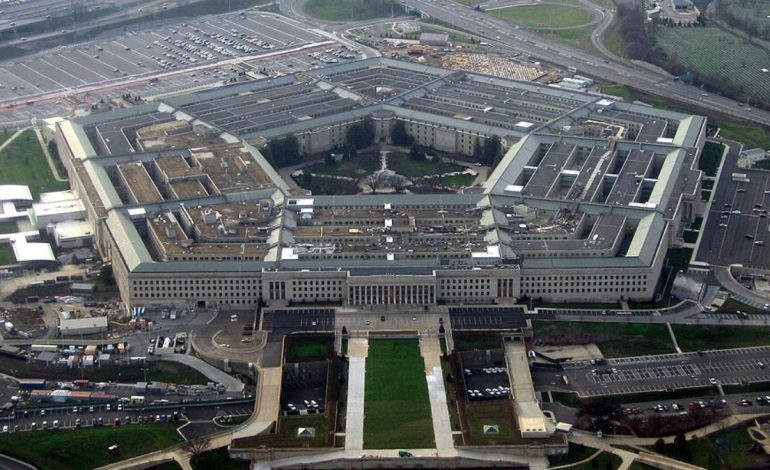
The Pentagon, headquarters. Image courtesy: Wikimedia Commons

New Delhi: The Pentagon is preparing at least four sets of options for US troop deployments in Europe as part of its ongoing Nato force-posture review, with the proposals due to defence secretary Pete Hegseth by November 6. The review covers roughly 80,000 US troops stationed across Europe and has fuelled concern among allies that Washington could eventually order further reductions.
According to a Pentagon “Terms of Reference” document reviewed by Reuters, the options will examine different force numbers and locations, how quickly any changes could be carried out and the costs involved. The broader six-month review, announced in June, is due to be completed in December.
A senior Pentagon official told Reuters that the process was intended to give policymakers a range of choices rather than point towards a predetermined troop level. The official said Washington wanted to examine the advantages and disadvantages of different force levels and dispositions. No final decision on troop reductions has been announced.
Review beyond troop numbers
The Pentagon review is examining more than how many US personnel should remain in Europe. The document places particular emphasis on access, basing and overflight, or ABO, which covers the ability of US forces to use allied territory, military bases and airspace.
It also considers whether allies are on a credible path towards meeting Nato defence-spending commitments and filling gaps under the Nato Force Model.
Other criteria include space, cyber and intelligence infrastructure that supports US military operations, as well as defence procurement and transatlantic defence-industrial cooperation.
Washington has separately sent Nato members a questionnaire asking whether they impose restrictions on US access, basing or overflight and whether they would be prepared to reduce or remove those restrictions. It also asks about defence spending, procurement, strategy and support for US foreign policy priorities. Responses to the questionnaire were due by Friday, August 28, Reuters reported.
Allies concerned about further reductions
The review has created uncertainty among European governments because Washington has repeatedly said it expects Europe to assume greater responsibility for its own defence. The US currently has roughly 80,000 troops stationed across Europe, according to Reuters.
European officials told Reuters privately that they were concerned Washington may already have formed a view on future force levels and questioned how much the consultation process would influence the eventual decision.
Those concerns follow earlier US moves to reduce some forces assigned to Nato defence plans. European governments are now waiting to see whether the current review results in further reductions. No new reduction has been announced.
When Hegseth announced the review in June, he criticised what he called “free-riding” Nato allies and said Washington needed clearer arrangements governing US access, basing and overflight.
The Trump administration has repeatedly argued that European members should carry a larger share of the burden for continental defence.
At the Nato summit in Ankara in July, European allies and Canada said they were assuming greater responsibility for the alliance’s defence as they increased military spending and worked towards the defence investment commitments agreed at The Hague.
Iran war figures in US concerns
The review is also taking place against US frustration with the response of some European allies during the war against Iran.
The United States president, Donald Trump, criticised some European allies over their response to the conflict. Reuters reported that US complaints included cases in which allies allegedly failed to grant basing or overflight access to US aircraft, or provided it too slowly.
Nato secretary general Mark Rutte acknowledged US disappointment over what he called “isolated cases”, but said European bases had supported almost 5,000 sorties during the US operation against Iran.
Rutte also stressed that access and basing arrangements were bilateral agreements between Washington and individual allies rather than a Nato operation.
Nato itself was not directly involved in the US-Israeli military campaign against Iran.
The distinction is relevant because the Pentagon questionnaire specifically asks individual allies about restrictions they may have imposed on US military access, bases or overflight rights.
September briefing before November options
The next major internal milestone is expected by September 18. The Pentagon document reviewed by Reuters says General Alexus G Grynkewich, the top US military commander in Europe, is expected to participate in a decision briefing with Pentagon policy chief Elbridge Colby by that date.
Grynkewich is commander of US European Command and Nato’s supreme allied commander Europe.
The briefing is expected to help shape the force-posture options that will later be presented to Hegseth. It is not a final decision meeting on troop levels.
Colby, the US under secretary of defence for policy, is also expected to brief Nato ambassadors in Brussels about the review as Washington consults allies over its future military posture in Europe.
Reuters reported that some European governments planned to use those discussions to highlight increased defence spending, military contributions and their willingness to host US forces.
By November 6, the Pentagon expects to have prepared at least four sets of force-posture options for Hegseth. The broader review is due to be completed in December.
Until those options are considered and a decision is taken, the roughly 80,000-strong US troop presence in Europe remains under review, with no new withdrawal or reduction plan formally announced.