US pauses immigrant visa appointments worldwide: What it means for Indian applicants
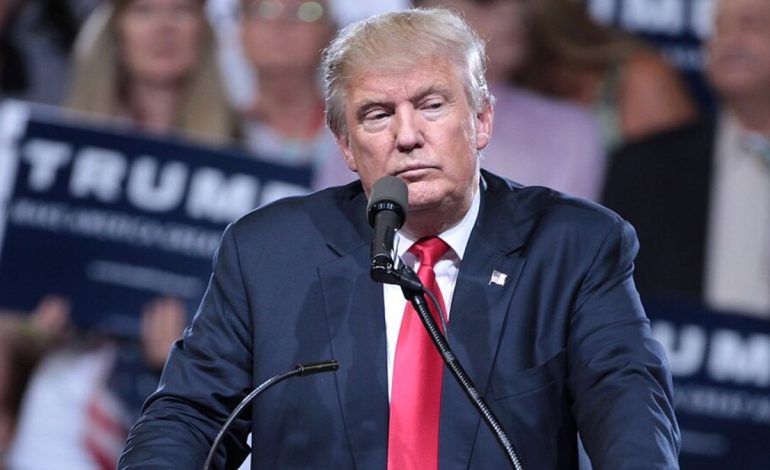
US President Donald Trump. Image courtesy: Wikimedia Commons

New Delhi: The United States has temporarily paused immigrant visa appointments worldwide as the Trump administration puts consular officers through a new global training programme aimed at strengthening applicant screening. Applicants who already had interviews scheduled are being informed that their appointments will be rescheduled.
The US state department told Reuters that it had launched a global training initiative at embassies and consulates worldwide, with immigrant visa appointments being adjusted to accommodate the training. The department said the programme was intended to help consular officers evaluate applicants more comprehensively and consistently, including those considered likely to depend on US public benefits.
Applicants affected by the disruption are expected to receive new interview dates, although the department has not announced a clear timeline for when normal scheduling will resume.
The distinction is important: this is not a blanket halt on every type of US visa. Immigrant visas are for foreign nationals seeking to live permanently in the United States, including eligible family-sponsored and employment-based applicants. Temporary visas such as B-1/B-2 visitor visas, F-1 student visas, H-1B work visas and J-1 exchange visas fall under the separate non-immigrant visa system.
The US state department maintains separate rules and appointment procedures for the two systems. The current global pause concerns immigrant visa appointments and should not be read as an automatic suspension of tourist, student or H-1B processing.
The Trump administration has, however, separately tightened or proposed changes affecting temporary work visas. RNA Media recently reported on a proposed $103,265 fee on new H-1B petitions filed through the annual lottery, a separate measure that could make US employers more selective about hiring skilled foreign workers, including Indians.
The move comes as the Trump administration expands scrutiny across the US immigration system, including tighter vetting, visa revocations and greater emphasis on whether prospective immigrants may become a so-called public charge.
Why is US pausing appointments?
The US state department says the immediate reason is a worldwide training initiative for consular officers. One focus is the public charge provision, a longstanding part of US immigration law under which an applicant can be found inadmissible if a consular officer concludes that the person is likely to become dependent on public support. Officers consider factors including age, health, family status, assets, financial circumstances, education and skills.
It is not simply a test of whether someone has previously received a particular government benefit.
Depending on the immigration category, an affidavit of financial support can also form part of that assessment.
On August 5, the US state department also introduced a pilot procedure allowing certain immigrant visa applicants facing a public-charge finding to seek a “public charge bond” as a possible way to overcome that ground of inadmissibility.
For applicants, the latest training could therefore mean more detailed scrutiny of financial circumstances once interviews restart. It does not, by itself, change the statutory basis on which immigrant visas are issued.
What does this mean for Indian applicants?
For an Indian applicant who had an immigrant visa interview scheduled at a US consular post, the most immediate consequence is straightforward: the interview may be postponed and a fresh date communicated later.
The announcement does not mean that an existing immigrant visa has been revoked, nor does it establish that pending immigrant visa petitions have been cancelled.
The appointment pause itself does not alter an applicant’s priority date or the numerical limits governing employment- and family-sponsored immigrant visas.
What it can do is introduce another delay between becoming eligible for an immigrant visa and completing the consular interview needed before that visa can be issued.
That distinction matters particularly for Indians because several employment-based permanent immigration categories already face severe demand and country-specific limits.
The US state department September 2026 visa bulletin, the latest bulletin published, continues to classify India as an oversubscribed country. For Indian applicants, the employment-based third preference, or EB-3, final action date is January 1, 2014. The EB-1 final action date is October 15, 2022. The EB-2 category for India is listed as unavailable for final action in September, meaning no immigrant visa numbers are authorized for issuance in that category during the month.
These dates do not mean every Indian applicant will wait the same number of years. Green-card timing depends on the category, priority date, place of processing and movement in the monthly Visa Bulletin.
But they illustrate why even a temporary appointment disruption can matter. An applicant who has already spent years waiting for a visa number to become available may face another layer of uncertainty if the consular interview itself is delayed.
Family-sponsored applicants can also be affected by the appointment pause. The September visa bulletin, for instance, places the final action date for India’s F4 category, which covers brothers and sisters of adult US citizens, at November 1, 2006.