
Iran and Oman revive Strait of Hormuz corridor plan as Tehran’s deadlock with US continues
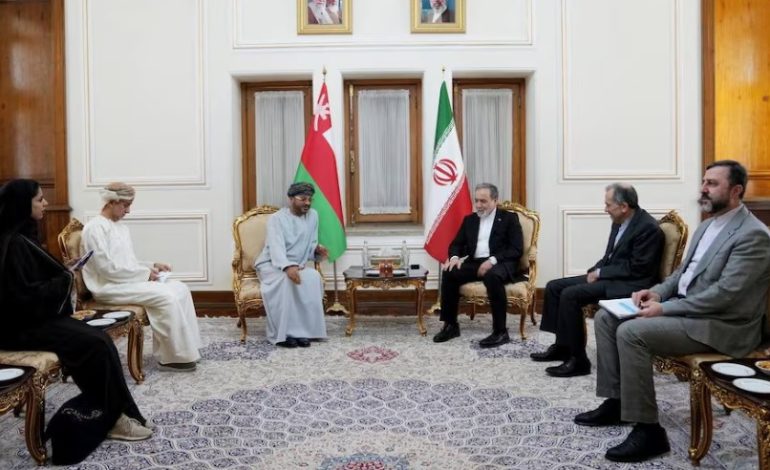
Iran’s foreign minister Abbas Araghchi (CR) with his Omani counterpart Sayyid Badr al-Busaidi (CL) in Tehran, on August 25, 2026. (Photo: X)

New Delhi: Iran and Oman have revived negotiations on creating a temporary navigational corridor through the Strait of Hormuz, offering a possible route towards restoring safer commercial shipping through the strategic waterway. The initiative, however, remains a proposed framework rather than a completed agreement, with technical, security and political questions still unresolved.
The talks were held in Tehran on August 25 between the Omani foreign minister, Badr Albusaidi, and his Iranian counterpart, Abbas Araghchi, against the backdrop of continuing US-Iran tensions. A joint statement issued by Oman’s foreign ministry said the consultations had concentrated on resuming safe navigation without compromising the sovereignty or sovereign rights of either coastal state.
The phased proposal envisages a jointly managed temporary shipping corridor and a bilateral operation to clear mines from the strait. Subsequent negotiations would cover a permanent route, information-sharing, vessel-traffic management and the provision of navigational and maritime-security services.
Albusaidi said he hoped the temporary corridor and practical arrangements for safer passage could be announced soon, with a permanent settlement to follow under the Islamabad Memorandum. Iran and Oman also called for discussions with other Gulf littoral states, indicating that any durable arrangement would require wider regional acceptance.
The language of the statement is important because it does not say that the strait has been reopened or that ships can immediately begin using a new route. It instead records a proposed framework and commits the two countries to further technical negotiations, making premature any suggestion that normal maritime movement has already been restored.
Before the war began in February, the Strait of Hormuz handled approximately one-fifth of global oil and liquefied natural gas shipments, but commercial traffic has since fallen sharply. Reuters reported that most shipping through the narrow passage has remained suspended or severely restricted as diplomatic efforts to settle the wider conflict have stalled.
The strait already has an internationally recognized traffic-separation system, with designated inbound and outbound lanes intended to reduce collision risks. The International Maritime Organization says the scheme was proposed jointly by Iran and Oman and adopted in 1968, but the war, mines and competing demands over maritime control have disrupted its normal operation.
The continuing danger was demonstrated on August 25 when an oil tanker was struck by an unidentified projectile about nine nautical miles, or 17 kilometres, northeast of Ash Shishah in Oman. The United Kingdom Maritime Trade Operations said the vessel was disabled, although it did not identify the attacker or attribute responsibility for the incident.
The US president, Donald Trump, has asserted that all mines in the strait have been cleared, repeating an earlier claim about American mine-countermeasure operations. The inclusion of a joint mine-clearance project in the Iranian-Omani framework nevertheless suggests that Tehran and Muscat believe an agreed survey, clearance and verification process remains necessary before shipping companies can treat the route as consistently safe.
Even a technically navigable corridor may not be enough to persuade shipowners to resume regular operations. Commercial decisions will depend on the likelihood of further attacks, the availability and cost of war-risk insurance, flag-state advisories and whether naval forces on opposing sides recognize the proposed traffic arrangements.
The negotiations are also constrained by the continuing confrontation between Washington and Tehran. Iran said earlier in August that an understanding with Oman alone would not be sufficient to normalize traffic as long as what it described as US “aggression” and the American blockade of Iranian ports continued, according to Reuters.
Washington, meanwhile, has threatened secondary measures against countries and companies continuing to trade with Iran, although it has stopped short of imposing immediate penalties on all such transactions. Tehran has denounced the pressure campaign as unlawful and maintains that several major trading partners will resist American attempts to isolate the Iranian economy.
Markets initially interpreted the Iranian-Omani talks as a sign that diplomacy might prevent another military escalation. Brent crude and West Texas Intermediate futures fell after the announcement, although the decline reflected expectations of progress rather than evidence that normal oil flows had resumed, according to Wall Street Journal.
Political tensions remain pronounced despite the relative reduction in direct hostilities. The US Secret Service said it was aware of an Iranian state television programme discussing an alleged plot against Trump’s youngest son, Barron Trump, an episode that could further complicate already fragile diplomatic efforts.
For India, the future of the strait carries direct economic and energy-security implications because a substantial proportion of crude oil and LNG moving through Hormuz is destined for Asian markets. US Energy Information Administration data show that China, India, Japan and South Korea collectively received 74 per cent of the crude oil and condensate passing through Hormuz during the first half of 2025.
Indian refiners have already increased purchases from Africa and Latin America to compensate for disrupted West Asian supplies, but longer voyages raise freight costs and complicate refinery planning. A reliable corridor would ease these pressures, although companies are unlikely to abandon alternative supply arrangements until the route’s security, insurance and operating rules have been tested.
The Iranian-Omani initiative therefore represents a potentially useful maritime confidence-building measure rather than a settlement of the conflict. Its success will depend on whether the two coastal states can agree on operational control, mine clearance and security guarantees – and whether Iran and the US can prevent their wider confrontation from once again spilling into the world’s most consequential energy chokepoint.