
India demands accountability after South Sudan ambush kills two Ethiopian UN peacekeepers
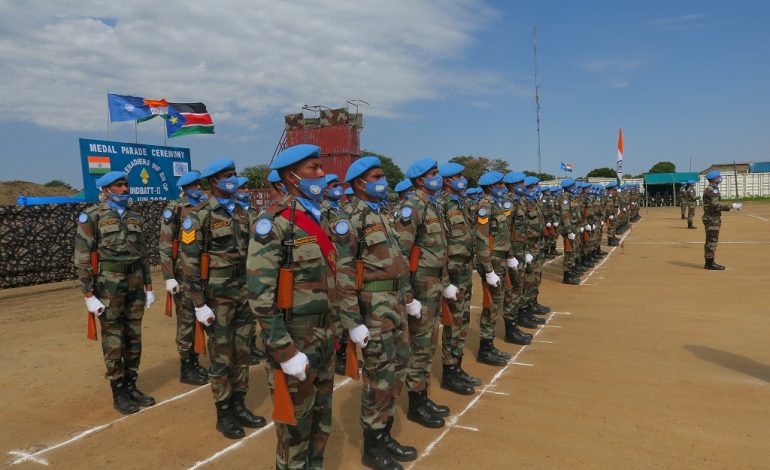
Indian peacekeepers in the United Nations Mission in South Sudan during a medal ceremony for their outstanding performance in Jonglei state and the Greater Pibor administrative area, in 2021. (Photo: X/@unmissmedia)

New Delhi: India has condemned an ambush on a United Nations Mission in South Sudan (Unmiss) patrol that killed two Ethiopian peacekeepers and wounded seven other people in Jonglei state on Monday. New Delhi demanded an immediate investigation and invoked an India-piloted UN security council (UNSC) resolution aimed at ending impunity for attacks against UN personnel.
The patrol was travelling towards Pajut when unidentified armed assailants opened fire. Three peacekeepers, two members of the South Sudan National Police Service and two UN civilian employees were injured, while a quick reaction force was deployed to secure the area and support the emergency response.
India’s permanent mission to the United Nations in New York, in a post on X, said the sanctity and inviolability of UN personnel and premises must be respected. It called on all parties to protect peacekeepers deployed under UNSC mandates and demanded that those responsible for the attack be identified, prosecuted and held accountable.
Although the Indian UN mission’s post referred to one fallen Ethiopian blue helmet, a subsequent Unmiss release confirmed that two Ethiopian peacekeepers had been killed.
The UN spokesperson, Stephane Dujarric, later confirmed the nationality of both personnel and said their deaths raised to nine the number of peacekeepers killed in hostile acts since January 1 this year, according to Reuters.
The special representative of the UN secretary general for South Sudan and head of Unmiss, Anita Kiki Gbeho, condemned the attack and called for a prompt and comprehensive investigation. Unmiss said deliberate attacks on peacekeepers could constitute war crimes under international law, including international humanitarian law.
No organization had claimed responsibility for the ambush by the time of publication, while the UN had not disclosed the names of the dead or provided details about the weapons used. The available official and agency accounts also reported no Indian casualty in the attack.
Why India invoked UNSC Resolution 2589
India specifically called for compliance with UNSC Resolution 2589, which it piloted during its presidency of the security council in August 2021. Adopted unanimously on August 18, 2021, the resolution was the first UNSC measure devoted specifically to strengthening accountability for crimes committed against UN peacekeepers.
The resolution calls on countries hosting current or former peacekeeping missions to investigate attacks, arrest suspects and prosecute those responsible in accordance with domestic and international law. It also asked the UN secretary general to establish a comprehensive database recording attacks against peacekeepers and the progress made in bringing perpetrators to justice.
India’s reference to the resolution is therefore directly relevant rather than a general diplomatic formulation. New Delhi has repeatedly emphasized that attacks on peacekeepers must be treated as prosecutable crimes because unresolved cases embolden armed groups and undermine the ability of UN missions to operate in dangerous areas.
India has a substantial operational stake in Unmiss and in the broader peacekeeping system. According to UN deployment figures cited by DD India, India was the largest military contributor to Unmiss as of April 2026, with 1,775 personnel deployed in South Sudan.
India was also the second-largest contributor of uniformed personnel to UN peace operations, with more than 4,200 military and police personnel serving across several missions. Its contingents are deployed in South Sudan as well as Abyei, the Democratic Republic of the Congo, Lebanon, Cyprus, the Central African Republic, Somalia, Western Sahara and the Middle East.
Attack comes amid renewed fighting in Jonglei
The ambush occurred in an area already affected by a dangerous increase in armed violence and attacks on humanitarian operations. Five South Sudanese aid workers were killed on June 29 when a clearly marked convoy was ambushed on the road between Payuel and Pajut in Duk county, with four other workers and several civilians reportedly injured.
That earlier convoy was transporting personnel from a World Food Programme-supported training programme. The proximity of the two attacks raises serious questions about the security of the Pajut corridor, although there is currently no verified evidence establishing that the same group carried out both ambushes.
The wider security environment in South Sudan has deteriorated as the power-sharing system established under the 2018 peace agreement has steadily unravelled. That agreement ended a five-year civil war between forces associated with the president, Salva Kiir, and those loyal to the opposition leader and former first vice-president, Riek Machar.
Machar has remained under house arrest since March 2025 and faces charges including treason over violence involving the “White Army” militia in Upper Nile state. His party has rejected the allegations, denied continuing command links with the militia and described the prosecution as politically motivated.
The conflict intensified in Jonglei from December 2025 when opposition forces captured government positions, prompting a government counteroffensive involving ground operations and aerial attacks. Pajut itself has repeatedly figured in the fighting and the resulting displacement crisis, placing peacekeepers and humanitarian convoys at greater risk.
More than 450 incidents involving violence against humanitarian personnel and assets were reported between January and July this year, more than double the number during the corresponding period in 2025. At least 36 aid workers and contractors had been killed during 2026, while a Unmiss report recorded more than 760 civilian deaths in the first three months alone − an 89 per cent increase from the preceding quarter.
Unmiss was established shortly after South Sudan became independent in July 2011 and is currently mandated to protect civilians, facilitate humanitarian access and help prevent a return to civil war. The UNSC renewed the mission under Resolution 2820 on April 30, 2026, extending its mandate until April 30, 2027.
Monday’s ambush demonstrates the gap between the mission’s extensive responsibilities and the security conditions under which its patrols must operate. Until the attackers are identified, the precise motive remains unknown, but the location, casualty toll and pattern of recent violence make a credible and transparent investigation essential.