
IAF chief ACM Amar Preet Singh flags predictive AI, digital twins for future warfare
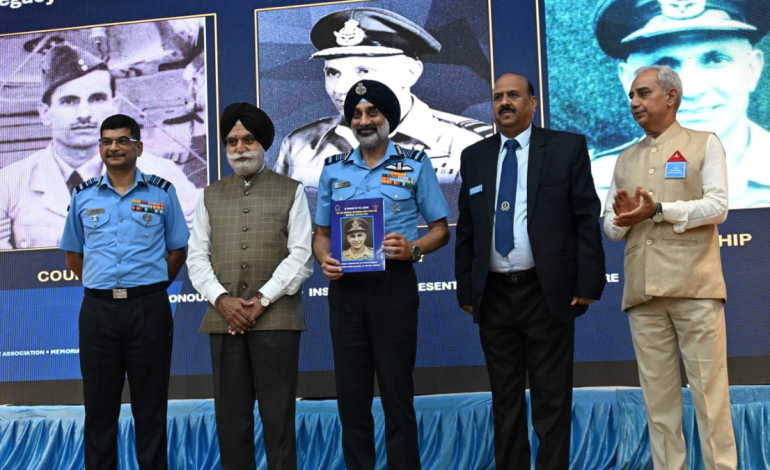
The Air Force hosted, AVM Harjinder Singh Memorial Lecture in Kanpur. (Image courtesy: X/@IAF_MCC)

New Delhi: The Indian Air Force is expanding the use of artificial intelligence and advanced data-driven technologies to strengthen future defence planning and decision-making. The chief of the air staff, Air Chief Marshal Amar Preet Singh, has stressed that predictive AI and digital twins can help the force assess possible developments and prepare for emerging operational challenges.
Addressing an event in Kanpur on Saturday, the IAF chief said the availability of large volumes of information has made it possible to use predictive AI to forecast what could happen next. He said the force is also developing digital twins to study possible future situations through virtual models.
The air chief also highlighted the importance of making better use of information available across different organizations. He said sharing data and experiences can help the armed forces identify mistakes, learn from them and prevent similar errors from being repeated.
“By leveraging the data we can easily share with one another, we should learn from any mistake, regardless of who made it and avoid repeating it ourselves,” he said.
Digital twins can allow military planners to recreate systems, environments and operational situations in a virtual setting and examine different possible outcomes. Such technology can support planning by helping commanders understand potential challenges and test responses before facing them in actual operations.
The IAF chief’s remarks are highlights the growing role of technology in contemporary warfare where data, automation and rapid decision-making is becoming increasingly important. Artificial intelligence and machine learning can support armed forces in processing large volumes of information and improving situational awareness in a range of operational environments.
Efforts are being made by the Air Force to incorporate new technologies for various purposes, such as surveillance, training, planning and decision making. Indigenous technological capabilities will be further improved as the Air Force faces complex security threats in the future.
He stressed that technology alone would not be sufficient without greater collaboration and institutional learning. Sharing knowledge, using collective experience and turning past mistakes into lessons, he said, would be essential for developing stronger defence systems and maintaining operational preparedness.
Meanwhile, the Air Force hosted the Air Vice Marshal Harjinder Singh memorial lecture in Kanpur, honouring the legacy of the aviation pioneer and his contribution to Indian aviation and Air Force, according to an X post shared by the service. Air Chief Marshal AP Singh delivered the keynote address and paid tribute to AVM Harjinder Singh, Air Marshal Yalla Umesh, Air Marshal PV Athawale (retd), and Air Marshal Jagjeet Singh (retd) were among the distinguished speakers.
The event brought together serving and retired members of the Air Force community and provided a platform to reflect on AVM Harjinder Singh’s contribution to Indian aviation. The association said the lecture also highlighted the importance of preserving the institutional history of the IAF and drawing inspiration from the innovation and pioneering spirit of its distinguished air warriors.