


US launches 11th night of strikes as Houthi blockade threatens global oil supply
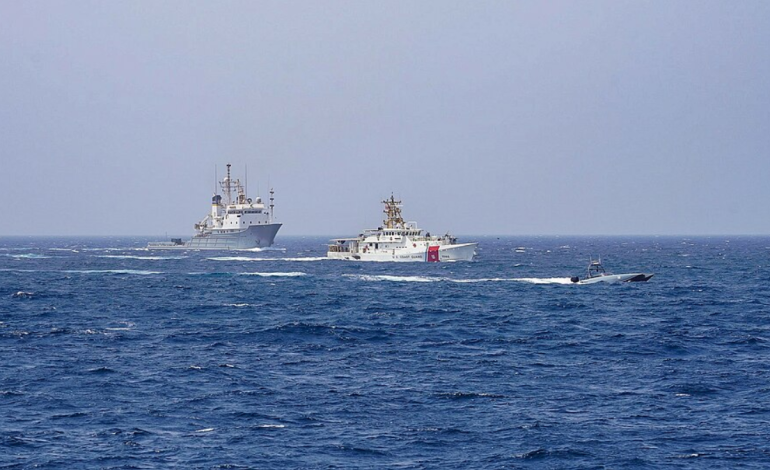
Houthi blockade threatens global oil supply. (Image courtesy: Wikimedia)

New Delhi: Tension between the United States and Iran showed no signs of easing on Wednesday as American forces carried out another round of strikes inside Iran, while the conflict spilled into a second major maritime corridor after Yemen’s Houthi rebels threatened Saudi oil shipments in the Red Sea. The simultaneous pressure on the Strait of Hormuz and the Bab el-Mandeb Strait has intensified concerns over global energy supplies and commercial shipping.
Iranian military sites hit
The US military said it completed its 11th straight night of operations against Iranian targets early Wednesday. According to US Central Command (Centcom), the latest wave focused on military assets, including aircraft shelters and facilities used to store drones.
Air-defence alerts sounded across parts of Iran overnight as explosions were reported in several provinces. Iranian media said blasts were heard in Bushehr, East Azerbaijan, Hamadan, Hormozgan, Khuzestan, Sistan and Baluchistan, while residents in Tehran also reported loud explosions as air-defence systems were activated.
Conflict expands Gulf
Even as military operations continued inside Iran, the regional conflict widened significantly after Yemen’s Iran-backed Houthi movement announced a naval blockade targeting Saudi Arabia.
The group warned shipping companies that vessels involved in transporting Saudi crude could be attacked, effectively opening another front in the war. The threat shifted attention from the Persian Gulf to the Bab el-Mandeb Strait, one of the world’s busiest shipping routes connecting the Red Sea with the Gulf of Aden.
Saudi oil shipments disrupted
The Houthi announcement had an immediate impact on commercial shipping. Two tankers carrying Saudi crude for China and India reportedly abandoned their planned route after loading cargo at Yanbu on Saudi Arabia’s Red Sea coast, turning back towards the Suez Canal instead of continuing through the Bab el-Mandeb Strait.
Saudi Arabia has increasingly depended on exports through Yanbu after security conditions deteriorated in the Strait of Hormuz. Any disruption in the Red Sea would further complicate global oil transportation and reduce alternative export options.
Hormuz shipping remains under pressure
Commercial traffic through the Strait of Hormuz also remained under strain as attacks on merchant vessels continued. A tanker reportedly came under attack on Tuesday, forcing its crew to abandon the ship before Iranian Revolutionary Guard forces claimed responsibility.
Iran also continued attacks against US military positions and regional partners, targeting locations in Bahrain, Kuwait and Jordan. Despite repeated US air operations, Tehran has maintained pressure on the strategic waterway, which normally carries around 20 per cent of the world’s crude oil and liquefied natural gas trade.
Pakistan attempts to restart diplomacy
Away from the battlefield, diplomatic activity continued in Islamabad, where Iranian interior minister Eskandar Momeni met Pakistan’s army chief Field Marshal Asim Munir and prime minister Shehbaz Sharif.
Pakistan was instrumental in helping secure last month’s temporary ceasefire between Washington and Tehran. However, the agreement collapsed after renewed attacks on shipping in the Strait of Hormuz, leaving Islamabad with limited room to revive negotiations. Sharif urged all parties to avoid further escalation and called for renewed diplomatic engagement to prevent the conflict from spreading further across the region.
Trump dismisses immediate talks
The US president, Donald Trump, indicated that Washington was not prepared to resume negotiations with Iran under the current circumstances. Speaking at the White House, he said the United States would only consider talks if Tehran demonstrated a willingness to negotiate seriously.
Trump also suggested that future military operations could focus on areas close to one of Iran’s principal uranium enrichment facilities. Iranian military leaders responded by warning that any strike on nuclear or other sensitive sites would be treated as a major escalation.
Oil prices climb
The expanding conflict continued to affect global energy markets on Wednesday. Brent crude traded above $91 per barrel, while fuel prices in the United States rose above $4 per gallon, reflecting growing concerns over possible supply disruptions.
Rising casualties add pressure in Washington
The prolonged conflict has also increased the human cost for the United States. A US official told the Associated Press that the number of wounded American service members has now exceeded 500, a figure higher than publicly reported Pentagon data because of delays in updating casualty records. Trump also confirmed that 18 US troops have been killed since the conflict escalated, including four personnel in recent Iranian attacks on US military installations in Jordan and Iraq.