


European allies plug most gaps left by US military cutbacks in Nato defence plans ahead of Ankara summit
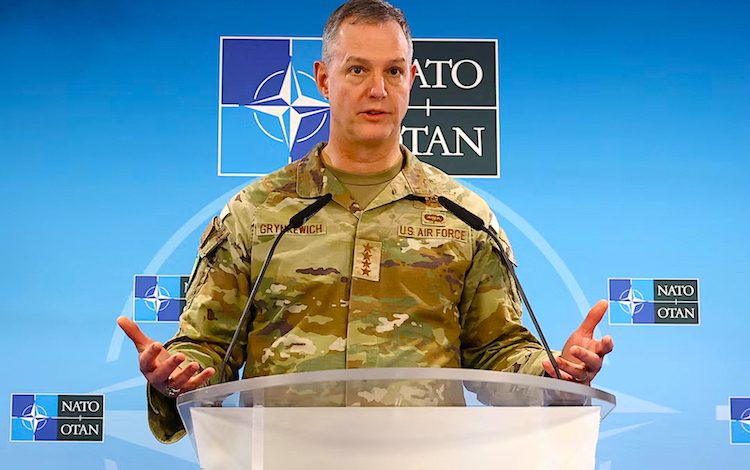
General Alexus Grynkewich, Nato supreme commander in Europe. (Video screenshot)

New Delhi: European members of the North Atlantic Treaty Organization have moved swiftly to compensate for most of the military capability shortfalls created by recent United States reductions in the alliance’s defence plans, Nato’s top military commander has said. This has eased concerns over the bloc’s readiness ahead of next week’s leaders’ summit in Türkiye.
General Alexus Grynkewich, Nato’s supreme allied commander Europe (SACEUR), said European allies had acted within weeks to replace much of the equipment and capabilities withdrawn after Washington decided to scale back several of its commitments under the “Nato Force Model” – the alliance’s operational framework that determines how forces from its 32 member states are made available during peace, crises and war.
“In a matter of weeks, European allies have largely filled the gaps left by US reductions to the Nato Force Model,” Grynkewich said, while acknowledging that a handful of capability shortfalls remain. He added that Nato is examining alternative solutions where European members do not yet possess equivalent military assets capable of delivering the same operational effect.
The Pentagon informed its allies in early June that it would reduce several key contributions earmarked for Nato contingency planning as Washington increasingly prioritizes military resources for potential challenges in the Indo-Pacific, particularly those involving China. The cuts affected a range of high-value assets, including an aircraft carrier strike group and supporting vessels, aerial refuelling aircraft, maritime patrol aircraft, surveillance drones and dozens of fighter aircraft.
Read also: Hegseth turns up the heat on Nato allies, orders review of US forces in Europe
The decision prompted concern among several European governments, which viewed the reductions as a test of Europe’s ability to shoulder greater responsibility for the continent’s collective defence. In response, member states reviewed their available military resources and accelerated efforts to strengthen Nato’s force pool. Britain, for example, has reportedly raised the readiness level of a second aircraft carrier and additional F-35 fighter aircraft for potential alliance operations.
The Nato Force Model, introduced to improve the alliance’s responsiveness following Russia’s invasion of Ukraine, enables commanders to draw upon designated national forces in phases over the first six months of a conflict. It represents the alliance’s primary mechanism for mobilizing military assets during emergencies.
The Nato secretary general, Mark Rutte, has sought to reassure allies that the US adjustments do not weaken the alliance’s collective defence commitments. He has argued that the reductions concern the peacetime allocation of forces rather than Washington’s obligations during an actual conflict, noting that the US could rapidly redirect military assets to Europe if Nato’s collective defence provisions under Article 5 were invoked.
The issue is expected to feature prominently when Nato leaders gather in Ankara on July 7 and 8, where discussions will focus on force planning, burden-sharing, defence spending and adapting the alliance to evolving security challenges. Leaders are also expected to reaffirm their commitment to Article 5 of the Washington Treaty, which considers an attack on one member as an attack on all.
The debate over military burden-sharing has intensified under the administration of the US president, Donald Trump, which has repeatedly urged European allies to assume a greater share of responsibility for regional security while allowing Washington to concentrate more resources on strategic competition in the Indo-Pacific.
For Europe, the rapid effort to replace withdrawn American capabilities reflects a broader shift towards greater strategic responsibility within Nato, even as the alliance continues to rely heavily on US military power for high-end capabilities such as strategic airlift, intelligence, surveillance, missile defence and long-range strike operations.